Orhan Pamuk — 作者 (51)
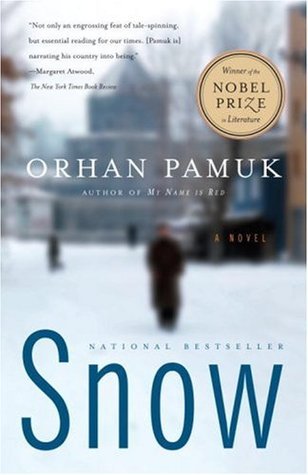
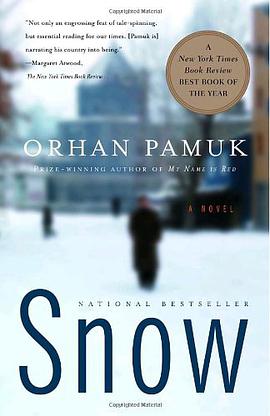
Snow [图书] 豆瓣
作者: Orhan Pamuk 译者: Maureen Freely publishing house: Vintage 2005 - 7
A Turkish poet who spent 12 years as a political exile in Germany witnesses firsthand the clash between radical Islam and Western ideals in this enigmatically beautiful novel. Ka's reasons for visiting the small Turkish town of Kars are twofold: curiosity about the rash of suicides by young girls in the town and a hope to reconnect with "the beautiful Ipek," whom he knew as a youth. But Kars is a tangle of poverty-stricken families, Kurdish separatists, political Islamists (including Ipek's spirited sister Kadife) and Ka finds himself making compromises with all in a desperate play for his own happiness. Ka encounters government officials, idealistic students, leftist theater groups and the charismatic and perhaps terroristic Blue while trying to convince Ipek to return to Germany with him; each conversation pits warring ideologies against each other and against Ka's own weary melancholy. Pamuk himself becomes an important character, as he describes his attempts to piece together "what really happened" in the few days his friend Ka spent in Kars, during which snow cuts off the town from the rest of the world and a bloody coup from an unexpected source hurtles toward a startling climax. Pamuk's sometimes exhaustive conversations and descriptions create a stark picture of a too-little-known part of the world, where politics, religion and even happiness can seem alternately all-consuming and irrelevant. A detached tone and some dogmatic abstractions make for tough reading, but Ka's rediscovery of God and poetry in a desolate place makes the novel's sadness profound and moving.
Copyright © Reed Business Information, a division of Reed Elsevier Inc. All rights reserved.
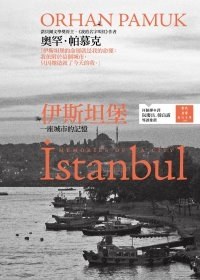
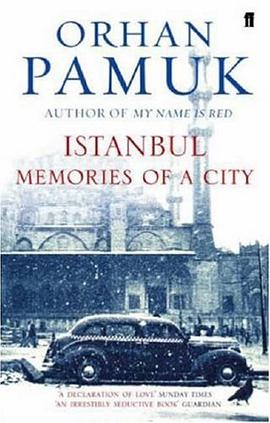
伊斯坦堡:一座城市的記憶 [图书] 豆瓣
İstanbul: Hatıralar ve Şehir
作者: Orhan Pamuk 译者: 何佩樺 publishing house: 馬可孛羅 2010 - 4
「伊斯坦堡的命運就是我的命運:我依附於這個城市,只因她造就了今天的我。」
.
在鄂圖曼土耳其帝國瓦解之後,世界幾乎忘了曾經叱吒風雲的伊斯坦堡存在過的事實。這座帕慕克所生長的城市如今窮困潦倒,在它長達兩千年的歷史以來從未像現在這般遺世獨立。對帕慕克而言,伊斯坦堡一直是一座充滿帝國遺跡與銷聲黯然的城市。他自己的內心也一直與這段銷聲黯然的過往爭戰不休,終於體悟出能超越這段記憶的唯一方式,就是與這段輝煌過如今卻澹然的歷史和平共存下去。
.
帕慕克於一九五二年出生在伊斯坦堡的一個中產階級的家庭,從小他就是個愛做白日夢的孩子,住在土耳其市中心為人所熟知的其中一棟建築---「帕慕克公寓」,而且帕慕克家族的分支分戶全都住在同棟公寓的不同樓層中。隨著時光遞嬗,家庭的生活型態也隨著土耳其的政經情勢而改變,對於帕慕克來說,整個家族群居的公寓不僅是成長的中心,整個伊斯坦堡更是圍繞著這幢公寓再向外延伸的世界。
.
如今作家帕慕克以其獨特的歷史感與善於描寫的傑出天分,重訪他家族的秘辛與習性,發掘出那些舊地往事的梗概和脈絡,拼貼出形形色色的當代城市生活。經由他的引導,和透過他所剖析自己家族的秘密和特質,我們跟著走進了鄂圖曼帝國的文明之中,在帕慕克筆下所營造的時代氛圍和字裡行間,處處透露著對土耳其文明的感傷,呈現出傳統和現代之間多所衝突的城市歷史,不啻為一本自傳性質的城市傳記。
.
隨著帕慕克對伊斯坦堡的記憶,在他頹圮的鄂圖曼別墅中、後巷裡和水道之間,我們幾乎可以目睹伊斯坦堡的歷史遺跡,和他個人失落的美好時光。除此之外,在他的回憶之中,還介紹了幾位伊斯坦堡的作家、藝術家和殺人犯,為這座他稱之為家鄉的城市,提供善與惡、美與醜的對比。
Snow [图书] 豆瓣
作者: Orhan Pamuk publishing house: Knopf 2004 - 8
From the acclaimed author of My Name Is Red (“a sumptuous thriller”–John Updike; “chockful of sublimity and sin”– New York Times Book Review ), comes a spellbinding tale of disparate yearnings–for love, art, power, and God–set in a remote Turkish town, where stirrings of political Islamism threaten to unravel the secular order.
Following years of lonely political exile in Western Europe, Ka, a middle-aged poet, returns to Istanbul to attend his mother’s funeral. Only partly recognizing this place of his cultured, middle-class youth, he is even more disoriented by news of strange events in the wider country: a wave of suicides among girls forbidden to wear their head scarves at school. An apparent thaw of his writer’s curiosity–a frozen sea these many years–leads him to Kars, a far-off town near the Russian border and the epicenter of the suicides.
No sooner has he arrived, however, than we discover that Ka’s motivations are not purely journalistic; for in Kars, once a province of Ottoman and then Russian glory, now a cultural gray-zone of poverty and paralysis, there is also Ipek, a radiant friend of Ka’s youth, lately divorced, whom he has never forgotten. As a snowstorm, the fiercest in memory, descends on the town and seals it off from the modern, westernized world that has always been Ka’s frame of reference, he finds himself drawn in unexpected directions: not only headlong toward the unknowable Ipek and the desperate hope for love–or at least a wife–that she embodies, but also into the maelstrom of a military coup staged to restrain the local Islamist radicals, and even toward God, whose existence Ka has never before allowed himself to contemplate. In this surreal confluence of emotion and spectacle, Ka begins to tap his dormant creative powers, producing poem after poem in untimely, irresistible bursts of inspiration. But not until the snows have melted and the political violence has run its bloody course will Ka discover the fate of his bid to seize a last chance for happiness.
Blending profound sympathy and mischievous wit, Snow illuminates the contradictions gripping the individual and collective heart in many parts of the Muslim world. But even more, by its narrative brilliance and comprehension of the needs and duties
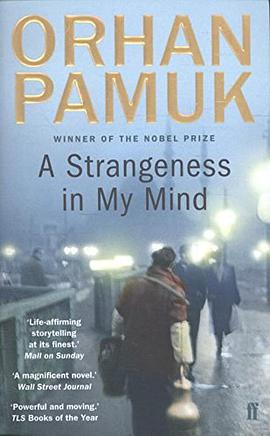
A Strangeness in My Mind [图书] 豆瓣
作者: Orhan Pamuk publishing house: Faber & Faber 2016 - 4
A Strangeness in My Mind (Turkish: Kafamda Bir Tuhaflık) is a 2014 novel by Orhan Pamuk. It is the author's ninth novel. Knopf Doubleday published the English translation by Ekin Oklap in the U.S.,[1] while Faber & Faber published the English version in the UK.[2]
The story takes place in Istanbul, documenting the changes that the city underwent from 1969 to 2012. The main character is Mevlut, who originates from central Anatolia and arrives as a 12-year old boy; the course of the novel tracks his adolescence and adulthood.[3] Mevlut gets married in 1982, and finds a lack of success in making money.[4]
Elena Seymenliyska of The Daily Telegraph described the book as "a family saga that is as much an elegy to Istanbul as to its generations of adopted residents."[5] Publishers Weekly stated that "what really stands out is Pamuk's treatment of Istanbul's evolution into a noisy, corrupt, and modernized city."[1] Kirkus Reviews states that the author "celebrates the city’s vibrant traditional culture—and mourns its passing".[4]
The novel is almost 600 pages long. Dwight Garner of The New York Times wrote that the book has "the stretch of an epic but not the impact of one."[6]
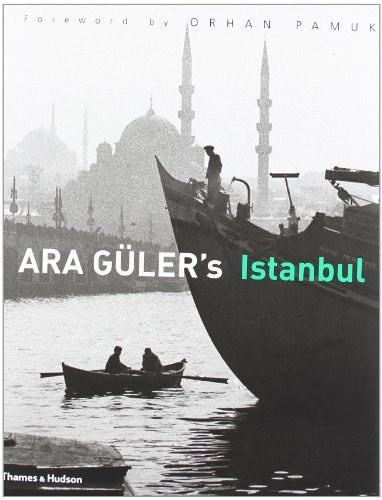
Ara Güler's Istanbul [图书] 豆瓣 谷歌图书 Goodreads
作者: Ara Güler / Orhan Pamuk publishing house: Thames and Hudson Ltd 2009 - 10
Ara Güler's Istanbul is a unique record of daily life in the cultural capital of Turkey from the 1940s to the 1980s, captured by the award-winning photographer and accompanied by an evocative foreword by Orhan Pamuk, the first Turkish recipient of the Nobel Prize in Literature.

As the crossroads between Europe and Asia, Istanbul has lived through several empires and has a character that is as many layered as its history – something that Güler’s photographs convey with great sensitivity. In these remarkable black-and-white images, the city’s melancholy aesthetic oscillates between tradition and modernity.

Both writer and photographer were born in Istanbul, and each in his youth held the ambition of becoming a painter. Here, each in his own way paints a picture of his home town and captures its very soul.
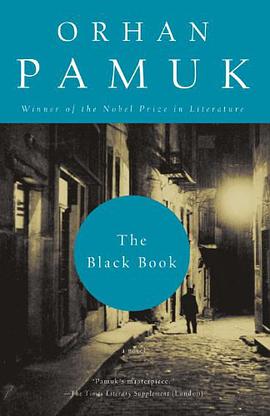
The Black Book [图书] 豆瓣
作者: Orhan Pamuk 译者: Maureen Freely publishing house: Vintage 2006 - 7
A New Translation and Afterword by Maureen Freely
Galip is a lawyer living in Istanbul. His wife, the detective novel–loving Ruya, has disappeared. Could she have left him for her ex-husband or Celâl, a popular newspaper columnist? But Celâl, too, seems to have vanished. As Galip investigates, he finds himself assuming the enviable Celâl's identity, wearing his clothes, answering his phone calls, even writing his columns. Galip pursues every conceivable clue, but the nature of the mystery keeps changing, and when he receives a death threat, he begins to fear the worst.
With its cascade of beguiling stories about Istanbul, The Black Book is a brilliantly unconventional mystery, and a provocative meditation on identity. For Turkish literary readers it is the cherished cult novel in which Orhan Pamuk found his original voice, but it has largely been neglected by English-language readers. Now, in Maureen Freely’s beautiful new translation, they, too, may encounter all its riches.
Other Colors [图书] 豆瓣
作者: Orhan Pamuk 译者: Freely, Ureen publishing house: Knopf 2007 - 9
Orhan Pamuk’s first book since winning the Nobel Prize, Other Colors is a dazzling collection of essays on his life, his city, his work, and the example of other writers.
Over the last three decades, Pamuk has written, in addition to his seven novels, scores of pieces—personal, critical, and meditative—the finest of which he has brilliantly woven together here. He opens a window on his private life, from his boyhood dislike of school to his daughter’s precocious melancholy, from his successful struggle to quit smoking to his anxiety at the prospect of testifying against some clumsy muggers who fell upon him during a visit to New York City. From ordinary obligations such as applying for a passport or sharing a holiday meal with relatives, he takes extraordinary flights of imagination; in extreme moments, such as the terrifying days following a cataclysmic earthquake in Istanbul, he lays bare our most basic hopes and fears. Again and again Pamuk declares his faith in fiction, engaging the work of such predecessors as Laurence Sterne and Fyodor Dostoyevsky, sharing fragments from his notebooks, and commenting on his own novels. He contemplates his mysterious compulsion to sit alone at a desk and dream, always returning to the rich deliverance that is reading and writing.
By turns witty, moving, playful, and provocative, Other Colors glows with the energy of a master at work and gives us the world through his eyes, assigning every radiant theme and shifting mooditsprecise shadein the spectrum of significance.
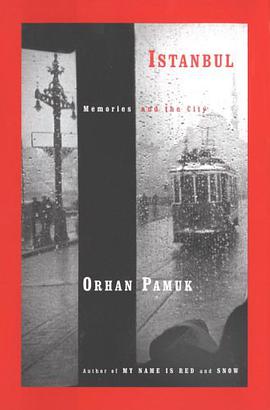
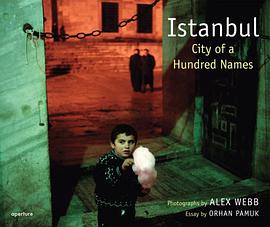
Istanbul [图书] 豆瓣
作者: Orhan Pamuk publishing house: Knopf 2005 - 6
A portrait, by turns intimate and panoramic, of one of the world’s great cities, by its foremost man of letters, author of the acclaimed novels Snow and My Name Is Red.
Blending reminiscence with history; family photographs with portraits of poets and pashas; art criticism, metaphysical musing, and, now and again, a fanciful tale, Orhan Pamuk invents an ingenious form to evoke his lifelong home, the city that forged his imagination. He begins with his childhood among the eccentric extended Pamuk family in the dusty, carpeted, and hermetically sealed apartment building they shared. In this place came his first intimations of the melancholy awareness that binds all residents of his city together: that of living in the seat of ruined imperial glories, in a country trying to become “modern” at the dizzying crossroads of East and West. This elegiac communal spirit overhangs Pamuk’s reflections as he introduces the writers and painters (among the latter, most particularly the German Antoine-Ignace Melling) through whose eyes he came to see Istanbul. Against a background of shattered monuments, neglected villas, ghostly backstreets, and, above all, the fabled waters of the Bosphorus, he presents the interplay of his budding sense of place with that of his predecessors. And he charts the evolution of a rich, sometimes macabre, imaginative life, which furnished a daydreaming boy refuge from family discord and inner turmoil, and which would continue to serve the famous writer he was to become. It was, and remains, a life fed by the changing microcosm of the apartment building and, even more, the beckoning kaleidoscope beyond its walls.
As much a portrait of the artist as a young man as it is an oneiric Joycean map of the city, Istanbul is a masterful evocation of its subject through the idiosyncrasies of direct experience as much as the power of myth--the dazzling book Pamuk was born to write.</p>
0
Snow [图书] Goodreads
Kar
作者: Orhan Pamuk
Dread, yearning, identity, intrigue, the lethal chemistry between secular doubt and Islamic fanaticism–these are the elements that Orhan Pamuk anneals in this masterful, disquieting novel. An exiled poet named Ka returns to Turkey and travels to the forlorn city of Kars. His ostensible purpose is to report on a wave of suicides among religious girls forbidden to wear their head-scarves. But Ka is also drawn by his memories of the radiant Ipek, now recently divorced. Amid blanketing snowfall and universal suspicion, Ka finds himself pursued by figures ranging from Ipek’s ex-husband to a charismatic terrorist. A lost gift returns with ecstatic suddenness. A theatrical evening climaxes in a massacre. And finding god may be the prelude to losing everything else. Touching, slyly comic, and humming with cerebral suspense,
is of immense relevance to our present moment.
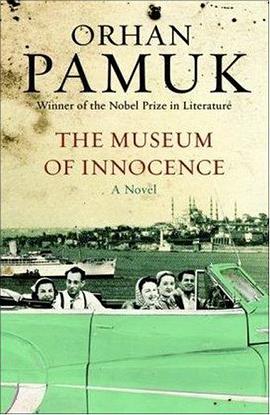
The Museum of Innocence [图书] 豆瓣
Masumiyet Müzesi
作者: Orhan Pamuk publishing house: Faber and Faber 2010 - 6
帕穆克的这部小说,讲述了古老的爱情与阶层的冲突故事,同时涉及土耳其当代社会依然隆重的“童贞”问题。但是作家帕穆克赋予这个故事最关键的主题是“纯真”一种与阶层、贫贱、门第、习俗、社会舆论、朋友社交等等因素“无关”的“纯真”的爱情。
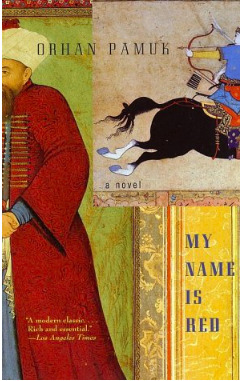
My Name Is Red [图书] Goodreads
Benim Adim Kirmizi
作者: Orhan Pamuk 译者: Erdağ M. Göknar publishing house: Vintage 2002 - 8
At once a fiendishly devious mystery, a beguiling love story, and a brilliant symposium on the power of art,
is a transporting tale set amid the splendor and religious intrigue of sixteenth-century Istanbul, from one of the most prominent contemporary Turkish writers.
The Sultan has commissioned a cadre of the most acclaimed artists in the land to create a great book celebrating the glories of his realm. Their task: to illuminate the work in the European style. But because figurative art can be deemed an affront to Islam, this commission is a dangerous proposition indeed. The ruling elite therefore mustn’t know the full scope or nature of the project, and panic erupts when one of the chosen miniaturists disappears. The only clue to the mystery–or crime? –lies in the half-finished illuminations themselves. Part fantasy and part philosophical puzzle,
is a kaleidoscopic journey to the intersection of art, religion, love, sex and power.
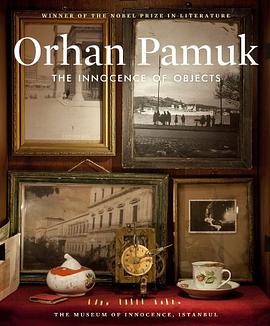
The Innocence of Objects [图书] 豆瓣
作者: Orhan Pamuk publishing house: Abrams 2012 - 10
Orhan Pamuk's Museum of Innocence in Istanbul is the culmination of decades of omnivorous collecting that seeks to capture the city of Pamuk's youth through everyday objects: The ephemera, bric-a-brac, and clutter that adheres to every life. These particular objects are intimately tied to The Museum of Innocence, Pamuk's novel of lost love, which lends its narrative structure to their arrangement in the museum. Eighty beautifully designed vitrines, or boxes, carry the visitor along the arc of the story, on a journey through time and space as well as into the mind of the collector himself, ambiguously identified with both Pamuk and his novel's lovelorn narrator. The Innocence of Objects, Pamuk's catalogue of his museum, explores the many meanings of this remarkable project. While it offers a rich visual guide to the exhibitions, it also allows Pamuk to write about things that matter deeply to him, including the psychology of the collector, the proper role of the museum, the uses of photography in modernising societies (illustrated with Pamuk's superb collection of haunting photographs and movie stills of old Istanbul) and of course the customs and traditions of his beloved Istanbul. The book's imagery is equally evocative, ranging from the pop ephemera that has become "collectible" throughout the chronically nostalgic developed world to the superb photographs of Turkish photographer Ara Guler. Combining compelling art and writing, The Innocence of Objects is an original work that will appeal to readers with a wide range of interests.
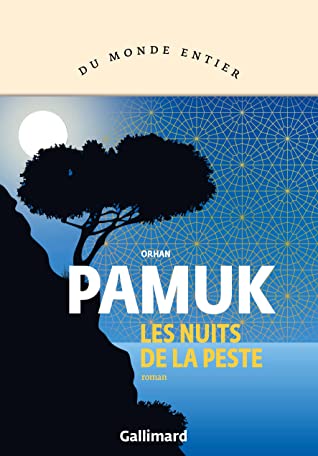
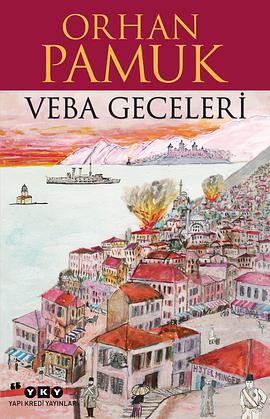
Les nuits de la peste [图书] Goodreads
作者: Orhan Pamuk 译者: Julien Lapeyre de Cabanes
En avril 1901, il se murmure que la peste s’est déclarée à Mingher, une île au large de Rhodes sur la route d’Alexandrie. Deux éminents spécialistes des épidémies sont dépêchés sur place par le sultan Abdülhamid II. La maladie infectieuse est rapidement confirmée mais imposer des mesures sanitaires représente un véritable défi, en particulier lorsqu’elles se heurtent aux croyances religieuses. Dans cette île multiculturelle où musulmans et orthodoxes tentent de cohabiter, la maladie agit comme un accélérateur des tensions communautaires. Et si l’union était rendue possible par la construction d’une identité nationale
Affaiblie par les contagions croissantes mais vive dans ses élans révolutionnaires, Mingher, « perle de la Méditerranée orientale », va connaître des mois décisifs pour son histoire et voir son destin bouleversé.
Avec un talent de conteur hors pair, Orhan Pamuk fait de cette île imaginaire, minutieusement dépeinte, le théâtre d’une grande fresque historique où s’amorce la chute de l’Empire ottoman. Mêlant habilement fiction et réalité, atmosphères funestes et élans amoureux, Les nuits de la peste est un roman grave et tendre qui nous montre comment une situation de crise peut devenir le terreau d’une révolution politique.
Nights of Plague: A novel [图书] 豆瓣
作者: Orhan Pamuk 译者: Ekin Oklap publishing house: Knopf 2022 - 10
A new book by the winner of the Nobel Prize in Literature. Part detective story, part historical epic—a bold and brilliant novel that imagines a plague taking over a fictional island in the Ottoman Empire.
It is April 1900, in the Levant, on the imaginary island of Mingeria—the 29th state of the Ottoman Empire—located in the eastern Mediterranean between Crete and Cyprus. Half the population is Muslim, the other half are Orthodox Greeks, and tension is high between the two. When a plague arrives—brought either by Muslim pilgrims returning from the Mecca, or by merchant vessels coming from Alexandria—the island revolts.
To stop the epidemic, the Ottoman sultan Abdul Hamid II sends his most accomplished quarantine expert to the island—an Orthodox Christian. Some of the Muslims, including followers of a popular religious sect and its leader Sheikh H, refuse to take precautions or respect the quarantine. And the sultan’s expert is murdered.
As the plague continues its rapid spread, the sultan sends a second doctor to the island, this time a Muslim, and strict quarantine measures are declared. But the incompetence of the island’s governor and local administration and the people’s refusal to respect the bans dooms the quarantine to failure, and the death count continues to rise. Faced with the danger that the plague might spread to the West and to Istanbul, the sultan bows to international pressure and allows foreign and Ottoman warships to blockade the island. Now the people of Mingeria are on their own, and they must find a way to defeat the plague themselves.
Steeped in history and rife with suspense, Nights of Plague is an epic story set more than one hundred years ago with themes that feel remarkably contemporary.