Steven J. Zaloga — 作者 (150)
Gustaf Mannerheim [图书] 豆瓣 谷歌图书 Goodreads
作者: Steven J. Zaloga / Adam Hook publishing house: Osprey Publishing 2015 - 10
Carl Gustaf Emil Mannerheim is a legendary figure, whose life and career were deeply influential in Finnish and European history.
He is viewed by many as the father of modern Finland after leading the 'White' faction to victory and independence in the Finnish Civil War of 1918. He then commanded his country's forces in a sequence of bitter clashes in the ice and snow, in the build-up to, and during, World War II: the Winter War in 1939–40, the Continuation War in 1941–44 and the Lapland War in 1944–45.
This study provides a fascinating insight into Mannerheim's career, analysing his traits, his biggest victories and his key enemies. Complete with uniform artwork and detailed tactical maps, it is a comprehensive guide to one of the 20th century's most capable military leaders and statesmen.
George S. Patton [图书] 豆瓣 Goodreads
作者: Steven J. Zaloga / Steve Noon publishing house: Osprey Publishing 2010 - 6
George S. Patton Jr. was the iconic American field commander of World War II, and widely regarded as the US Army's finest practitioner of mechanized warfare. This title examines Patton's colorful life and leadership in three wars, with a concentration on his command in World War II. Despite his ability, Patton was thoroughly reviled by most GIs, partly due to his insistence on traditional military discipline in the ranks, but also because of his unwillingness to pander to the growing power of the press. This combination of ability and controversy have combined to make him one of the most interesting figures in American military history.
Steven Zaloga's contribution to Osprey's newest series, Command, addresses this iconic figure from his early life to his life after war. Including an analysis of Patton's mind and motivations, strict training methods and the controversies surrounding Patton and his relationship with his soldiers and with Eisenhower, Zaloga's text is a concise but important look into the life of one of the most famous commanders of World War II.
Omar Bradley [图书] 豆瓣 谷歌图书 Goodreads
作者: Steven J. Zaloga / Steve Noon publishing house: Osprey Publishing 2012 - 5
General Omar Bradley was the premier US Army tactical commander in the European Theatre of Operations in 1944-45. A West Point classmate of Dwight Eisenhower, Bradley was the quintessential US field commander of World War II, elevated to high command with little combat experience but a solid track record as a skilled planner and organiser. Bradley was part of a small cadre of highly skilled young officers groomed for higher command in the austere and bankrupt 1930s. Bradley was at the centre of nearly all the major US Army victories in 1944-45 from D-Day through the final push into Germany. Along with that combat record came a string of controversies. Bradley's greatest blunder, failing to anticipate the German offensive in the Ardennes, was counter-balanced by a vigorous and skilled response which fatally injured the German Army in the West. Beyond the performance of the US Army in the ETO, Bradley was also intimately wrapped up in other controversies, especially the internecine squabbles with his British counterpart, Bernard Montgomery.
Eisenhower [图书] 豆瓣
作者: Steven J. Zaloga / Steve Noon publishing house: Osprey Publishing 2011 - 8
Dwight Eisenhower represented a fundamentally new type of military commander in the 20th century: commander as manager rather than the traditional warrior commander. Armies had become so large and military coalitions so dependent on politics that this new type of commander emerged. Eisenhower never fought in a single battle, but he commanded the most modern and powerfully armed force to fight in Europe. As Supreme Commander of the Allied Expeditionary Force, Eisenhower had at his disposal not only the British, US, and French armies, but the RAF, USAAF, Royal Navy and US Navy-Atlantic. This book explores every aspect of his military career.
Bazooka vs Panzer [图书] 谷歌图书
作者: Steven J. Zaloga publishing house: Bloomsbury Publishing 2016 - 11
World War II saw tanks assume a dominant role in warfare, capable of tearing through the enemy lines if left unchecked.

To combat the threat posed by these armoured behemoths the United States developed the M1 Anti-Tank Rocket Launcher, better known as the Bazooka. First employed in combat during 1942, the weapon required a great deal of skill and courage to use effectively. By late 1944 it was a mainstay of the US infantry's anti-tank capabilities, alongside towed weapons, anti-tank grenades and other longer-established measures.

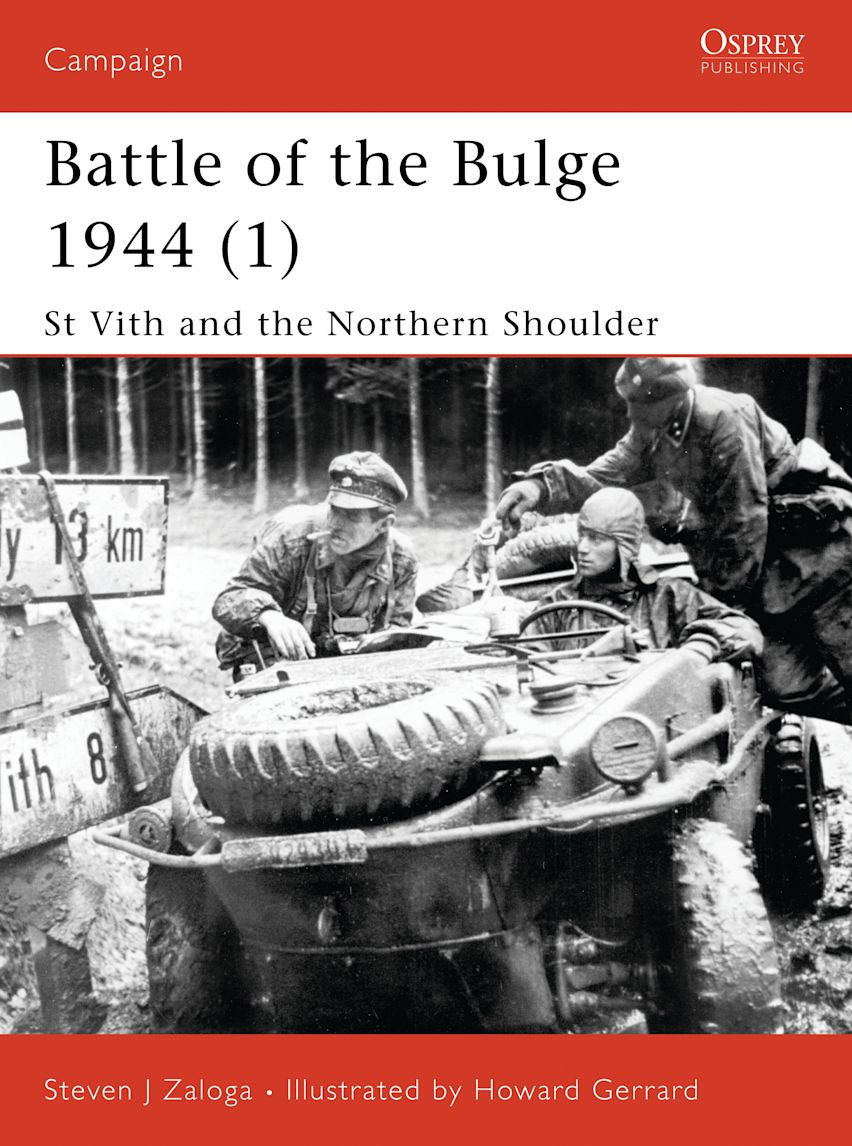
Focusing on the savage close-quarters fighting between Germany's armoured divisions and the US infantry during the Battle of the Bulge, Steven Zaloga's absorbing study compares and assesses the strengths and limitations of the cutting-edge technology used by both sides. Featuring specially commissioned full-colour artwork and explosive battle reports, this volume casts new light on the evolving nature of infantry-versus-tank combat in the closing months of World War II.
US Amphibious Tanks of World War II [图书] 豆瓣 谷歌图书 Goodreads
作者: Steven J. Zaloga / Henry Morshead publishing house: Osprey Publishing 2012 - 8
The advent of combined arms operations in World War II created the need for specialized armored vehicles. In the case of amphibious attacks, the issue arose of how best to land tanks on a beach. Although a variety of specialized landing craft were developed, the Dieppe raid in 1942 encouraged the development of tanks that could be deployed from further off-shore to limit the vulnerability of the LCT craft. The deep-wading equipment that they developed was first used during Operation Husky on Sicily in July 1943, and subsequently for Operations Avalanche (Salerno, September 1943), Shingle (Anzio, January 1944) and Overlord (Normandy, June 1944). The US-manufactured DD tanks were used during Overlord by both US and British forces, and again in 1945 during the Rhine crossings. Initially, developments in the Pacific Theater were separate from those in Europe. The Marines learned from the Tarawa landings in 1943 that unprepared tanks could not be safely landed even in shallow water. DD tanks were never seriously considered for the Pacific, so other solutions were sought. A detailed study of specialized US amphibious tanks, this is a title that will appeal to those interested in both Pacific and European Theaters, modellers and collectors.
Gulf War 1990–91 [图书] 豆瓣 Goodreads
作者: Steven J. Zaloga / Robert McSweeney publishing house: Osprey Publishing 2026 - 1
An in-depth study of the ground campaign led by the US and Coalition forces against Iraq in the Gulf War.
In 1980, Iraq invaded Iran, precipitating an eight-year war. By the end of the 1980s, Iraq was bankrupt, having amassed enormous debts, and oil-rich neighboring Kuwait, which Iraq had long claimed was rightly part of greater Iraq, seemed like the perfect solution. Saddam Hussein's invasion in August 1990 pitted one of the largest Arab armies against the smallest and Kuwait fell in a few days. Upset at this turn of events and worried about Hussein's military power, Saudi Arabia began negotiations with the US, UK and France to create a coalition to oust Iraq from Kuwait. More than 30 countries joined the coalition force. Operation Desert Shield had begun.
With contemporary images, maps, diagrams and stunning artwork, this book by expert historian Steven J. Zaloga dives into the response from the forces of the Coalition to help liberate Kuwait following the month-long air campaign to weaken the Iraqi forces. While Iraq was defeated, the war did not unseat Hussein and the conflict would resume a decade later. This detailed study brings the ground campaign of the Gulf War to life.
Operation Pointblank 1944 [图书] Goodreads 豆瓣 谷歌图书
作者: Steven J. Zaloga publishing house: Osprey Publishing 2011 - 7
Osprey's examination of Operation Pointblank, which was the code name for the United States Army Air Force's attempt to destroy German fighter capability through the use of daylight strategic bombing in advance of the D-Day landings of World War II (1939-1945). Launched in 1943, the operation immediately met with severe problems, most notably the horrible attrition experienced by the US bomber forces. However, with the arrival of the P-51 Mustang, the United States was able to equip the fighters to fly on long-range-bomber escort missions and take the fight to the Luftwaffe in the skies over Germany. This book examines the entire operation from both the Allied and the German perspectives, covering all the main decisions and technological innovations made by both sides in this epic struggle.
Metz 1944 [图书] 谷歌图书 Goodreads 豆瓣
作者: Steven J. Zaloga / Steve Noon publishing house: Osprey Publishing 2012 - 3
General George Patton's most controversial campaign was the series of battles in autumn 1944 along the German frontier which centered on the fortified city of Metz. It took nearly four months, from September to December 1944, for Patton's Third Army to capture the Metz-Thionville fortified zone. In part, the problem was logistics. As was the case with the rest of the Allied forces in the European Theatre, supplies were limited until the port of Antwerp could finally be cleared. Also problematic was the weather. The autumn of 1944 was one of the wettest on record, and hardly conducive to the type of mechanized warfare for which Patton was so famous. However at the heart of the problem was the accretion of sophisticated fortifications. Metz had been fortified since ancient times, heavily rebuilt by France in the post-Napoleonic period, modernized by Germany in 1870-1914, and modernized by France during the Maginot effort in 1935-40. The Germans hoped to hold Metz with a thin screen of second-rate troops, counting on the impregnable fortifications. This book covers the entire campaign from beginning to end, offering an unbiased assessment of the success and failures of both the Allied and Axis efforts.
Sicily 1943 [图书] Goodreads 谷歌图书 豆瓣
作者: Steven J. Zaloga publishing house: Osprey Publishing 2013 - 1 其它标题: Sicily 1943
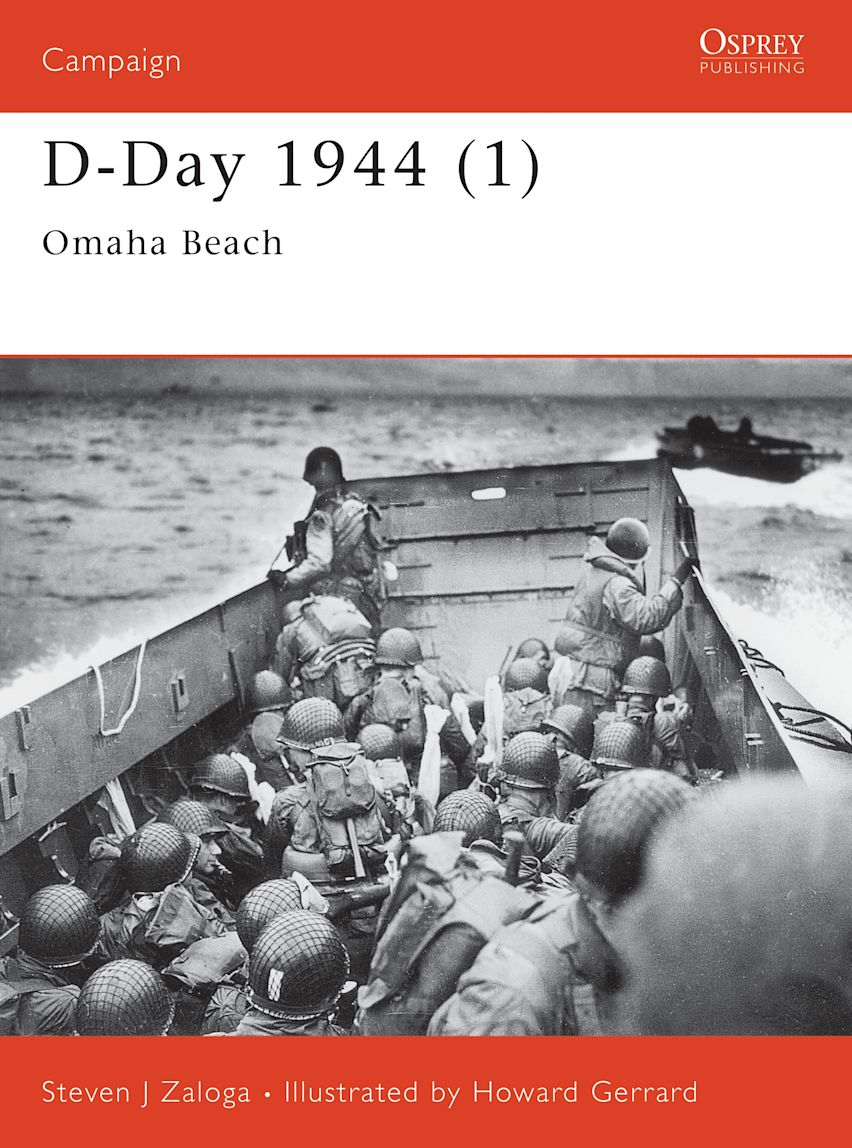
Operation Husky, the Anglo-American amphibious landings on Sicily in July 1943 were the proving ground for all subsequent Allied amphibious operations including Salerno, Anzio, and D-Day in Normandy. Husky's strategic objective was to knock Italy out of the war, a mission that ultimately proved successful. But it also demonstrated the growing ability of Britain and the United States to conduct extremely complex combined-arms attacks involving not only amphibious landings, but also airborne assaults. It was in many ways the precursor of all modern joint operations through the recent wars in Iraq and Afghanistan as two different armies and navies with their own methods of command and control adjusted their practices to conduct a harmonious operation. This stood in stark contrast to the increasingly dysfunctional German-Italian alliance which finally broke down on Sicily.
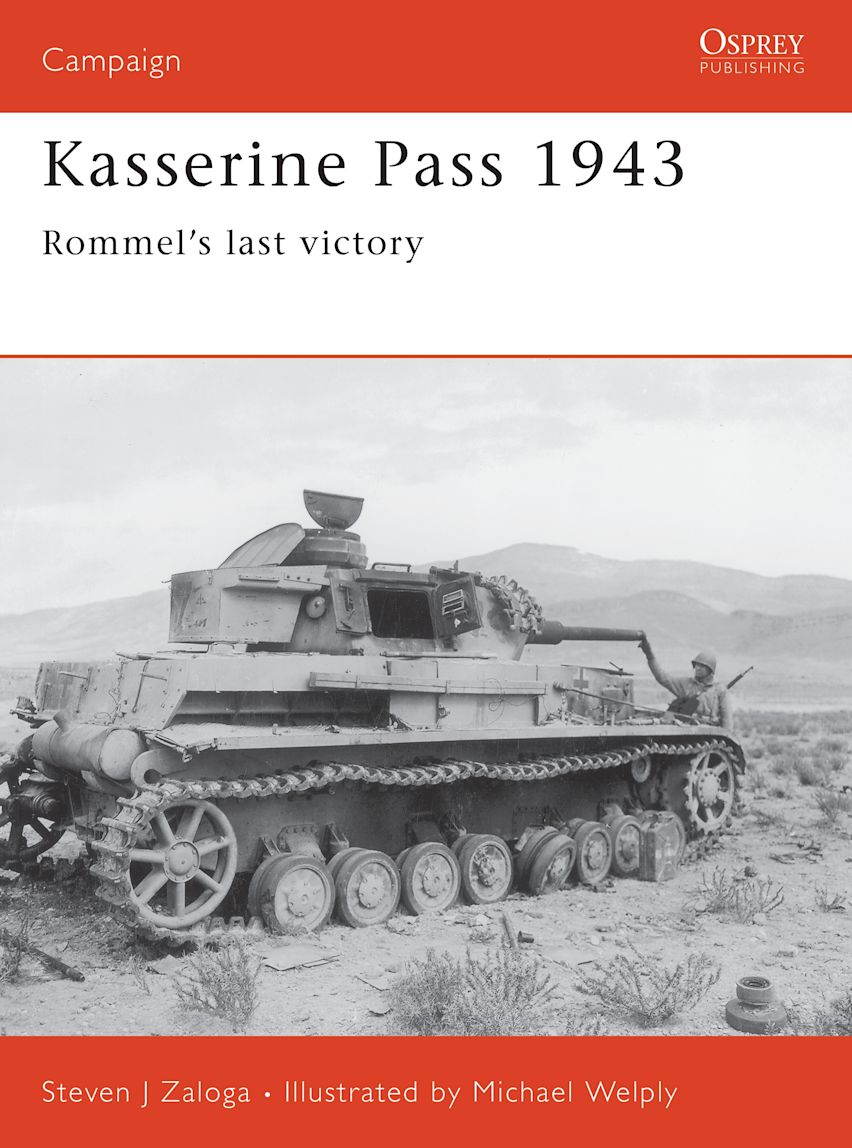
Not only did the Sicily operation represent a watershed in tactical development of combined arms tactics, it was also an important test for future Allied joint operations. Senior British commanders left the North African theater with a jaundiced and dismissive view of the combat capabilities of the inexperienced US Army after the debacle at Kasserine Pass in Tunisia in February 1943. Sicily was a demonstration that the US Army had rapidly learned its lessons and was now capable of fighting as a co-equal of the British Army.
The Sicily campaign contained a measure of high drama as Patton took the reins of the Seventh US Army and bent the rules of the theater commander in a bold race to take Palermo on the northern Sicilian coast. Patton was determined to prove the ability of the US Army after Kasserine in the hands of a skilled tactical commander. When stiff German resistance halted Montgomery's main assault to Messina through the mountains, Patton was posed to be the first to reach the key Sicilian port and end the campaign.
The Sicily campaign contains a fair amount of controversy as well including the disastrous problems with early airborne assaults and the Allied failure to seal the straits of Messina, allowing the Germans to withdraw many of their best forces.
Downfall 1945 [图书] Goodreads 豆瓣
作者: Steven J. Zaloga / Steve Noon publishing house: Osprey Publishing 2016 - 5 其它标题: Downfall 1945
As the final month of fighting in Europe in 1945 dawned, the Allies embarked upon a series of mopping-up operations, destroying the last centers of German resistance as the essentially defeated Wehrmacht fought on in increasingly desperate conditions, driven by the explicit no-surrender order issued by Hitler.

Yet at the same time, the Allies were already on shaky ground--as German resistance was crushed, the Allies began to eye one another nervously across a battle-torn Europe. These politically driven military decisions would have a huge impact on the future of the continent.

This book traces the final operations of the war, from the liberation of Denmark, the Allied drive toward the Baltic straits, incursions in Yugoslavia, Hungary, Czechoslovakia, and engagements in Eastern and Western Germany, while also analyzing how the Allied strategies in the final days of the war were a hint of the future difficulties that would drive the Cold War.
St Lô 1944 [图书] Goodreads 豆瓣
作者: Steven J. Zaloga / Johnny Shumate publishing house: Osprey Publishing 2017 - 6 其它标题: St Lô 1944
Following the D-Day landings on June 6, 1944, the First US Army engaged in a six-week struggle to break out of the Normandy beach-head. The hedgerow country of lower Normandy, called the Bocage, presented unanticipated tactical problems since it proved to be ideal for German infantry defense.

This book examines the brutal attritional struggle in June-July 1944 to overcome the determined German defense and secure St Lô. The city was the site of a crucial cross-roads and was thus a vital target for the invading Allied forces; the initial bombing attacks were so severe that the writer Samuel Beckett would later report that it had been 'bombed out of existence in one night'. The attack by ground forces turned into a brutal attritional struggle to overcome the determined German defense. Using full-color artwork, photographs and maps, this is the engaging story of one of the key engagements in the Battle of Normandy.
Brittany 1944 [图书] 谷歌图书 Goodreads 豆瓣
作者: Steven J. Zaloga publishing house: Osprey Publishing 2018 - 4 其它标题: Brittany 1944
One of the prime objectives for the Allies following the D-Day landings was the capture of sufficient ports to supply their armies. The original Overlord plans assumed that ports along the Breton coast would be essential to expansion of the Normandy beach-head. This included the major ports at Brest and on Quiberon Bay.

The newly arrived Third US Army (TUSA) under Lt. Gen. George S. Patton was delegated to take on the Brittany mission. In one of the most rapid mechanized advances of the war, TUSA had the ports of Avranches and Quiberon encircled by the second week of August 1944.

But changing priorities meant that most of TUSA was redeployed, meaning only a single corps was left to take the Breton port cities. The fight would drag into 1945, long after German field armies had been driven from France. Using full color maps and artwork as well as contemporary accounts and photographs, Brittany 1944 is the fascinating story of the siege of Germany's last bastions on the French Atlantic coast.
Mortain 1944 [图书] 谷歌图书 豆瓣 Goodreads
作者: Steven J. Zaloga publishing house: Osprey Publishing 2019 - 5
Following the successful landings in Normandy on D-Day and consolidation during Operation Cobra, the Wehrmacht was ordered to begin a counter-offensive named Operation Lüttich.
The plan was to send a large Panzer force across the First US Army sector, cutting off its spearheads, and finally reach Avranches on the coast. Had this succeeded, it not only would have cut off the First US Army spearheads, but also Patton's newly deployed Third US Army operating in Brittany.
However, thanks to an intercepted radio message, the Allies were well-prepared for the offensive and not only repelled the oncoming panzers, but went on a counter-attack that would lead to a whole German army becoming encircled in the Falaise Pocket.
Fully illustrated with stunning full-colour artwork, this book tells the story of Operation Lüttich, the failed offensive which ended any prospect of Germany winning the battle of Normandy.
Warsaw 1920 [图书] Goodreads 豆瓣 谷歌图书
作者: Steven J. Zaloga publishing house: Osprey Publishing 2020 - 5
Published to coincide with the centenary of the campaign, this highly illustrated book from Steven Zaloga explores a David and Goliath conflict which saw the survival of the newly independent Poland in the face of the Soviet Red Army.

The Battle of Warsaw in August 1920 has been described as one of the decisive battles of European history. At the start of the battle, the Red Army appeared to be on the verge of advancing through Poland into Germany to expand the Soviet revolution. Had the war spread into Germany, another great European war would have ensued, dragging in France and Britain. However, the Red Army was defeated by 'the miracle on the Vistula'.

This campaign title explores the origins and outcomes of this momentous battle. In May 1920, the Polish Army intervened in war-torn Ukraine, pushing all the way to Kiev, but the Red Army, by now triumphant in most of the theatres of the Russian Civil War, turned its attention to this new threat. By the late summer of 1920, two Soviet armies had advanced into Poland and the overconfident Soviet leadership dreamed of advancing over a prostrate Polish Army into neighbouring Germany to ignite a Communist revolution in the heart of Europe.

Thanks to the low density of forces on both sides and the huge distances involved, the conflict was a war of manoeuvre, with a curious mixture of traditional and advanced tactics. Horse cavalry played a dominant role in the fighting, but aeroplanes, tanks, and armoured trains lent the war an air of modernity. This illustrated study explores the war through the lens of the Battle of Warsaw, the turning point when, after a summer of disastrous retreat, the Polish army rallied and repulsed the Red Army at Warsaw and Lwow.
T-34 vs StuG III [图书] 谷歌图书 Goodreads 豆瓣
作者: Steven J. Zaloga / Richard Chasemore publishing house: Osprey Publishing 2019 - 8
Written by a noted authority, this fully illustrated book pits the StuG III assault gun in Finnish hands against the Soviet T-34-85 tank in the bitter armored clashes in Finland at the height of World War II.Featuring specially commissioned artwork and an array of archive photographs, T-34 vs StuG III is the absorbing story of the parts played by Soviet and Finnish armor in the epic battles in Finland during June and July 1944.In the summer of 1944, the Red Army staged a massive armored assault up the Karelian Isthmus with the intent of eliminating any remaining German and Finnish forces facing the Leningrad region. Most of the Soviet units sent into Finland were new to the region, moving mainly from the fighting in the Leningrad area. As a result, they had the latest types of Soviet equipment including the new T-34-85 tank. Germany refused to sell the Finns new tanks without a reinforced military alliance, but in 1943 began selling them a few dozen StuG III assault guns. This made the StuG III battalion the most modern and powerful element of the Finnish armored division, and it saw very extensive combat in the June–July summer battles.
US Marine Corps Tanks of World War II [图书] Goodreads 豆瓣 谷歌图书
作者: Steven J. Zaloga / Richard Chasemore publishing house: Osprey Publishing 2012 - 1
The US Marine Corps formed six tank battalions in World War II which saw combat in some of the most varied and extreme conditions of the Pacific theater. The Marine tank battalions fought on small coral atolls such as Tarawa, in the fetid jungles of the south west Pacific including Guadalcanal, in the lush central Pacific islands of the Marianas such as Saipan and Guam, and on the volcanic deserts of the Bonin islands such as Iwo Jima. The tank equipment of the Marine Corps was essentially the same as that used by the US the M3 and M5A1 light tanks, and the M4 Sherman medium tanks. But the conditions and the opponent forced the Marine Corps to adapt both in terms of technical and tactical innovations. The numerous island landings forced the development of novel landing equipment, especially deep wading equipment to get the tanks safely ashore. Japanese defensive tactics in 1943-44 put a premium on American use of flamethrowers and the development of a variety of flamethrower tanks on the M3 light tank chassis. Deadly Japanese close-infantry tactics forced the development of novel methods of tank protection including the use of wooden armor to defeat the use of magnetic anti-tank devices. This book will examine the Marine use of tanks in World War II and the tactics and technology that made their experiences so unique in the annals of tank warfare.
Tanks of Hitler’s Eastern Allies 1941–45 [图书] 谷歌图书 Goodreads 豆瓣
作者: Steven J. Zaloga / Henry Morshead publishing house: Osprey Publishing 2013 - 4
The titanic armor battles of the Russian Front are widely known, but the role of Germany's eastern allies is not as well known. Two of these countries, Romania and Hungary, manufactured their own tanks as well as purchasing tanks from Germany. These ranged from older, obsolete types such as the PzKpfw 35(t) all the way up to the latest and best German vehicles including the Tiger I and Hetzer. These tanks played a frequent role in the battles in southern Russia and Ukraine and were especially prominent in the disaster at Stalingrad where the Red Army specifically chose the weaker Romanian and Hungarian salients for their critical envelopment operation. This New Vanguard will provide a broad survey of the various and colorful tanks used. Besides covering the largest of these Axis tank forces, this book will cover the many smaller and lesser known forces including the Italian contingent in Russia, the Finnish armored force, and the small but interesting armored forces of the Russian Vlasov (RONA), Croatian, Bulgarian and Slovakian armies. This subject is seeing increasing interest in the modeling world; for example Tamiya recently announced a PzKpfw 35 (t) (suitable for Romanian, Slovak armies) a Finnish StuG III, and a Finnish BT-42.
M7 Priest 105mm Howitzer Motor Carriage [图书] Goodreads 豆瓣 谷歌图书
作者: Steven J. Zaloga / Richard Chasemore publishing house: Osprey Publishing 2013 - 7
From El Alemein through Sicily, Italy, Normandy, the Ardennes, and Germany, the Allied M7 Priest self-propelled howitzer and its Canadian/British Sexton 25 pdr version became iconic. It was based on the ubiquitous Grant/Sherman tank and was the most widely manufactured vehicle of its type in World War II, being used by all major Allied armies including the US, British, Canadian and Free French forces. Besides covering the basic Priest, this book also deals with the major derivative including the British/Canadian Sexton with 25 pdr, and other US Sherman derivatives such as the M12 155mm GMC. The Priest has been widely kitted over the years including the recent Dragon kits (1/35), two Academy 1/35 kits, an older Italeri 1/35 kit (re-released by Tamiya), and numerous small scale offerings including Matchbox, Italeri, etc. and has been an evergreen modeling subject.
US Flamethrower Tanks of World War II [图书] Goodreads 豆瓣 谷歌图书
作者: Steven J. Zaloga / Richard Chasemore publishing house: Osprey Publishing 2013 - 10
American experience, from D-Day to dug-in Japanese defenders, went from British Crocodile to E4-7, USMC Satan, and the many POA-CWS (Pacific Area Operation-Chemical Warfare Section) flamethrower tank variants chronicled in this book.

The US Army and Marine Corps experimented with a wide range of flame-thrower tanks through World War II in both the European and Pacific theaters. This book will examine early efforts in the US, the ill-fated attempt to adopted the British Crocodile for D-Day in Normandy, the adoption of the auxiliary E4-7 in the European Theater, and the use of British Crocodile flamethrower units in the ETO. Although the US Army deployment of flame-thrower tanks in the ETO was problematic at best, flamethrowers were much more widely used in the Pacific theater and became ubiquitous by 1945, including an entire Army flamethrower tank battalion on Okinawa in 1945, the largest single use of flamethrower tanks in World War II. This will cover the initial attempts at the use of auxiliary flamethrowers by both the US Army and Marine Corps in 1943, the standardized adoption of the Satan flamethrower tank by the Marines in 1944, the development of main gun flamethrowers by the Marines and US Army based on the POA-CWS (Pacific Area Operation-Chemical Warfare Section) designs, and the myriad other types tested in combat including the powerful LVT-4 design using Navy flamethrowers at Peleliu in 1944. Due to the extensive Japanese use of fortifications in the final year of the Pacific war, Flamethrower tanks became one of the most important solutions in American tactics.