心理学
日常生活中的自我呈现 豆瓣 谷歌图书
The Presentation of Self in Everyday Life
8.5 (84 个评分) 作者: 欧文·戈夫曼 译者: 冯钢 出版社: 北京大学出版社 2016 - 5
我想把这个研究报告当作一种手册,详尽叙述一种社会学观点。社会生活,特别是在建筑物或房舍的有形界限内有组织的社会生活,可以根据这种社会学观点来研究。我将描述一组特征,它们共同构成一种框架,这一框架能运用于任何具体的社会设施,无论是家庭设施、工业设施还是商业设施。本报告所使用的观点是戏剧表演的观点,其原理从舞台演出艺术原理引申而来。我将讨论个体在普通工作情境中向他人呈现他自己和他的活动的方式,他引导和控制他人对他形成的印象的方式,以及他在他人面前维持表演时可能会做或不会做的各种事情。
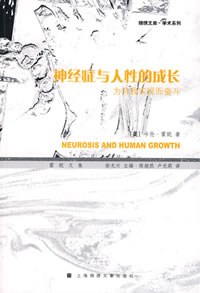
神经症与人性的成长 豆瓣
作者: [美] 霍妮 译者: 陈超然 / 卢光莉 出版社: 上海锦绣文章出版社 2008 - 8
《神经症与人性的成长:为自我实现而奋斗》是霍妮的代表作之一,对弗洛伊德理论进行系统批判,阐述了许多令人耳目一新的精神分析学理论。霍妮是知识女性的一面旗帜,是精神分析学园地的一朵奇葩,也是女性心理学的开拓者。霍妮年轻时接受弗洛伊德派的精神分析训练,但在此后的生涯中却公然与弗洛伊德派决裂,分庭抗礼,自创门派,独树一帜。这在当时确实具有过人的胆识。
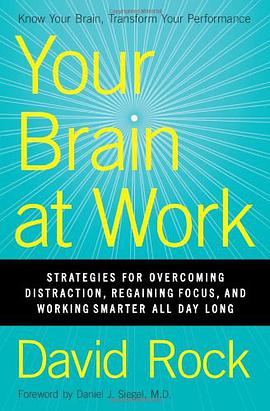
Your Brain at Work 豆瓣 Goodreads
作者: David Rock 出版社: Collins Business 2009 - 10
Meet Emily and Paul, the parents of two young children. Emily is a newly promoted executive in a large corporation, while Paul has his own business as a consultant. Their lives, like all of ours, are filled with a bewildering blizzard of emails, phone calls, yet more emails, meetings, projects, proposals, and plans. For them, just staying ahead of the storm has become a seemingly insurmountable task. In this book, we travel inside the brains of Emily and Paul as they attempt to sort the vast quantities of information they're presented with and figure out how to prioritize, organize, and act on it. Fortunately for Emily and Paul—and for readers of Your Brain at Work —they're in good hands: David Rock knows how the brain works—and more specifically, how it works in a work setting. Your Brain at Work explores: Why your brains feels so taxed, and how to take full advantage of your mental resources Why it's so hard to focus, and how to better manage distractions How to maximize your chance of finding insights that can solve seemingly insurmountable problems How to keep your cool in any situation, so that you can make the best decisions possible How to collaborate with others more effectively Why providing feedback is so difficult, and how to make it easier How to effectively change other people's behavior Rock shows how it's possible not only to survive in today's overwhelming work environment but to succeed in it—and still feel energized at the end of the day, with a sense of accomplishment.
群氓之族 豆瓣
Idols of the Tribe Group Identity and Political Change
8.2 (8 个评分) 作者: [美] 哈罗德·伊罗生 译者: 邓伯宸 出版社: 广西师范大学出版社 2008 - 5
本书从部落偶像、身体、名字、语言、宗教、民族、历史起源、新多元主义等多种角度,探讨群体认同在政治变迁压力下的自我塑造,缕析民族主义对世界格局的改变,以及认同问题对个人心理的巨大冲击。作者返回源头,从人性的基本面,考察群体认同的各种因素如何以不同的方式、在不同的环境,纠缠扭结,以致我们以各自的形态变成今天这副模样。
在全球化浪潮以摧枯拉朽之势将世界抹平的今天,人类各种族间的冲突却呈愈演愈烈之势,现代人对归属感的需要也变得空前迫切,焦虑感与孤独感成为心头的梦魇,挥之不去。阅读本书,既像是在读历史,又像是在读预言。读历史,是作者30年前所点名的族群冲突点已经一一爆发;读预言,则是作者早已看到一些进行式的和未来式的族群冲突。
人类的科技越来越全球化,政治却越来越部落化;人类的传播系统越来越普及化,对于该传播哪些东西却知道得越来越少;人类离其他的行星越来越近,对自己这颗行星上的同类却越来越不能容忍;活在分裂之中,人类越来越得不到尊严,却越来越趋于分裂。面对世界资源与权力的前所未有的激烈争夺,人类社会正把自己撕裂,撕裂成越来越小的碎片。 《群氓之族》是一本重要的学术著作,有广泛的影响力,从部落偶像、身体、名字、语言、宗教、民族、历史起源、新多元主义,来探讨群体认同与政治变迁。
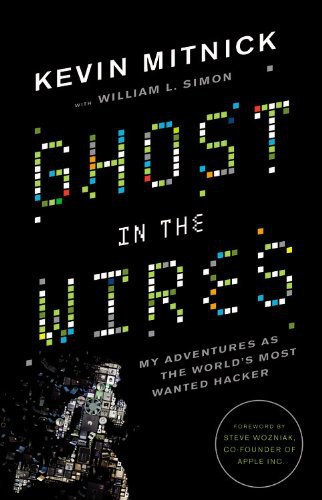
Ghost in the Wires 豆瓣 Goodreads
Kevin Mitnick
作者: Kevin Mitnick 出版社: Little, Brown and Company 2011 - 8
Kevin Mitnick, the world's most wanted computer hacker, managed to hack into some of the country's most powerful - and seemingly impenetrable - agencies and companies. By conning employees into giving him private information and maneuvering through layers of security, he gained access to data that no one else could. The suspenseful heart of the book unfolds as Mitnick disappears on a three-year run from the FBI. He creates fake identities, finds jobs at a law firm and hospital, and keeps tabs on his myriad pursuers - all while continuing to hack into computer systems and phone company switches that were considered flawless. A modern, technology-driven adventure story, GHOST IN THE WIRES is a dramatic account of the joy of outsmarting security programs, the satisfaction of code-cracking, and the thrill of unbelievable escape.
人格心理学 豆瓣
作者: [美] 兰迪·拉森 / [美] 戴维·巴斯 译者: 郭永玉 出版社: 人民邮电出版社 2011 - 8
一直以来,人格心理学不仅是心理学研究的重要领域,也是普通读者非常感兴趣的领域。近年来,人格心理学已经进入了它的黄金时期,本书的第二版汇聚并及时更新了人格领域内各个方面的研究成果,见证了该学科的繁荣景象。
本书不是围绕传统的人格的宏大理论来组织内容,而是设计了有关人格功能的六个重要知识领域这种框架,以问题为中心展开论述。这种架构给人耳目一新之感,代表着当代人格心理学体系建构的新趋势。这六大知识领域揭示了人格的不同侧面,它们分别是:特性领域(特质、特质分类和跨时间的人格特性),生物学领域(生理、遗传和进化),心理动力领域(心理动力、动机),认知经验领域(认知、情绪和自我),社会和文化领域(社会交互作用、性别和文化),以及调适领域(压力、应对、健康和人格障碍)。本书具有三个主要特点:第       一,强调人格的整体性。第二,注重联系性。第三,体系上具有新颖性。
本书既适用于心理学专业本科生、研究生和专家学者,也适合对人格感兴趣的读者拿来轻松阅读。
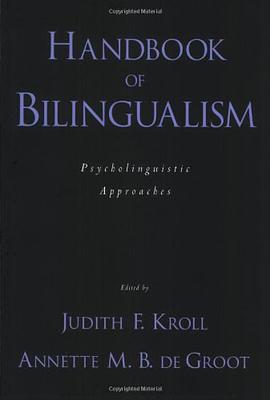
Handbook of Bilingualism 豆瓣
作者: Kroll, Judith F. (EDT)/ Degroot, Annette M. B. (EDT) 2009 - 2
How is language acquired when infants are exposed to multiple language input from birth and when adults are required to learn a second language after early childhood? How do adult bilinguals comprehend and produce words and sentences when their two languages are potentially always active and in competition with one another? What are the neural mechanisms that underlie proficient bilingualism? What are the general consequences of bilingualism for cognition and for language and thought? This handbook will be essential reading for cognitive psychologists, linguists, applied linguists, and educators who wish to better understand the cognitive basis of bilingualism and the logic of experimental and formal approaches to language science.
Second Language Acquisition 豆瓣
作者: Susan M. Gass / Larry Selinker 出版社: Routledge 2008 - 1
The new and updated edition of this bestselling introductory textbook is a comprehensive overview of the field of second language acquisition. In an easy-to-read, accessible style, it provides students with information about the scope of the field, but also provides background information on related areas such as first language acquisition. The book introduces students to current issues of data collection and data analysis, as well as provides an historical overview of the field, thus giving students context and perspective about how today's issues arise from earlier approaches.Each chapter offers discussion questions and/or problems so that students can put their knowledge to use in a way that is relevant to what they have learned, but that also challenges them to go beyond what is in the chapter and to relate information across chapters. The book covers a range of areas of second language research including sociolinguistic, psycholinguistic, and linguistic perspectives. It also includes a chapter on the lexicon and on instructed second language learning. The concluding chapter pulls the information in the previous chapters together into a coherent framework that challenges students to think about the field of second language acquisition as a whole.
性心理学 豆瓣
Psychology of Sex: A Manual for Students
作者: 亨利·赫福洛克·霭理士 译者: 潘光旦 译注 出版社: 生活·读书·新知三联书店 1987 - 7
霭理士是英国着名的性学权威,他的七大本的《性心理学研究录》对于医生、心理学者和其他的学术专家是相当重要的参考书。而霭理士在这部巨着之外另有一本比较尽人可读的性心理学,一面把《研究录》的内容则要再介绍一过,一面把《研究录》问世以后二十年里这门学问所已获得的新进步补叙进去。潘光旦先生的译本是公认该书的最佳译本。
焦虑、恐惧和恐怖的认知行为集体治疗 豆瓣
作者: Tian P.S.Oei 译者: 张新凯 出版社: 人民卫生出版社 2009 - 5
《焦虑、恐惧和恐怖的认知行为集体治疗》讲述了:我和Oei教授相识于2004年第28届世界心理学大会,会上我作的“社交焦虑障碍认知行为集体治疗的上海实践”的专业报告引起了Oei教授的兴趣,他主动和我交流关于CBGT的应用和推广问题。次年,Oei教授邀请我参加在香港中文大学召开的由他任学术主席的第一届亚洲认知行为治疗大会,这样,我有机会与Oei教授再次相会。在香港期间,我因专业兴趣使然,对Oei教授的临床工作和著述比较关心,尤其对他在CBG了.方面的经验和内容感兴趣,便向其请教,并邀请他到国内来为我的同行们提供有关CBG7’方面的专业指导和帮助。Oei教授有华人血统,虽然生在海外长在海外,不会说中文,但依然对中国有深厚感情,当即表示愿意与国内同行分享他的经验和体会,还送给我一本他所著的关于CBGT临床应用的专业著作。
恐惧与颤栗 豆瓣
Furcht und zittern
6.4 (5 个评分) 作者: (丹麦)日兰.克尔凯郭尔 译者: 一谌 / 肖聿 出版社: 华夏出版社 1999 - 1
基督教与古希腊—罗马古典传统的关系,因此是西方思想史上的枢纽性问题。本“西方传统:经典与解释”丛编旨在积累两类文献:一,历代基督教神学要著(教父时期、中古时期、近代时期和现代时期),这些论著与古希腊罗马的古典传统或多或少有这样或那样的关系;二,西方学界近百年来的研究成果。
恐惧 豆瓣
Fear
8.8 (22 个评分) 作者: [奥]斯蒂芬•茨威格 译者: 韩耀成 / 沈锡良 出版社: 陕西师范大学出版总社有限公司 2013 - 5
名家名作名译——悦经典01
探索女性终极心灵之谜
讴歌人类情感至高奇迹
★《一个陌生女人的来信》作者茨威格最值得珍藏的经典中篇全收录!
★著名德语翻译家韩耀成经典译本
茨威格是人类灵魂的猎手。(罗曼·罗兰)
===================
富有高贵的律师之妻伊蕾娜与一位年轻的钢琴家发生了婚外情。某天, 她忽然遭到一位女人的敲诈。害怕丑闻的曝光,担心失去富有的生活与高贵的地位,她的生活从此陷入了无边的恐惧之中……——《恐惧》
女人初遇男人的时候,她13岁,他23岁。18年后,他对于她是一生的挚爱,而她对于他只 是一个陌生人。——《一个陌生女人的来信》
C太太做梦也没想到,自己竟然在蒙特卡罗的赌场里因为一双年轻人的手而义无反顾地投身而入。二十四小时完全可能决定一个女人的命运。——《一个女人一生中的二十四小时》
Man's Search for Meaning 豆瓣 Goodreads Goodreads
Trotzdem ja zum Leben sagen: Ein Psychologe erlebt das Konzentrationslager
8.7 (21 个评分) 作者: Viktor E. Frankl 译者: Isle Lasch 出版社: Beacon Press 2006 - 6
Book Description
Frankl's timeless memoir and meditation on finding meaning in the midst of suffering With a new Foreword by Harold S. Kushner and a new Biographical Afterword by William J. Winslade Psychiatrist Viktor Frankl's memoir has riveted generations of readers with its descriptions of life in Nazi death camps and its lessons for spiritual survival. Between 1942 and 1945 Frankl labored in four different camps, including Auschwitz, while his parents, brother, and pregnant wife perished. Based on his own experience and the experiences of others he treated later in his practice, Frankl argues that we cannot avoid suffering but we can choose how to cope with it, find meaning in it, and move forward with renewed purpose. Frankl's theory-known as logotherapy, from the Greek word logos ("meaning")-holds that our primary drive in life is not pleasure, as Freud maintained, but the discovery and pursuit of what we personally find meaningful. At the time of Frankl's death in 1997, Man's Search for Meaning had sold more than 10 million copies in twenty-four languages. A 1991 reader survey for the Library of Congress that asked readers to name a "book that made a difference in your life" found Man's Search for Meaning among the ten most influential books in America. Beacon Press, the original English-language publisher of Man's Search for Meaning, is issuing this new paperback edition with a new Foreword, biographical Afterword, jacket, price, and classroom materials to reach new generations of readers.
Book Dimension
length: (cm)17.6                 width:(cm)10.6
Thinking, Fast and Slow 豆瓣 Goodreads
Thinking, Fast and Slow
8.3 (36 个评分) 作者: Daniel Kahneman 出版社: Farrar, Straus and Giroux 2011 - 10
Major New York Times bestseller
Winner of the National Academy of Sciences Best Book Award in 2012
Selected by the New York Times Book Review as one of the best books of 2011
A Globe and Mail Best Books of the Year 2011 Title
One of The Economist’s 2011 Books of the Year
One of The Wall Street Journal's Best Nonfiction Books of the Year 2011
In the international bestseller, Thinking, Fast and Slow, Daniel Kahneman, the renowned psychologist and winner of the Nobel Prize in Economics, takes us on a groundbreaking tour of the mind and explains the two systems that drive the way we think. System 1 is fast, intuitive, and emotional; System 2 is slower, more deliberative, and more logical. The impact of overconfidence on corporate strategies, the difficulties of predicting what will make us happy in the future, the profound effect of cognitive biases on everything from playing the stock market to planning our next vacation—each of these can be understood only by knowing how the two systems shape our judgments and decisions.
Engaging the reader in a lively conversation about how we think, Kahneman reveals where we can and cannot trust our intuitions and how we can tap into the benefits of slow thinking. He offers practical and enlightening insights into how choices are made in both our business and our personal lives—and how we can use different techniques to guard against the mental glitches that often get us into trouble. Winner of the National Academy of Sciences Best Book Award and the Los Angeles Times Book Prize and selected by The New York Times Book Review as one of the ten best books of 2011, Thinking, Fast and Slow is destined to be a classic.
One of the New York Times Book Review's Top 10 Books of 2011
Editorial Reviews
Amazon.com Review
Amazon Best Books of the Month, November 2011: Drawing on decades of research in psychology that resulted in a Nobel Prize in Economic Sciences, Daniel Kahneman takes readers on an exploration of what influences thought example by example, sometimes with unlikely word pairs like "vomit and banana." System 1 and System 2, the fast and slow types of thinking, become characters that illustrate the psychology behind things we think we understand but really don't, such as intuition. Kahneman's transparent and careful treatment of his subject has the potential to change how we think, not just about thinking, but about how we live our lives. Thinking, Fast and Slow gives deep--and sometimes frightening--insight about what goes on inside our heads: the psychological basis for reactions, judgments, recognition, choices, conclusions, and much more. --JoVon Sotak
Review
“A tour de force. . . Kahneman’s book is a must read for anyone interested in either human behavior or investing. He clearly shows that while we like to think of ourselves as rational in our decision making, the truth is we are subject to many biases. At least being aware of them will give you a better chance of avoiding them, or at least making fewer of them.”—Larry Swedroe, CBS News
“Daniel Kahneman demonstrates forcefully in his new book, Thinking, Fast and Slow, how easy it is for humans to swerve away from rationality.”—Christopher Shea, The Washington Post
“An outstanding book, distinguished by beauty and clarity of detail, precision of presentation and gentleness of manner. Its truths are open to all those whose System 2 is not completely defunct. I have hardly touched on its richness.”— Galen Strawson, The Guardian
“Brilliant . . . It is impossible to exaggerate the importance of Daniel Kahneman’s contribution to the understanding of the way we think and choose. He stands among the giants, a weaver of the threads of Charles Darwin, Adam Smith and Sigmund Freud. Arguably the most important psychologist in history, Kahneman has reshaped cognitive psychology, the analysis of rationality and reason, the understanding of risk and the study of happiness and well-being . . . A magisterial work, stunning in its ambition, infused with knowledge, laced with wisdom, informed by modesty and deeply humane. If you can read only one book this year, read this one.”— Janice Gross Stein, The Globe and Mail
“A sweeping, compelling tale of just how easily our brains are bamboozled, bringing in both his own research and that of numerous psychologists, economists, and other experts...Kahneman has a remarkable ability to take decades worth of research and distill from it what would be important and interesting for a lay audience...Thinking, Fast and Slow is an immensely important book. Many science books are uneven, with a useful or interesting chapter too often followed by a dull one. Not so here. With rare exceptions, the entire span of this weighty book is fascinating and applicable to day-to-day life. Everyone should read Thinking, Fast and Slow.” —Jesse Singal, Boston Globe
“We must be grateful to Kahneman for giving us in this book a joyful understanding of the practical side of our personalities.” —Freeman Dyson, The New York Review of Books
“Brilliant . . . It is impossible to exaggerate the importance of Daniel Kahneman’s contribution to the understanding of the way we think and choose. He stands among the giants, a weaver of the threads of Charles Darwin, Adam Smith and Sigmund Freud. Arguably the most important psychologist in history, Kahneman has reshaped cognitive psychology, the analysis of rationality and reason, the understanding of risk and the study of happiness and well-being . . . A magisterial work, stunning in its ambition, infused with knowledge, laced with wisdom, informed by modesty and deeply humane. If you can read only one book this year, read this one.” — Janice Gross Stein, The Globe and Mail
“It is an astonishingly rich book: lucid, profound, full of intellectual surprises and self-help value. It is consistently entertaining and frequently touching, especially when Kahneman is recounting his collaboration with Tversky . . . So impressive is its vision of flawed human reason that the New York Times columnist David Brooks recently declared that Kahneman and Tversky’s work ‘will be remembered hundreds of years from now,’ and that it is ‘a crucial pivot point in the way we see ourselves.’ They are, Brooks said, ‘like the Lewis and Clark of the mind’ . . . By the time I got to the end of Thinking, Fast and Slow, my skeptical frown had long since given way to a grin of intellectual satisfaction. Appraising the book by the peak-end rule, I overconfidently urge everyone to buy and read it. But for those who are merely interested in Kahenman’s takeaway on the Malcolm Gladwell question it is this: If you've had 10,000 hours of training in a predictable, rapid-feedback environment—chess, firefighting, anesthesiology—then blink. In all other cases, think.”—The New York Times Book Review
“Ask around and you hear pretty much the same thing. 'Kahneman is the most influential psychologist since Sigmund Freud,' says Christopher Chabris, a professor of psychology at Union College, in New York. 'No one else has had such a broad impact on so many fields' . . . It now seems inevitable that Kahneman, who made his reputation by ignoring or defying conventional wisdom, is about to be anointed the intellectual guru of our economically irrational times.”— Evan R. Goldstein, The Chronicle of Higher Education
“There have been many good books on human rationality and irrationality, but only one masterpiece. That masterpiece is Daniel Kahneman’s Thinking, Fast and Slow . . . This is one of the greatest and most engaging collections of insights into the human mind I have read.”—William Easterly, Financial Times
“[Thinking, Fast and Slow] is wonderful, of course. To anyone with the slightest interest in the workings of his own mind, it is so rich and fascinating that any summary would seem absurd.”— Michael Lewis, Vanity Fair
“Absorbingly articulate and infinitely intelligent . . . What's most enjoyable and compelling about Thinking, Fast and Slow is that it's so utterly, refreshingly anti-Gladwellian. There is nothing pop about Kahneman's psychology, no formulaic story arc, no beating you over the head with an artificial, buzzword-encrusted Big Idea. It's just the wisdom that comes from five decades of honest, rigorous scientific work, delivered humbly yet brilliantly, in a way that will forever change the way you think about thinking.”—Maria Popova, The Atlantic
“I will never think about thinking quite the same. [Thinking, Fast and Slow] is a monumental achievement.”—Roger Lowenstein, Bloomberg/Businessweek
“Profound . . . As Copernicus removed the Earth from the centre of the universe and Darwin knocked humans off their biological perch, Mr. Kahneman has shown that we are not the paragons of reason we assume ourselves to be.” —The Economist
“[Kahneman’s] disarmingly simple experiments have profoundly changed the way that we think about thinking . . . We like to see ourselves as a Promethean species, uniquely endowed with the gift of reason. But Mr. Kahneman’s simple experiments reveal a very different mind, stuffed full of habits that, in most situations, lead us astray.” —Jonah Lehrer, The Wall Street Journal
“[A] tour de force of psychological insight, research explication and compelling narrative that brings together in one volume the high points of Mr. Kahneman's notable contributions, over five decades, to the study of human judgment, decision-making and choice . . . Thanks to the elegance and force of his ideas, and the robustness of the evidence he offers for them, he has helped us to a new understanding of our divided minds—and our whole selves.” —Christoper F. Chabris, The Wall Street Journal
“The ramifications of Kahenman’s work are wide, extending into education, business, marketing, politics . . . and even happiness research. Call his field “psychonomics,” the hidden reasoning behind our choices. Thinking, Fast and Slow is essential reading for anyone with a mind.” —Kyle Smith, The New York Post
“A major intellectual event . . . The work of Kahneman and Tversky was a crucial pivot point in the way we see ourselves.” —David Brooks, The New York Times
“Kahneman provides a detailed, yet accessible, description of the psychological mechanisms involved in making decisions.” —Jacek Debiec, Nature
“With Kahneman’s expert help, readers may understand this mix of psychology and economics better than most accountants, therapists, or elected representatives. VERDICT A stellar accomplishment, a book for everyone who likes to think and wants to do it better.” —Library Journal
“The mind is a hilariously muddled compromise between incompatible modes of thought in this fascinating treatise by a giant in the field of decision research. Nobel-winning psychologist Kahneman (Attention and Effort) posits a brain governed by two clashing decision-making processes. The largely unconscious System 1, he contends, makes intuitive snap judgments based on emotion, memory, and hard-wired rules of thumb; the painfully conscious System 2 laboriously checks the facts and does the math, but is so "lazy" and distractible that it usually defers to System 1. Kahneman uses this scheme to frame a scintillating discussion of his findings in cognitive psychology and behavioral economics, and of the ingenious experiments that tease out the irrational, self-contradictory logics that underlie our choices. We learn why we mistake statistical noise for cohere...
How Children Learn the Meanings of Words 豆瓣
作者: Paul Bloom 出版社: A Bradford Book 2002 - 3
Winner of the 2002 Eleanor Maccoby Book Award in Developmental Psychology presented by Division 7 (Developmental Psychology Division) of the American Psychological Association (APA). The award is given to the author of a book in the field of psychology that has had or promises to have a profound effect on one or more of the areas represented by Division 7 of the APA. and Winner of the 2000 Professional/Scholarly Publishing Division Annual Awards Competition in the category of Psychology, presented by the Association of American Publishers, Inc.
How do children learn that the word "dog" refers not to all four-legged animals, and not just to Ralph, but to all members of a particular species? How do they learn the meanings of verbs like "think," adjectives like "good," and words for abstract entities such as "mortgage" and "story"? The acquisition of word meaning is one of the fundamental issues in the study of mind.
According to Paul Bloom, children learn words through sophisticated cognitive abilities that exist for other purposes. These include the ability to infer others' intentions, the ability to acquire concepts, an appreciation of syntactic structure, and certain general learning and memory abilities. Although other researchers have associated word learning with some of these capacities, Bloom is the first to show how a complete explanation requires all of them. The acquisition of even simple nouns requires rich conceptual, social, and linguistic capacities interacting in complex ways.
This book requires no background in psychology or linguistics and is written in a clear, engaging style. Topics include the effects of language on spatial reasoning, the origin of essentialist beliefs, and the young child's understanding of representational art. The book should appeal to general readers interested in language and cognition as well as to researchers in the field.
像我们一样疯狂 豆瓣
Crazy Like Us: The Globalization of the American Psyche
8.6 (40 个评分) 作者: [美] 亿森·沃特斯 译者: 黄晓楠 出版社: 北京师范大学出版社 2016 - 8
本书是美国著名作家伊森·沃特斯享誉心理学界的非虚构著作。他以一个心理学记者的独特视角, 通过采访四个国家和地区的心理疾病案例,生动展现了关于厌食症、创伤后应激障碍、精神分裂和抑郁症在不同文化中的“地貌”,强有力地说明了美国的心理学范式是如何在其医药商业利益驱动下输出全世界,潜移默化地改变本土心理疾病的现象。
作者认为,在过去的几十年中,美国已经在源源不断地以全球工业化的方式输出他们自己的心理疾病定义和治疗方法。由此, 美国的心理学在不知不觉中将全世界如何"疯狂"的方式变得越来越相似, 越来越同质化。
精神病态者的科学 豆瓣
The Psychopath Whisperer
作者: 肯特·基尔 出版社: 湖南科学技术出版社 2016 - 10
这是来自美国最高戒备监狱的一手资料,世界顶级心理学家、脑神经科学家与冷血杀手的灵魂访谈,你会发现让你颤抖惊悚的远远不止变态杀手在犯罪现场留下的行为签名,而是罪犯的心理,确切地说——是他们的大脑和基因,他们是天生变态狂!
绝对颠覆的阅读体验:
连环杀手为何产生性变态、恋物癖、精神分裂、反社会、强奸、碎尸等变态心理和行为?
连环杀手日常生活中和普通人有区别吗?
连环杀手真的在3岁就注定了吗?
人一生平均要遇到多少谋杀犯?
如何从变态狂手下逃生?
本书作者基尔博士制造了世界上第一台移动式功能磁共振扫描仪,扫描了500多名精神病态者和3000多名暴力罪犯,建立了世界上最大的法医神经科学数据库。本书不仅揭示了精神病态者的大脑和基因缺陷,又真实可信地刻画了精神病态到底是什么样子。不是小说,却更摄人心魄!
我们时代的神经症人格 豆瓣
8.9 (66 个评分) 作者: [美] 卡伦·霍尼 译者: 冯川 出版社: 译林出版社 2011 - 5
《我们时代的神经症人格》是作者的代表作,全面分析了现代人的病态心理和变态人格。作者认为,我们每个人的内心时刻处于各种矛盾与冲突之中,而最主要的冲突就是我们都同时具有“亲近人”、“对抗人”、“逃避人”的冲动。这些冲动若协调不好,就会使我们陷入各种各样的焦虑和神经症。 《我们时代的神经症人格》由卡伦·霍尼编著。