文化研究
甜与权力 Douban
Sweetness and Power: The Place of Sugar in Modern History
《甜与权力》一书便是一个绝佳范例。作为一部人类学经典作品,西敏司娓娓道来的是糖这件平常事物身后奇妙而非同寻常的历史。聚焦于工业化早期的英格兰以及美洲加勒比殖民地的甘蔗种植园,西敏司把糖的命运讲述得格外深刻而不乏趣味。书中我们看到了糖从一件奢侈品化身为工业化生产之商品的过程,在这个过程中它密切地与早期资本主义原始积累、奴隶化生产,乃至国与国之间的政治经济关系联系在了一起。与此同时,我们也看到了糖是如何经过一个自上而下的复杂文化过程,一步步地嵌入到了日常生活的肌理之中。人类学家如何从纷繁的历史材料中发潜阐幽?如何在平凡处着眼进而揭示出背后的不平凡?
Brooklyn Bridge Douban
author:
Alan Trachtenberg
publishing house:
University Of Chicago Press
1979
- 7
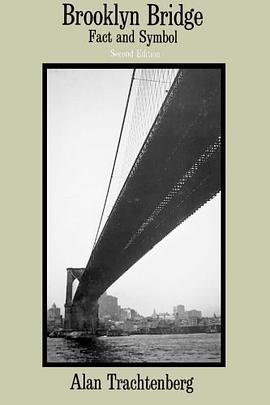
Fourteen of Walker Evans's evocative photographs of Brooklyn Bridge, most of which have never been published, appear in this edition of Alan Trachenberg's "Brooklyn Bridge: Fact and Symbol." In the new afterword Trachenberg explores the history of Hart Crane's "The Bridge," especially the poem's integral relationship with the powerful photography of Evans.
"[Brooklyn Bridge] is familiar in so many movies, in so many stage sets and, as Mr. Trachtenberg shows in this brilliant . . . book, it is at least as much a symbol as a reality. . . . Mr. Trachtenberg is always exciting and illuminating."--"Times Literary Supplement
""The book is a skillful and insightful synthesis of materials about Brooklyn Bridge from such diverse fields as history, engineering, literature and art. Essentially it asks the question of why Brooklyn Bridge achieved such great impact on the nineteenth century American imagination and why it has continued to have a significant impact on twentieth century art and literature. In addition to its exploration of the bridge's symbolic significance, which includes perceptive analyses of such particular works as Hart Crane's great poem cycle and the paintings of artists like Joseph Stella, the book also includes a solidly researched account of the conception, planning and construction of the bridge. Trachtenberg's account of the intellectual and cultural sources of the bridge is particularly fascinating in its demonstration of the convergence of many different philosophical and ideological currents of the time around this great engineering enterprise, illustrating as effectively as any discussion I know the complex interplay of ideas and material culture."--John G. Cawelti, University of Chicago
"Alan Trachtenberg's "Brooklyn Bridge" is a fascinating story, the philosophic genesis of the idea in Europe, John Roebling's heroic effort to translate it into masonry and steel, and the meanings that Americans attached to the physical object as an emblem of their aspirations."--Leo Marx, Amherst College, author of "The Machine in the Garden"
"[Brooklyn Bridge] is familiar in so many movies, in so many stage sets and, as Mr. Trachtenberg shows in this brilliant . . . book, it is at least as much a symbol as a reality. . . . Mr. Trachtenberg is always exciting and illuminating."--"Times Literary Supplement
""The book is a skillful and insightful synthesis of materials about Brooklyn Bridge from such diverse fields as history, engineering, literature and art. Essentially it asks the question of why Brooklyn Bridge achieved such great impact on the nineteenth century American imagination and why it has continued to have a significant impact on twentieth century art and literature. In addition to its exploration of the bridge's symbolic significance, which includes perceptive analyses of such particular works as Hart Crane's great poem cycle and the paintings of artists like Joseph Stella, the book also includes a solidly researched account of the conception, planning and construction of the bridge. Trachtenberg's account of the intellectual and cultural sources of the bridge is particularly fascinating in its demonstration of the convergence of many different philosophical and ideological currents of the time around this great engineering enterprise, illustrating as effectively as any discussion I know the complex interplay of ideas and material culture."--John G. Cawelti, University of Chicago
"Alan Trachtenberg's "Brooklyn Bridge" is a fascinating story, the philosophic genesis of the idea in Europe, John Roebling's heroic effort to translate it into masonry and steel, and the meanings that Americans attached to the physical object as an emblem of their aspirations."--Leo Marx, Amherst College, author of "The Machine in the Garden"

性之变 Douban Goodreads Goodreads
8.1 (18 ratings)
author:
潘绥铭
/
黄盈盈
publishing house:
中国人民大学出版社
2013
- 7
在潘绥铭教授的主持下,中国人民大学性社会学研究所在2000年、2006年和2010年,三次对中国人的性生活与性关系进行了全国总人口的随机抽样调查。这本书就是三次调查的结果的汇总与分析。
本书深刻地揭示出,在21世纪的前10年里,中国人的性生活与性关系都发生了巨大的变化,其中有一些很出乎人们的意料。本书分为多个专题,不仅包括18~61岁中国人的性观念、性欲、性生活、性技巧等,也包括婚外情、一夜情、找“小姐”等各种非主流的性关系,还包括14~17岁少年的性状况,更包括了“多元性别”与同性恋等的情况。在每个专题里不仅发布了大量的统计数据,而且剖析了这些现象的形成原因,还从性文化的高度进行了深入阐述。
本书深刻地揭示出,在21世纪的前10年里,中国人的性生活与性关系都发生了巨大的变化,其中有一些很出乎人们的意料。本书分为多个专题,不仅包括18~61岁中国人的性观念、性欲、性生活、性技巧等,也包括婚外情、一夜情、找“小姐”等各种非主流的性关系,还包括14~17岁少年的性状况,更包括了“多元性别”与同性恋等的情况。在每个专题里不仅发布了大量的统计数据,而且剖析了这些现象的形成原因,还从性文化的高度进行了深入阐述。

过渡礼仪 Douban
Les rites de passage
8.9 (11 ratings)
author:
[法] 阿诺尔德·范热内普
translator:
张举文
publishing house:
商务印书馆
2010
- 11
《过渡礼仪》主要内容简介:出生、结婚、怀孕、死亡、季节转换等地位变化的事件,往往会以过渡礼仪来加以标识。范热内普在《过渡礼仪》中所提出的过渡礼仪之分隔-边缘-聚合三阶段模式,及其对各阶段象征意义的分析,使此模式已成为民俗学的一个根本理论,也成为人类学和其他学科研究仪式行为的一个经典概念。
这部首版于1909年的著作,对仪式机制和人类行为研究的贡献是多方面和意义深远的。正如当代美国著名民俗学家邓迪斯所评价的,“也许可以公平地说,民俗学分析性著作对学术界所产生的影响没有一部可超过这一经典研究。”
这部首版于1909年的著作,对仪式机制和人类行为研究的贡献是多方面和意义深远的。正如当代美国著名民俗学家邓迪斯所评价的,“也许可以公平地说,民俗学分析性著作对学术界所产生的影响没有一部可超过这一经典研究。”
Hegemony and Socialist Strategy Douban
author:
Ernesto Laclau
/
Chantal Mouffe
publishing house:
Verso
2001
- 6
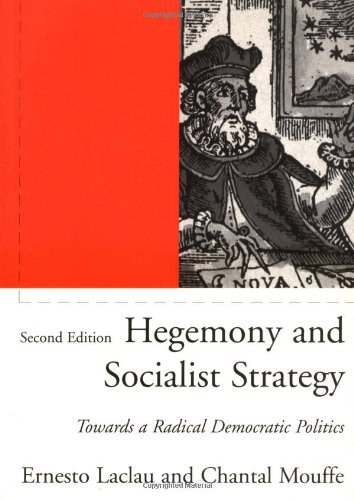
Since its original publication fifteen years ago, this hugely influential book has been at the centre of much debate. The arguments and controversies it has been aroused are, furthermore, far from abating: the disintegration of the Soviet bloc, the emergence of new social and political identities linked to the transformation of late capitalism, and the crisis of a left-wing project whose essentialist underpinnings have increasingly come under fire have, if anything, made more relevant than ever the theoretical perspective that the book proposes. Moreover the political project of 'radical and plural democracy' that it advocates provides a much-needed antidote to the attempts to formulate a Third Way capable of overcoming the classical opposition between Left and Right. Updated with a new preface, this is a fundamental text for understanding the workings of hegemony and grasping the nature of contemporary social struggle and their significance for democratic theory.

视差之见 Douban
The Parallax View
8.7 (6 ratings)
author:
[斯洛文尼亚] 斯拉沃热·齐泽克
translator:
季广茂
publishing house:
浙江大学出版社
2014
本书是齐泽克最重要的理论作品,齐泽克把它视为自己的代表作(magnum opus),在这部著作中,他把自己原本分散的哲学见解整合起来,使之融为一体,提出了一套独特的存有论。何谓视差?视差本是天文学概念,指从保持一定距离的两个点观察同一个目标时所产生的方向差异。在齐泽克看来,审视同一个客体时,视差是由两个互不兼容的视角构成的,这两个视角之间存在着不可化约的非对称性。以视差为起点,齐泽克透过黑格尔和拉康解读哲学、科学和政治理论,借助辩证思维和精神分析范畴分析当代文化,重新激活马克思主义对全球资本主义的批判。
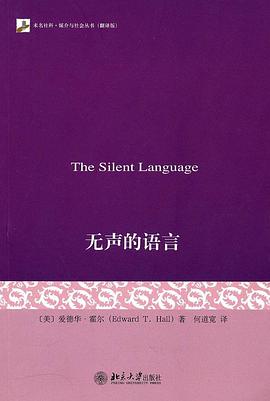
无声的语言 Douban
author:
[美] 爱德华·霍尔
translator:
何道宽
publishing house:
北京大学出版社
2010
- 11
《无声的声言》是跨文化传播(交际)学的奠基之作,视野宏阔,洞见深刻,理沦崭新。霍尔按知觉程度将文化分为显形、隐形和技术性三个层次,按内部构造将文化分为元素、集合和模式。他系统讲解直观而实用的“文化教学示意图”,解说文化变革,提出“文化即是交流”的命题,首倡“时间语言”和 “空间语言”,并给予生动的解说,意在帮助人们挣脱文化枷锁,逃离文化囚笼。
跨文化传播(交际)学之父爱德华·霍尔筚路蓝缕的精心之作前无古人,达到了后人也难以企及的高度,魅力经久不衰。
《无声的语言》在传播学的发展中给人启迪,在“和谐世界”的构建中给人信心,它扫荡隐形障碍,提高文化觉悟,激励世界各国人民互相学习和尊重。
(正在采用)
跨文化传播(交际)学之父爱德华·霍尔筚路蓝缕的精心之作前无古人,达到了后人也难以企及的高度,魅力经久不衰。
《无声的语言》在传播学的发展中给人启迪,在“和谐世界”的构建中给人信心,它扫荡隐形障碍,提高文化觉悟,激励世界各国人民互相学习和尊重。
(正在采用)
后现代性下的生命与多重时间 Douban
Life and Times of Post-Modernity
9.8 (9 ratings)
author:
[英] 基思·特斯特
translator:
李康
publishing house:
北京大学出版社
2010
- 3
本书分六章:界限、特性/身份/认同、怀旧/恋乡、技术、责任、他人,将文学、历史、哲学融合到一起,探讨了当今社会中的生活、时间、意义及其全球影响。
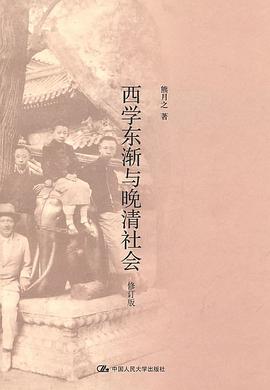
西学东渐与晚清社会(修订版) Douban
author:
熊月之
publishing house:
中国人民大学出版社
2011
- 3
西学东渐是发生在近代中国的大事,影响广泛、持久而深刻。熊月之编著的《西学东渐与晚清社会(修订版)》独辟蹊径,对晚清西学传播全过程进行了分析,从了解世界、求强求富、救亡图存、民主革命、科学启蒙这五大主题逐一进行梳理讨论。除了国内重要图书馆,作者还广求史料于英国、美国与日本等地,利用众多著名研究重镇的相关图书和档案,史料根基扎实,分析细致,对西学东渐史上许多重大问题提出了独到见解。全书逻辑严密,文字清新,图片丰美,便于读者全面、深入地理解那段波澜壮阔、色彩斑斓的历史。
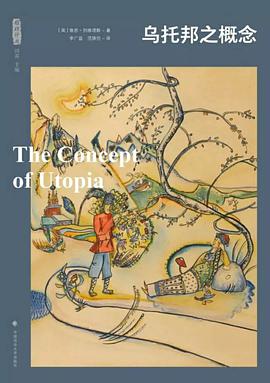
乌托邦之概念 Douban
author:
[英]鲁思·列维塔斯
translator:
李广益
/
范轶伦
publishing house:
中国政法大学出版社
2018
- 3
在这本极具影响力的著作中,李维塔斯为我们提供了一个关于乌托邦概念的含义与意义的绝佳导论,作者探讨了来自文学和社会理论的丰富材料,以论证乌托邦的深厚历史和分析的多元性。李维塔斯将乌托邦置于现代想象力的语境内,检视了许多论述现代性的思想领袖对乌托邦概念的运用方式:包括马克思、恩格斯、卡尔·曼海姆、罗伯特·欧文、索莱尔、布洛克、威廉·莫里森与马尔库塞。乌托邦至今仍是想象和生产一个“更美好世界”的最有利的世俗性概念,根据本书作者,乌托邦是在文本和政治实践中对更好生活方式的欲求的一种表达,而乌托邦的渴求至今在文化和政治中仍是一种积极的元素。而本书作为一个经典文本,对许多学科内的研究者而言都是无价的智识瑰宝。

神话修辞术/批评与真实 Douban
9.2 (10 ratings)
author:
[法] 罗兰·巴特
translator:
屠友祥
/
温晋仪
publishing house:
上海人民出版社
2009
- 8
本书收录巴特的两种著作,前者约14万字,后者2万余字。1952年巴特进入国家科学研究中心从事词汇学和社会学研究,在其后的七年间在《新文艺》杂志上发表了许多揭露大众文化迷思的文章,后来集结成《神话修辞术》(Mythologies, 1957)。从此,巴特被公认是关于我们怎样通过语言、服饰、手势相互交流的最有独创性的评论家之一。60年代初期,巴特在社会科学高等学院研究符号学和结构主义,他对传统学院文学理论观点以及大众文学形态作了论述,其独特的观点被称为新批评,引起其他思想家的不满,认为他漠视和不尊重文化中的文学根源。巴特则发表《批评与真实》(Critique et verite, 1966)与其对抗,控诉那种陈旧的、布尔乔亚式的不重视语言细节、刻意忽视其他理论概念(如马克思主义)挑战的批评方式;他热情地呼吁读者要摆脱既成观念,按照现代思想看待文学作品,而文学作品总是先由一种语言与其自身的冲突组成的。
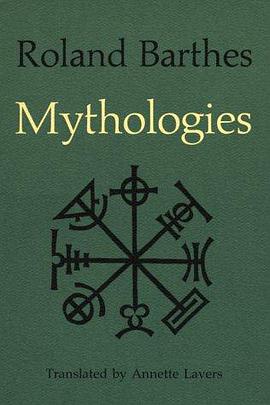
Mythologies Douban
author:
Barthes Roland
translator:
Annette Lavers
publishing house:
Hill & Wang
1972
- 1
"[Mythologies] illustrates the beautiful generosity of Barthes's progressive interest in the meaning (his word is signification) of practically everything around him, not only the books and paintings of high art, but also the slogans, trivia, toys, food, and popular rituals (cruises, striptease, eating, wrestling matches) of contemporary life . . . For Barthes, words and objects have in common the organized capacity to say something; at the same time, since they are signs, words and objects have the bad faith always to appear natural to their consumer, as if what they say is eternal, true, necessary, instead of arbitrary, made, contingent. Mythologies finds Barthes revealing the fashioned systems of ideas that make it possible, for example, for 'Einstein's brain' to stand for, be the myth of, 'a genius so lacking in magic that one speaks about his thought as a functional labor analogous to the mechanical making of sausages.' Each of the little essays in this book wrenches a definition out of a common but constructed object, making the object speak its hidden, but ever-so-present, reservoir of manufactured sense."--Edward W. Said
This text refers to the Paperback edition.
This text refers to the Paperback edition.
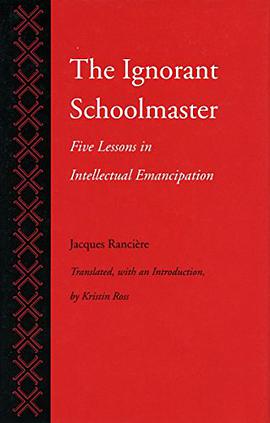
The Ignorant Schoolmaster Douban Goodreads Skybridge
author:
Jacques Rancière
translator:
Kristin Ross
publishing house:
Stanford University Press
1991
- 7
other title:
The Ignorant Schoolmaster: Five Lessons in Intellectual Emancipation
Review
'An extremely provocative, original, and engaging book, it raises questions of great relevance and urgency about the process of cultural selection and canonization.'Denis Hollier, Yale UniversityIgnorant Schoolmaster
In The Ignorant Schoolmaster, Rancière uses the historical figure of Joseph Jacotot as a way of discussing human nature, education, pedagogy, ignorance, intelligence, and emancipation. These ideas have profound implications on the nature of schooling and research, and the role that teachers and scholars play. Contents [hide]
1 Joseph Jacotot (1770-1840)
2 Explication
3 Emancipation
4 Ignorance
5 Intelligence
6 Will
7 Language
[edit]
Joseph Jacotot (1770-1840)
Jacotot was a French instructor who taught subjects as far-ranging as French, literature, mathematics, ideology and law (p. 1). He had a profound realization one time when he had to teach a group of Flemish students French. Since he didn’t know Flemish himself, he had the challenge of teaching these students French.
[edit]
Explication
The conventional view of the teacher’s (or master’s, as Rancière calls it), is to “explicate”. But Jacotot noticed that his Flemish students were able to learn French without any explication from him. He had given them a bilingual text of Télémaque; using that, his students were able to eventually under French grammar and spelling, using a text that was aimed for adults, and not “simplified” for school children. Jacotot (or maybe Rancière?) was inspired to ask: Were schoolmaster’s explications superfluous? (p. 4) Rancière believes that explication stultifies learning by short-circuiting the journey that the student is able to make. Teachers who rely on explication inadvertently creates a “veil of ignorance” (p. 6) what the student is expected to learn, thus creating a world of superior (i.e. the master, the explicator) and inferior (i.e. the student, the ignorant). But Rancière believes that all people are capable of learning without explication because they have all acquired their mother tongues without explication (p. 5, 10). They learn, imitate, and correct themselves, and universally, all children will grow up to understand their parents without every spent one day in school. Why do we presume this intelligence goes away?
[edit]
Emancipation
Rancière distinguishes between two human traits: intelligence and will. In Jacotot’s classroom, there are two wills (the students’ and Jacotot’s) and two intelligences (the students’ and the book’s). Students may need to follow the teacher’s will, who guides them towards the subject. But stultification occurs when the students’ intelligences are linked with the teacher’s, when they have to rely on the schoolmaster to explain what they have learned. The opposite of stultification is, therefore, emancipation. But who emancipates? Once again, conventionally, it is the scholar, the philosopher, the wise, the learned, the Teachers College doctoral student. But Rancière believes that the only way to emancipate is when an intelligence obeys only itself even if its will obeys another’s will (p. 13). In reality, universal teaching has existed since the beginning of the world, alongside all the explicative methods...Everyone has done this experiment a thousand times in life, and yet it has never occurred to someone to say to someone else: I’ve learned many things without explanations, I think that you can too... (p. 16)In Jacotot’s class, the students learned using their own methods, not his. And in the end, they learned French, and they have done so using the oldest method in the world: universal teaching.
[edit]
Ignorance
Rancière argues that the “Socratic Method” is a perfected form of stultification, where the role of the Master is to interrogate (demand speech) and verify that intelligence is done with attention (p. 29). Even if these pedagogies are aimed at “empowering” the student, it is still done so after the master has verified it. Thus, it is still the master’s method, not the student’s.
The ignorant schoolmaster does not verify what the student has found, only that the student has searched (p. 31). This means that anyone, including illiterate parents, can teach their children how to read and write. For example, they can question whether they pronounce the same word each time in the same way, or hide it under their hand and ask the student what is under it. This is true not only for re
[edit]
Intelligence
Most people become stultified because they believe in their inferiority (p. 39). And superior minds can only be superior if they can make everyone else inferior. Thus we never break out of that circle, not matter how generous our intentions may be. The word intelligence is often understood as a number, or variable, that describes different people’s capacities to comprehend complex ideas or solve logic problems. But Rancière believes that everyone has the same intelligence (p. 50). He argues that a statement like “Bob is smarter because he produces better work” is a tautological statement that explains nothing. It’s true that people will produce different types of work, but he doesn’t see this as the result of different intelligence, but as a result of not bringing sufficient attention to the work.
[edit]
Will
Intelligence has to do with attention while will has to do with the “power to be moved” (p. 54). Rancière argues that each of us represents a will that is served by an intelligence. We see, analyze, compare, reason, correct, reconsider, on an everyday basis. We do not always learn the same things because we do not pay the same amount of attention to the situation. Furthermore, he suggests that “[m]eaning is the work of the will” (p. 56). He calls “secret” of universal teaching, something that geniuses all know. All humans are capable of anything they want.
[edit]
Language
Jacotot/Rancière believed that truth cannot be told. When it is expressed in language it becomes fragmented (p. 60). Hence, he goes into the arbitrariness of language to suggest that there is no language that is superior than others because they are equally arbitrary. Intelligence does not have a language. As Jacotot argued, we are not intelligent because we speak; we are intelligent because we exist. But this is not a problem. It is precisely because all languages are arbitrary that we employ all we have access to (including but not limited to language) in expressing truth. (p. 62) Rancière calls our expression through language as a form of art, like improvisation. He calls “telling the story” and “figuring things out” the two master operations of intelligence (p. 64). He believes that the artist is the exact opposite of the professor. He argues: “Each one of us is an artist to the extent that he carries out a double process; he is not content to be a mere journeyman but wants to make all work a means of expression, and he is not content to feel something but tries to impart it to others” (p. 70).
'An extremely provocative, original, and engaging book, it raises questions of great relevance and urgency about the process of cultural selection and canonization.'Denis Hollier, Yale UniversityIgnorant Schoolmaster
In The Ignorant Schoolmaster, Rancière uses the historical figure of Joseph Jacotot as a way of discussing human nature, education, pedagogy, ignorance, intelligence, and emancipation. These ideas have profound implications on the nature of schooling and research, and the role that teachers and scholars play. Contents [hide]
1 Joseph Jacotot (1770-1840)
2 Explication
3 Emancipation
4 Ignorance
5 Intelligence
6 Will
7 Language
[edit]
Joseph Jacotot (1770-1840)
Jacotot was a French instructor who taught subjects as far-ranging as French, literature, mathematics, ideology and law (p. 1). He had a profound realization one time when he had to teach a group of Flemish students French. Since he didn’t know Flemish himself, he had the challenge of teaching these students French.
[edit]
Explication
The conventional view of the teacher’s (or master’s, as Rancière calls it), is to “explicate”. But Jacotot noticed that his Flemish students were able to learn French without any explication from him. He had given them a bilingual text of Télémaque; using that, his students were able to eventually under French grammar and spelling, using a text that was aimed for adults, and not “simplified” for school children. Jacotot (or maybe Rancière?) was inspired to ask: Were schoolmaster’s explications superfluous? (p. 4) Rancière believes that explication stultifies learning by short-circuiting the journey that the student is able to make. Teachers who rely on explication inadvertently creates a “veil of ignorance” (p. 6) what the student is expected to learn, thus creating a world of superior (i.e. the master, the explicator) and inferior (i.e. the student, the ignorant). But Rancière believes that all people are capable of learning without explication because they have all acquired their mother tongues without explication (p. 5, 10). They learn, imitate, and correct themselves, and universally, all children will grow up to understand their parents without every spent one day in school. Why do we presume this intelligence goes away?
[edit]
Emancipation
Rancière distinguishes between two human traits: intelligence and will. In Jacotot’s classroom, there are two wills (the students’ and Jacotot’s) and two intelligences (the students’ and the book’s). Students may need to follow the teacher’s will, who guides them towards the subject. But stultification occurs when the students’ intelligences are linked with the teacher’s, when they have to rely on the schoolmaster to explain what they have learned. The opposite of stultification is, therefore, emancipation. But who emancipates? Once again, conventionally, it is the scholar, the philosopher, the wise, the learned, the Teachers College doctoral student. But Rancière believes that the only way to emancipate is when an intelligence obeys only itself even if its will obeys another’s will (p. 13). In reality, universal teaching has existed since the beginning of the world, alongside all the explicative methods...Everyone has done this experiment a thousand times in life, and yet it has never occurred to someone to say to someone else: I’ve learned many things without explanations, I think that you can too... (p. 16)In Jacotot’s class, the students learned using their own methods, not his. And in the end, they learned French, and they have done so using the oldest method in the world: universal teaching.
[edit]
Ignorance
Rancière argues that the “Socratic Method” is a perfected form of stultification, where the role of the Master is to interrogate (demand speech) and verify that intelligence is done with attention (p. 29). Even if these pedagogies are aimed at “empowering” the student, it is still done so after the master has verified it. Thus, it is still the master’s method, not the student’s.
The ignorant schoolmaster does not verify what the student has found, only that the student has searched (p. 31). This means that anyone, including illiterate parents, can teach their children how to read and write. For example, they can question whether they pronounce the same word each time in the same way, or hide it under their hand and ask the student what is under it. This is true not only for re
[edit]
Intelligence
Most people become stultified because they believe in their inferiority (p. 39). And superior minds can only be superior if they can make everyone else inferior. Thus we never break out of that circle, not matter how generous our intentions may be. The word intelligence is often understood as a number, or variable, that describes different people’s capacities to comprehend complex ideas or solve logic problems. But Rancière believes that everyone has the same intelligence (p. 50). He argues that a statement like “Bob is smarter because he produces better work” is a tautological statement that explains nothing. It’s true that people will produce different types of work, but he doesn’t see this as the result of different intelligence, but as a result of not bringing sufficient attention to the work.
[edit]
Will
Intelligence has to do with attention while will has to do with the “power to be moved” (p. 54). Rancière argues that each of us represents a will that is served by an intelligence. We see, analyze, compare, reason, correct, reconsider, on an everyday basis. We do not always learn the same things because we do not pay the same amount of attention to the situation. Furthermore, he suggests that “[m]eaning is the work of the will” (p. 56). He calls “secret” of universal teaching, something that geniuses all know. All humans are capable of anything they want.
[edit]
Language
Jacotot/Rancière believed that truth cannot be told. When it is expressed in language it becomes fragmented (p. 60). Hence, he goes into the arbitrariness of language to suggest that there is no language that is superior than others because they are equally arbitrary. Intelligence does not have a language. As Jacotot argued, we are not intelligent because we speak; we are intelligent because we exist. But this is not a problem. It is precisely because all languages are arbitrary that we employ all we have access to (including but not limited to language) in expressing truth. (p. 62) Rancière calls our expression through language as a form of art, like improvisation. He calls “telling the story” and “figuring things out” the two master operations of intelligence (p. 64). He believes that the artist is the exact opposite of the professor. He argues: “Each one of us is an artist to the extent that he carries out a double process; he is not content to be a mere journeyman but wants to make all work a means of expression, and he is not content to feel something but tries to impart it to others” (p. 70).
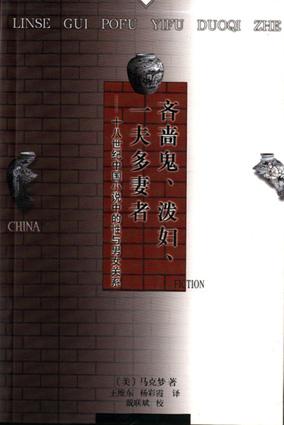
吝啬鬼、泼妇、一夫多妻者 Douban
author:
[美] 马克梦
translator:
王维东
/
杨彩霞
publishing house:
人民文学出版社
2001
- 3
《吝啬鬼、泼妇、一夫多妻者:18世纪中国小说中的性与男女关系》是一本美国人所写的专论中国色情文学的汉学著作,这是一本对迄今在中国仍是禁区的色情文学进行初步探索的文学作品,可以说是一本难得的探讨中国文学作品中性现象和性文化的书籍,弥补了近十多年来从事性别与性现象研究仅仅局限于欧美文化的现状。
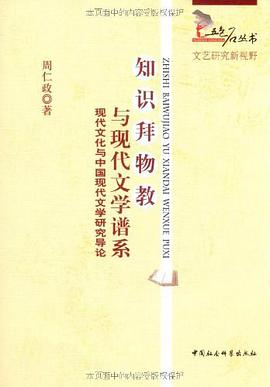
知识拜物教与现代文学谱系 Douban
author:
周仁政
publishing house:
中国社会科学出版社
2009
- 5
《知识拜物教与现代文学谱系》讲述了:现代文学在品质上区别于传统文学,在于它的本质自主性和普遍知识化。而且,这和五四新文化运动作为中国启蒙运动所确立的意识形态知识系统——科学知识系统,不可同日而语。或许正是在科学知识系统作为意识形态知识系统被强力推进的同时,更为古老的自然拜物教知识系统在审美主义人文精神感召下,作为新的文学知识谱系应运而生。同时,科学知识系统的“拜物教”化,诱发了社会经济和现代生活领域深入持久的“商品拜物教”文化异化现象,从而造就了20世纪30年代成熟期中国现代文学中左翼、京派和海派的三足鼎立。
作者深信这一文学史思路的确凿有据和应有的逻辑自明性。从思考“现代文学与现代文化”的关系人手,我不厌其烦地在《知识拜物教与现代文学谱系》“绪论”中从对比“现代文化”与“传统文化”的不同体制和功能出发,推论人的“知识化觉悟”这一现代社会条件下人的新型品质,阐明其文化史价值和意义。由普遍的人的知识化推论文学——社会文化形态的知识形态化和多元化,借用康德三大批判的理论逻辑,沿着其理性批判和知识规划的哲学思路,为现代文化清理出三种最为普遍有效的价值形态系统——知识拜物教系统:科学拜物教、商品拜物教和自然拜物教。
作者深信这一文学史思路的确凿有据和应有的逻辑自明性。从思考“现代文学与现代文化”的关系人手,我不厌其烦地在《知识拜物教与现代文学谱系》“绪论”中从对比“现代文化”与“传统文化”的不同体制和功能出发,推论人的“知识化觉悟”这一现代社会条件下人的新型品质,阐明其文化史价值和意义。由普遍的人的知识化推论文学——社会文化形态的知识形态化和多元化,借用康德三大批判的理论逻辑,沿着其理性批判和知识规划的哲学思路,为现代文化清理出三种最为普遍有效的价值形态系统——知识拜物教系统:科学拜物教、商品拜物教和自然拜物教。