计算机
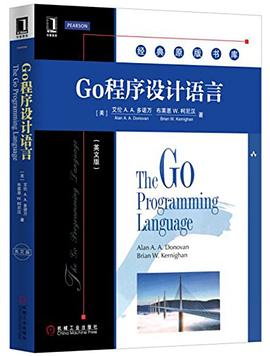
Go程序设计语言(英文版) 豆瓣
作者:
艾伦A.A.多诺万 (Alan A.A.Donovan)
/
布莱恩W.柯尼汉 (Brian W.Kemighan)
出版社:
机械工业出版社
2016
- 1
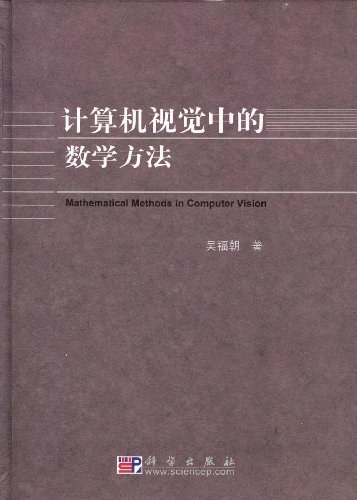
计算机视觉中的数学方法 豆瓣
作者:
吴福朝
2008
- 3
《计算机视觉中的数学方法》由射影几何、矩阵与张量、模型估计3篇组成,它们是三维计算机视觉所涉及的基本数学理论与方法。射影几何学是三维计算机视觉的数学基础,《计算机视觉中的数学方法》着重介绍射影几何学及其在视觉中的应用,主要内容包括:平面与空间射影几何,摄像机几何,两视点几何,自标定技术和三维重构理论。矩阵与张量是描述和解决三维计算机视觉问题的必要数学工具,《计算机视觉中的数学方法》着重介绍与视觉有关的矩阵和张量理论及其应用,主要内容包括:矩阵分解,矩阵分析,张量代数,运动与结构,多视点张量。模型估计是三维计算机视觉的基本问题,通常涉及变换或某种数学量的估计,《计算机视觉中的数学方法》着重介绍与视觉估计有关的数学理论与方法,主要内容包括:迭代优化理论,参数估计理论,视觉估计的代数方法、几何方法、鲁棒方法和贝叶斯方法。
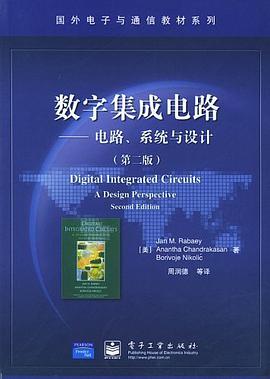
数字集成电路 豆瓣
作者:
拉贝艾
译者:
周润德
出版社:
电子工业出版社
2004
- 10
《国外电子与通信教材系列·数字集成电路:电路、系统与设计(第2版)》由美国加州大学伯克利分校JanM.Rabaey教授撰写。全书共12章,分为三个部分:基本单元、电路设计和系统设计。《数字集成电路——电路、系统与设计》在对MOS器件和连线的特性做了简要介绍之后,深入分析了数字设计的核心——反相器,并逐步将这些知识延伸到组合逻辑电路、时序逻辑电路、控制器、运算电路以及存储器这些复杂数字电路与系统的设计中。为了反映数字集成电路设计进入深亚微米领域后正在发生的深刻变化,第二版增加了许多新的内容,并以0.25微米CMOS工艺的实际电路为例,讨论了深亚微米器件效应、电路最优化、互连线建模和优化、信号完整性、时序分析、时钟分配、高性能和低功耗设计、设计验证、芯片测试和可测性设计等主题,着重探讨了深亚微米数字集成电路设计面临的挑战和启示。
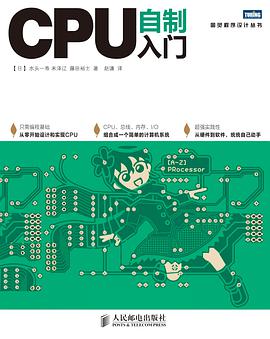
CPU自制入门 豆瓣
CPU自作入門 ~HDLによる論理設計・基板製作・プログラミング~
作者:
[日] 水头一寿
/
[日] 米泽辽
…
译者:
赵谦
出版社:
人民邮电出版社
2014
- 1
一直以来CPU内部是绝大多数IT工程师难以触及的领域。纵使学习过计算机架构相关课程,自己动手实现CPU也始终遥不可及,因为这涉及计算机系统的最底层——芯片设计。而近年来FPGA芯片产品的发展与普及打破了这一阻碍,利用内部电路可重编程的FPGA,我们几乎可以实现任何逻辑电路,自然也包括CPU。
本书就是在这样一个背景下孕育而生的。本书利用FPGA,为读者开启了一个崭新的自制CPU的世界。全书分为3章,分别介绍计算机系统最底层的3个部分:CPU设计制作、电路板设计制造以及汇编编程。将如此广泛的技术内容以实践的方式融合成一册,该书可谓首屈一指。
本书可以帮助软件工程师深入了解硬件与底层,开发出高效代码。硬件工程师可以在本书基础上设计定制硬件,开发高速计算机系统。相信所有读者都可以在本书的阅读过程中,体会到自制计算机系统的乐趣与热情。
本书就是在这样一个背景下孕育而生的。本书利用FPGA,为读者开启了一个崭新的自制CPU的世界。全书分为3章,分别介绍计算机系统最底层的3个部分:CPU设计制作、电路板设计制造以及汇编编程。将如此广泛的技术内容以实践的方式融合成一册,该书可谓首屈一指。
本书可以帮助软件工程师深入了解硬件与底层,开发出高效代码。硬件工程师可以在本书基础上设计定制硬件,开发高速计算机系统。相信所有读者都可以在本书的阅读过程中,体会到自制计算机系统的乐趣与热情。
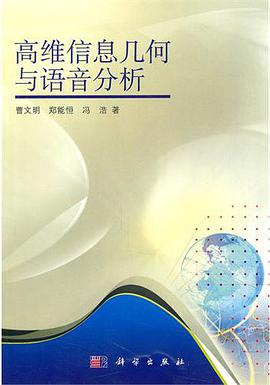
高维信息几何与语音分析 豆瓣
作者:
曹文明
2011
- 3
《高维信息几何与语音分析》共三个部分,第一部分是介绍语音分析的常见研究方法,第二部分是高维信息几何基础知识,它主要介绍了高维信息几何的欧氏空间与高维信息几何线性代数基础理论基本算法,第三部分给出了高维信息几何理论及其算法在语音分析中的实际应用,它主要是提出了高维信息几何点覆盖理论及几何分析方法,对连续语音在高维空间中的种种表现形式加以探讨,给出了语音信息映射到高维空间后的分布概况。
统计自然语言处理(第2版) 豆瓣
作者:
宗成庆
出版社:
清华大学出版社
2013
- 8
《中文信息处理丛书:统计自然语言处理(第2版)》全面介绍了统计自然语言处理的基本概念、理论方法和最新研究进展,内容包括形式语言与自动机及其在自然语言处理中的应用、语言模型、隐马尔可夫模型、语料库技术、汉语自动分词与词性标注、句法分析、词义消歧、篇章分析、统计机器翻译、语音翻译、文本分类、信息检索与问答系统、自动文摘和信息抽取、口语信息处理与人机对话系统等,既有对基础知识和理论模型的介绍,也有对相关问题的研究背景、实现方法和技术现状的详细阐述。
《中文信息处理丛书:统计自然语言处理(第2版)》可作为高等院校计算机、信息技术等相关专业的高年级本科生或研究生的教材或参考书,也可供从事自然语言处理、数据挖掘和人工智能等研究的相关人员参考。
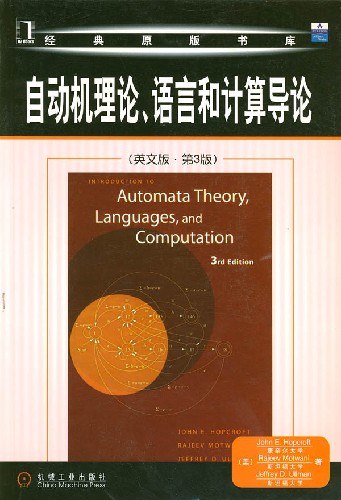
自动机理论、语言和计算导论(英文版.第3版) 豆瓣
Introduction to Automata Theory, Languages, and Computation (3rd Edition)
作者:
John E. Hopcroft
/
Rajeev Motwani
…
出版社:
机械工业
2008
- 1
本书是关于形式语言、自动机理论和计算复杂性方面的经典教材,是三位理论计算大师的巅峰之作,现已更新到第3版。书中涵盖了有穷自动机、正则表达式与语言、正则语言的性质、上下文无关文法及上下文无关语言、下推自动机、上下文无关语言的,陸质、图灵机、不可判定性以及难解问题等内容。
本书已被世界许多著名大学采用为计算机理论课程的教材或教学参考书,适合用作国内高校计算机专业高年级本科生或研究生的教材,还可供从事理论计算工作的研究人员参考。
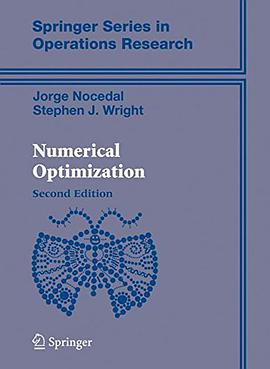
Numerical Optimization 豆瓣
Optimization is an important tool used in decision science and for the analysis of physical systems used in engineering. One can trace its roots to the Calculus of Variations and the work of Euler and Lagrange. This natural and reasonable approach to mathematical programming covers numerical methods for finite-dimensional optimization problems. It begins with very simple ideas progressing through more complicated concepts, concentrating on methods for both unconstrained and constrained optimization.
Introduction to Computing Systems 豆瓣
作者:
Yale N. Patt
/
Sanjay J. Patel
出版社:
McGraw-Hill Education
2003
- 8
"Introduction to Computing Systems: From bits & gates to C & beyond", now in its second edition, is designed to give students a better understanding of computing early in their college careers in order to give them a stronger foundation for later courses. The book is in two parts: the underlying structure of a computer, and programming in a high level language and programming methodology. To understand the computer, the authors introduce the LC-3 and provide the LC-3 Simulator to give students hands-on access for testing what they learn. To develop their understanding of programming and programming methodology, they use the C programming language.The book takes a "motivated" bottom-up approach, where the students first get exposed to the big picture and then start at the bottom and build their knowledge bottom-up. Within each smaller unit, the same motivated bottom-up approach is followed. Every step of the way, students learn new things, building on what they already know. The authors feel that this approach encourages deeper understanding and downplays the need for memorizing. Students develop a greater breadth of understanding, since they see how the various parts of the computer fit together.
计算机病毒防范艺术 豆瓣
The Art of Computer Virus Research and Defense
作者:
斯泽
译者:
段新海
出版社:
机械工业出版社
2007
- 1
《计算机病毒防范艺术》作者是赛门铁克(Symantec)公司安全响应中心首席安全架构师,他根据自己设计和改进Norton AntiVirus系统产品及培训病毒分析人员的过程中遇到的问题精心总结编写了本书。本书最大的特色是大胆深入地探讨了病毒知识的技术细节,从病毒的感染策略上深入分析病毒的复杂性,从文件、内存和网络等多个角度讨论病毒的感染技术,对过去20年来黑客们开发的各种病毒技巧进行了分类和讲解,并介绍了代码变形和其他新兴病毒感染技术,展示了当前计算机病毒和防毒软件最新技术,向读者传授计算机病毒分析和防护的方法学。
Deep Learning 豆瓣 Goodreads
Deep Learning
9.7 (7 个评分)
作者:
Ian Goodfellow
/
Yoshua Bengio
…
出版社:
The MIT Press
2016
- 11
"Written by three experts in the field, Deep Learning is the only comprehensive book on the subject." -- Elon Musk, co-chair of OpenAI; co-founder and CEO of Tesla and SpaceX
Deep learning is a form of machine learning that enables computers to learn from experience and understand the world in terms of a hierarchy of concepts. Because the computer gathers knowledge from experience, there is no need for a human computer operator to formally specify all the knowledge that the computer needs. The hierarchy of concepts allows the computer to learn complicated concepts by building them out of simpler ones; a graph of these hierarchies would be many layers deep. This book introduces a broad range of topics in deep learning.
The text offers mathematical and conceptual background, covering relevant concepts in linear algebra, probability theory and information theory, numerical computation, and machine learning. It describes deep learning techniques used by practitioners in industry, including deep feedforward networks, regularization, optimization algorithms, convolutional networks, sequence modeling, and practical methodology; and it surveys such applications as natural language processing, speech recognition, computer vision, online recommendation systems, bioinformatics, and videogames. Finally, the book offers research perspectives, covering such theoretical topics as linear factor models, autoencoders, representation learning, structured probabilistic models, Monte Carlo methods, the partition function, approximate inference, and deep generative models.
Deep Learning can be used by undergraduate or graduate students planning careers in either industry or research, and by software engineers who want to begin using deep learning in their products or platforms. A website offers supplementary material for both readers and instructors.
Deep learning is a form of machine learning that enables computers to learn from experience and understand the world in terms of a hierarchy of concepts. Because the computer gathers knowledge from experience, there is no need for a human computer operator to formally specify all the knowledge that the computer needs. The hierarchy of concepts allows the computer to learn complicated concepts by building them out of simpler ones; a graph of these hierarchies would be many layers deep. This book introduces a broad range of topics in deep learning.
The text offers mathematical and conceptual background, covering relevant concepts in linear algebra, probability theory and information theory, numerical computation, and machine learning. It describes deep learning techniques used by practitioners in industry, including deep feedforward networks, regularization, optimization algorithms, convolutional networks, sequence modeling, and practical methodology; and it surveys such applications as natural language processing, speech recognition, computer vision, online recommendation systems, bioinformatics, and videogames. Finally, the book offers research perspectives, covering such theoretical topics as linear factor models, autoencoders, representation learning, structured probabilistic models, Monte Carlo methods, the partition function, approximate inference, and deep generative models.
Deep Learning can be used by undergraduate or graduate students planning careers in either industry or research, and by software engineers who want to begin using deep learning in their products or platforms. A website offers supplementary material for both readers and instructors.
The Elements of Statistical Learning 豆瓣 Goodreads
9.8 (10 个评分)
作者:
Trevor Hastie
/
Robert Tibshirani
…
出版社:
Springer
2009
- 10
During the past decade there has been an explosion in computation and information technology. With it have come vast amounts of data in a variety of fields such as medicine, biology, finance, and marketing. The challenge of understanding these data has led to the development of new tools in the field of statistics, and spawned new areas such as data mining, machine learning, and bioinformatics. Many of these tools have common underpinnings but are often expressed with different terminology. This book describes the important ideas in these areas in a common conceptual framework. While the approach is statistical, the emphasis is on concepts rather than mathematics. Many examples are given, with a liberal use of color graphics. It is a valuable resource for statisticians and anyone interested in data mining in science or industry. The book's coverage is broad, from supervised learning (prediction) to unsupervised learning. The many topics include neural networks, support vector machines, classification trees and boosting---the first comprehensive treatment of this topic in any book. This major new edition features many topics not covered in the original, including graphical models, random forests, ensemble methods, least angle regression & path algorithms for the lasso, non-negative matrix factorization, and spectral clustering. There is also a chapter on methods for "wide" data (p bigger than n), including multiple testing and false discovery rates.
Algorithms 豆瓣 Goodreads
Essential Information about Algorithms and Data Structures A Classic Reference The latest version of Sedgewick,s best-selling series, reflecting an indispensable body of knowledge developed over the past several decades. Broad Coverage Full treatment of data structures and algorithms for sorting, searching, graph processing, and string processing, including fifty algorithms every programmer should know. See