认知科学
Computational Simulation in Evolutionary Linguistics 豆瓣
作者: Tao GONG (龔濤) 出版社: Taiwan: Academia Sinica 2009
本專著通過一個自行開發的多個體計算仿真模型來探索語言衍生中的一個關鍵問題,即語法能力是如何產生的。它是由天生的、人類所特有的能力決定的,還是從一些人與動物普遍具有的簡單能力中逐步適應發展而來的?該模型模擬了兩種語言普適特性(體現於詞彙上的合成性和體現於詞序上的規則性)的衍生過程,指出從整體語言向合成語言的轉化是一個詞彙與基本成分詞序共同演化的過程。該模型同時記錄了一個“自底向頂”的語法發展過程,即句子層面的(頂層的)詞序可通過複用詞項間的(底層的)局部詞序來得到。這些仿真結果表明語言的合成性和規則性,以及相關的語言能力可以從一些人與動物普遍具有的能力(如簡單的特徵提取和排序能力)中發展而來。
除了語言使用者的學習機制,本論文進一步討論了社群傳播,社會和語義結構對語言演化所施加的影響。首先,通過仿真幾種主要的社群傳播形式,本論文探討了“水平”傳播中的約定俗成效應對語言演化所起的作用。其次,通過記錄語言在幾種簡單社會結構中的產生與保持,本論文探討了受歡迎個體在語言演化中的作用,個體間對語言的理解與整個社會層次結構間的相互關係,以及社群間的交流對社群間語言趨同所起的作用。最後,通過模擬在不同語義結構下的語言保持,本論文指出不同的語義結構會對詞序產生影響,此因素可被用於解釋人類語言在基本詞序上的偏向性分佈。這些研究討論了自組織在語言演化中所起的作用,重新認識了社群傳播中的樽頸效應,並對其他研究社會結構對語言演化之影響的課題起了指導性作用。
The Cambridge Handbook of Thinking and Reasoning 豆瓣
作者: Keith J. Holyoak / Robert G. Morrison 出版社: Cambridge University Press 2005
Written by foremost authorities from cognitive psychology, cognitive science, and cognitive neuroscience, the chapters of this reference summarize basic concepts and facts of a major topic, sketch its history, and analyze the progress its research is currently making. The volume also includes work related to developmental, social and clinical psychology, philosophy, economics, artificial intelligence, linguistics, education, law, and medicine. The Cambridge Handbook of Thinking and Reasoning comprises the first comprehensive and authoritative handbook for all core topics within the fields of thinking and reasoning.
人类的认知 豆瓣
作者: (美)司马贺 / 赫伯特·西蒙 译者: 荆其诚 / 张厚粲 出版社: 科学出版社 1986 - 11
赫伯特·亚历山大·西蒙(英语:Herbert Alexander Simon,1916年6月15日-2001年2月9日),汉名为司马贺,美国著名学者、计算机科学家和心理学家。
自 1972 年起,中国学术界与西蒙有了近 30 年的交往,他与许多中国同行建立了亲密的友谊。 1983 年春,应中国科学院的邀请,西蒙教授到中国科学院心理研究所进行科研合作,其间还在北京大学系统地讲授了认知心理学。在3个月的讲演中,他从理论上讲解了认知科学的基本观点,阐述了科学理论的层次和规律、物理符号系统、满意的原则等理论问题,还介绍了EPAM 程序、启发式搜索等实际应用的问题。这次讲课内容后来整理成书正式出版,即《人类的认知一思维的信息加工理论》 一书。
Behave 豆瓣 Goodreads
作者: Robert M. Sapolsky 出版社: Penguin Press 2017 - 5
Why do we do the things we do?
More than a decade in the making, this game-changing book is Robert Sapolsky’s genre-shattering attempt to answer that question as fully as perhaps only he could, looking at it from every angle. Sapolsky’s storytelling concept is delightful but it also has a powerful intrinsic logic: he starts by looking at the factors that bear on a person’s reaction in the precise moment a behavior occurs, and then hops back in time from there, in stages, ultimately ending up at the deep history of our species and its evolutionary legacy.
And so the first category of explanation is the neurobiological one. A behavior occurs–whether an example of humans at our best, worst, or somewhere in between. What went on in a person’s brain a second before the behavior happened? Then Sapolsky pulls out to a slightly larger field of vision, a little earlier in time: What sight, sound, or smell caused the nervous system to produce that behavior? And then, what hormones acted hours to days earlier to change how responsive that individual is to the stimuli that triggered the nervous system? By now he has increased our field of vision so that we are thinking about neurobiology and the sensory world of our environment and endocrinology in trying to explain what happened.
Sapolsky keeps going: How was that behavior influenced by structural changes in the nervous system over the preceding months, by that person’s adolescence, childhood, fetal life, and then back to his or her genetic makeup? Finally, he expands the view to encompass factors larger than one individual. How did culture shape that individual’s group, what ecological factors millennia old formed that culture? And on and on, back to evolutionary factors millions of years old.
The result is one of the most dazzling tours d’horizon of the science of human behavior ever attempted, a majestic synthesis that harvests cutting-edge research across a range of disciplines to provide a subtle and nuanced perspective on why we ultimately do the things we do…for good and for ill. Sapolsky builds on this understanding to wrestle with some of our deepest and thorniest questions relating to tribalism and xenophobia, hierarchy and competition, morality and free will, and war and peace. Wise, humane, often very funny, Behave is a towering achievement, powerfully humanizing, and downright heroic in its own right.
MIT认知科学百科全书 豆瓣
作者: 编者:ROBERTA.WILSONFRANK.KELL 出版社: 上海外语教育出版社 2000 - 1
Since the 1971s the cognitive sciences have offered multidisciplinary ways of understanding the mind and cognition. The MIT Encyclopedia of the represents Sciences(MITECS)is a landmark,comprehensive reference work that represents the methodological and theoretical diversity of this changing field. For both students and researchers,MITCS will be an indispensable guide to the current state of the cognitive sciences. “The cognitive sciences emerged in recognition of the fact that scholars and scientists in many different fields shared common problems and needed to collaborate. Now at last The MIT Encyclopedia of the Cognitive Sciences has provided a forum large enough for that interaction to occur——a forum that will not only facilitate cooperation but will educate a new generation of cognitive scientists.”——George Miller,Professor of Psychology Emeritus,Princeton University “At last,a thorough,authoritative source for work in the cognitive sciences. Take the most important topics in the study of cognition,ask the worlds top authorities to summarize the state of the art,and you have it:The MIT Encyclopedia of the Cognitive Sciences. I have already used it to learn,to browse,to inform,to teach,and to update my own understanding.It doesnt matter which end you seek:the book will frequently be in use.” ——Donald A. Norman. The Nielsen Norman Group;Professor Emeritus,Department of Cognitive Science,University of California,San Diego;and author The Invisible Computer “Among the human minds proudest accomplishments is the invention of a science dedicated to understanding itself:cognitive science. In less than fifty years,deep mysteries of antiquity have been brought into the lab and captured in rigorous theories. This volume is an authoritative guide to this exhilarating new body of knowledge,written by the experts,edited with skill and good judgment.If we were to leave a time capsule for the next millennium with records of the great achievements of civilization,this volume would have to be in it.” ——Steven Pinker,Professor of Psychology,Massachusetts Institute of Technology;and author of How the Mind Works and The Language Instinct.
意识的宇宙 豆瓣
A Universe of Consciousness : How Matter Becomes Imagination
作者: [美] 杰拉尔德·埃德尔曼 / [美] 朱利欧·托诺尼 译者: 顾凡及 出版社: 上海科学技术出版社 2004 - 1
本书对意识理论进行全面研究,建立在近代神经科学基础上、致力于对意识的产生、及人们对意识的认识如何帮助其“把严格的科学描述与人类知识和经验的宽广领域联系起来”等问题进行解答。
理解意识(第2版) 豆瓣
作者: [英] 马克斯·威尔曼斯 (Max Velmans) 译者: 王淼 / 徐怡 2014 - 2
这本著作主要包括意识的科学研究和心灵哲学两方面内容。第一部分,指出当代二元论、物质论、功能主义等主要的几种意识理论的优缺点;第二部分,作者基于常识现象对意识问题提出了一种新的分析理论,对形成二元论与还原论之争的前提假设提出了挑战;第三部分,提出了他的创造性综合(synthesis)意识观,即主张用一种创生的径路(a novel approach)来理解意识,这种创生性围绕着意识与脑的交互作用而展开。同时还提出了自反一元论(reflexive monism)的观念,作为二元论和还原论的一种替代方案,目的在于使科学发现与常识性感知相连贯。
人类认知的文化起源 豆瓣
The Cultural Origins of Human Cognition
作者: 迈克尔·托马塞洛 译者: 张敦敏 出版社: 中国社会科学出版社 2011 - 11
也许我们经常问自己,在所有的动物物种中,是什么使人类如此特殊?这个问题并不缺乏答案,其中包括:因为我们人类能创造语言、数学、工具、艺术、音乐和幽默等,而这些能力又都是其他动物缺乏的。但如果我们继续追问,为什么我们人类有这些能力,而动物却没有?作者认为,在进化的道路上,我们和其他灵长类动物是在600万年前分手的。因此,人类认知中,可以大致分两部分,一部分为我们与其他灵长类动物共有,如感知、记忆和范畴化等,另一部分就是上述那些人类独有的部分。正是这些独有的部分把我们人类与其他动物区别开来了。这些独有的部分是怎样产生的呢?作者认为,在人类与其他灵长类动物分手之后,或许发生了某些基因事件和自然选择事件,使人类具有了把自己的同类成员认同为像自己一样的、有意向的行动者,最终能把他们理解为像自己一样的、有心智的行动者。这种新的对他人的理解方式彻底改变了所有社会互动的本质,包括社会学习。因此,进化以独特的文化形式开始在历史上发生了,在这个过程中,一代代的儿童在发育过程中向前辈学习各种事物,包括某些物质性或符号性的人造物品,其中当然有工具和语言等,从而人类就以这些自己独有的认知技能把自己和其他动物区别开了。
从语源学到语用学 豆瓣
作者: 斯威彻尔 出版社: 北京大学出版社 2002 - 1
在各种语言中,情态词、连接词、条件词、知觉动词恐怕都是最生动、也是最难以把握其意义的词类。其意义的多歧性不仅困扰语言学家,也困扰分析哲学家。尽管如此,Eve E.Sweetser的论述仍然向我们证实了它们是可以被分析,而且可以是成系统的分析。
语义关系并非独立于人类的认知结构之外,包括这种结构的隐喻与文化方面。无论是词汇的多义性还是语用的含糊性,都会通过认知和言语过程的作用,为世俗的隐喻方式所定型。本书从多义现象入手,将这类特殊的词置于印欧语系的历史之下来探讨其语义结构的变化,提示了隐喻和文化在语认结构演变中的角色。
本书也将吸引那些从事认知科学与隐喻、哲学研究的学者。
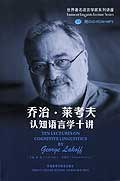
乔治·莱考夫认知语言学十讲 豆瓣
作者: [美] 乔治·莱考夫 出版社: 外语教学与研究出版社 2007 - 4
《乔治·莱考夫认知语言学十讲》概括了作者对语言学某一领域的研究成果;同时讲座的形式使深奥的内容变得深入浅出,易于理解。北京航空航天大学外语系和外国语言研究所于2004年4月邀请了认知语言学创始George Lakoff教授来北京作了系列讲座。讲座先后在北京航空航天大学、北京大学、清华大学、北京师范大学和北京外国语大学进行。Lakoff教授通过十次讲座系统讲授了认知语言学的核心内容以及它的历史发展、与其他学科的交叉、最新动态及未来趋势等。讲座基本涵盖了Lakoff教授41年来的主要学术观点和研究成果。本系列讲座成书名为《乔治·莱考夫认知语言学十讲》,是“世界著名语言学家系列讲座”丛书中的一本。
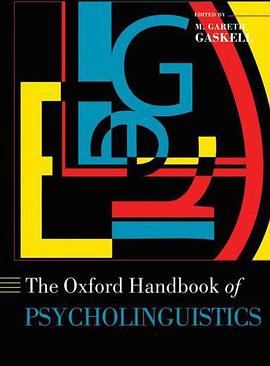
Oxford Handbook of Psycholinguistics 豆瓣
作者: Gaskell, Gareth 编 出版社: Oxford Univ Pr 2007 - 9
The ability to communicate through spoken and written language is one of the defining characteristics of the human race, yet it remains a deeply mysterious process. The young science of psycholinguistics attempts to uncover the mechanisms and representations underlying human language. This interdisciplinary field has seen massive developments over the past decade, with a broad expansion of the research base, and the incorporation of new experimental techniques such as brain imaging and computational modelling. The result is that real progress is being made in the understanding of the key components of language in the mind. The Oxford Handbook of Psycholinguistics brings together the views of 75 leading researchers in psycholinguistics to provide a comprehensive and authoritative review of the current state of the art in psycholinguistics. With almost 50 chapters written by experts in the field, the range and depth of coverage is unequalled. The contributors are eminent in a wide range of fields, including psychology, linguistics, human memory, cognitive neuroscience, bilingualism, genetics, development and neuropsychology. Their contributions are organised into six themed sections, covering word recognition, the mental lexicon, comprehension and discourse, language production, language development, and perspectives on psycholinguistics. The breadth of coverage, coupled with the accessibility of the short chapter format should make the handbook essential reading for both students and researchers in the fields of psychology, linguistics and neuroscience.
Basic Color Terms 豆瓣
作者: Brent Berlin / Paul Kay 出版社: Cambridge University Press 1999 - 3
The work reported in this monograph was begun in the winter of 1967 in a graduate seminar at Berkeley. Many of the basic data were gathered by members of the seminar and the theoretical framework presented here was initially developed in the context of the seminar discussions. Much has been discovered since 1969, the date of original publication, regarding the psychophysical and neurophysical determinants of universal, cross-linguistic constraints on the shape of basic color lexicons, and something, albeit less, can now also be said with some confidence regarding the constraining effects of these language-independent processes of color perception and conceptualization on the direction of evolution of basic color term lexicons.
A Natural History of Human Thinking Goodreads 豆瓣
作者: Michael Tomasello 出版社: Harvard University Press 2014 - 2
Tool-making or culture, language or religious belief: ever since Darwin, thinkers have struggled to identify what fundamentally differentiates human beings from other animals. In this much-anticipated book, Michael Tomasello weaves his twenty years of comparative studies of humans and great apes into a compelling argument that cooperative social interaction is the key to our cognitive uniqueness. Once our ancestors learned to put their heads together with others to pursue shared goals, humankind was on an evolutionary path all its own.

Tomasello argues that our prehuman ancestors, like today's great apes, were social beings who could solve problems by thinking. But they were almost entirely competitive, aiming only at their individual goals. As ecological changes forced them into more cooperative living arrangements, early humans had to coordinate their actions and communicate their thoughts with collaborative partners. Tomasello's "shared intentionality hypothesis" captures how these more socially complex forms of life led to more conceptually complex forms of thinking. In order to survive, humans had to learn to see the world from multiple social perspectives, to draw socially recursive inferences, and to monitor their own thinking via the normative standards of the group. Even language and culture arose from the preexisting need to work together. What differentiates us most from other great apes, Tomasello proposes, are the new forms of thinking engendered by our new forms of collaborative and communicative interaction.

A Natural History of Human Thinking is the most detailed scientific analysis to date of the connection between human sociality and cognition.
Why Don't Students Like School? 豆瓣
7.6 (5 个评分) 作者: Daniel T. Willingham 出版社: Jossey-Bass 2010 - 3
Easy-to-apply, scientifically-based approaches for engaging students in the classroom Cognitive scientist Dan Willingham focuses his acclaimed research on the biological and cognitive basis of learning. His book will help teachers improve their practice by explaining how they and their students think and learn. It reveals-the importance of story, emotion, memory, context, and routine in building knowledge and creating lasting learning experiences. Nine, easy-to-understand principles with clear applications for the classroom Includes surprising findings, such as that intelligence is malleable, and that you cannot develop "thinking skills" without facts How an understanding of the brain's workings can help teachers hone their teaching skills "Mr. Willingham's answers apply just as well outside the classroom. Corporate trainers, marketers and, not least, parents -anyone who cares about how we learn-should find his book valuable reading."
—Wall Street Journal
Louder Than Words 豆瓣
作者: Benjamin K. Bergen 出版社: Basic Books 2012 - 10
Whether it's brusque, convincing, fraught with emotion, or dripping with innuendo, language is fundamentally a tool for conveying meaning--a uniquely human magic trick in which you vibrate your vocal cords to make your innermost thoughts pop up in someone else's mind. You can use it to talk about all sorts of things--from your new labradoodle puppy to the expansive gardens at Versailles, from Roger Federer's backhand to things that don't exist at all, like flying pigs. And when you talk, your listener fills in lots of details you didn't mention--the curliness of the dog's fur or the vast statuary on the grounds of the French palace. What's the trick behind this magic? How does meaning work? In "Louder than Words," cognitive scientist Benjamin Bergen draws together a decade's worth of research in psychology, linguistics, and neuroscience to offer a new theory of how our minds make meaning. When we hear words and sentences, Bergen contends, we engage the parts of our brain that we use for perception and action, repurposing these evolutionarily older networks to create simulations in our minds. These embodied simulations, as they're called, are what makes it possible for us to become better baseball players by merely visualizing a well-executed swing; what allows us to remember which cupboard the diapers are in without looking, and what makes it so hard to talk on a cell phone while we're driving on the highway. Meaning is more than just knowing definitions of words, as others have previously argued. In understanding language, our brains engage in a creative process of constructing rich mental worlds in which we see, hear, feel, and act. Through whimsical examples and ingenious experiments, Bergen leads us on a virtual tour of the new science of embodied cognition. A brilliant account of our human capacity to understand language, "Louder than Words" will profoundly change how you read, speak, and listen.
心智、语言和机器 豆瓣
作者: 徐英瑾 出版社: 人民出版社 2013 - 10
《心智、语言和机器:维特根斯坦哲学和人工智能科学的对话》向读者介绍人工智能科学的基本发展历史和基本技术;介绍“人工智能哲学”这门哲学分支的大致发展情况;维氏哲学将对知识表征、自然语言理解、机器人、非单调推理等人工智能的子课题做出贡献。而《心智、语言和机器:维特根斯坦哲学和人工智能科学的对话》就将负责在维氏和这些课题之间搭建桥梁。