韓國

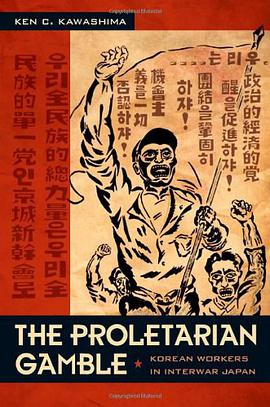
The Proletarian Gamble 豆瓣
作者:
Ken C. Kawashima
出版社:
Duke University Press Books
2009
- 4
Korean workers in Japan constituted imperial Japan's largest colonial labour force in the 1920s and 1930s. Caught between the Scylla of agricultural destitution in Korea and the Charybdis of industrial depression in Japan, migrant Korean peasants arrived on Japanese soil amid extreme forms of precariousness in the labour and housing markets. For the migrant, becoming a worker in Japan was dependent on chance, on knowing or meeting the right people, on being in the right place at the right time. In "The Proletarian Gamble", Ken C. Kawashima maintains that contingent labour is a defining characteristic of capitalist commodity economies. He develops his argument by scrutinizing how the labour power of Korean workers in Japan was commodified, how they fought against the racist and contingent conditions of exchange, and how they combated institutionalized racism. Kawashima draws on previously unseen archival materials from interwar Japan as he describes how Korean migrants struggled against various recruitment practices, unfair and discriminatory wages, sudden firings, racist housing practices, and excessive bureaucratic red-tape. Demonstrating that there was no single Korean 'minority', he reveals how Koreans exploited fellow Koreans and how the stratification of their communities worked to the advantage of state and capital. However, Kawashima also describes how when migrant workers did organize, as when they became involved in Roso (the largest Korean communist labour union in Japan), and in Zenkyo (the Japanese communist labour union), their diverse struggles were united toward a common goal. In "The Proletarian Gamble", his analysis of the Korean migrant workers' experiences opens into a much broader re-thinking of the fundamental nature of capitalist commodity economies and the analytical categories of the proletariat, surplus populations, commodification, and state power.