Miles Davis
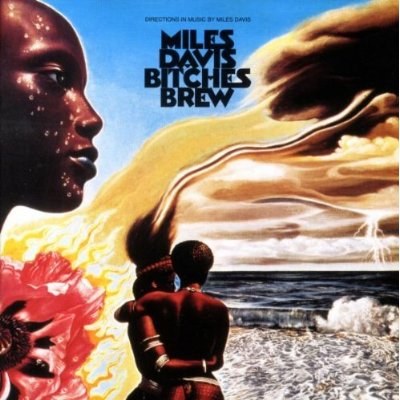
泼妇酿酒 豆瓣 Discogs
9.3 (58 个评分) Miles Davis 类型: 爵士
发布日期 1970年1月1日 出版发行: Sony
Bitches Brew is a studio double album by jazz musician Miles Davis, released in June of 1970 on Columbia Records.[1] Recording sessions took place at Columbia's 30th Street Studio over the course of three days in August of 1969. The album continued Davis' experimentation of electric instruments previously featured on his critically acclaimed In a Silent Way album. With the use of these instruments, such as the electric piano and guitar, Davis rejected traditional jazz rhythms in favor of a looser, rock-influenced improvisational style.
Often cited as one of Davis' best-selling albums and masterpieces, Bitches Brew marked a turning point in modern jazz. Upon release, it received mixed criticism from fans and critics, alike, due to the album's unconventional style and revolutionary sound. Later on, Bitches Brew gained recognition as one of jazz's greatest albums and a progenitor of the jazz rock genre, as well as a major influence on rock and funk musicians.[2] In 1998, Columbia Records released The Complete Bitches Brew Sessions, a four-disc box set that included the original album as well as ensuing studio sessions through February 1970.
2026年2月4日 听过
挺有意思的一张盘,disc 1 就能感受到这股“实验性”的劲儿……我有限的品味更吃disc 2
就问这标题谁翻译的
70s Miles Davis 爵士 融合
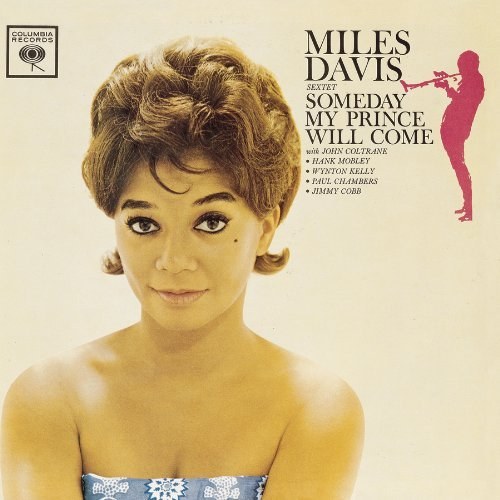
Someday My Prince Will Come 豆瓣
9.1 (9 个评分) Miles Davis 类型: 爵士
发布日期 1999年6月8日 出版发行: Sony
专辑介绍:
The session that produced Someday My Prince Will Come is finally restored and collected together on one CD, and the transitional nature of the Miles Davis band at that moment is now clearer than ever. Hank Mobley produces some fine blues-inflected tenor solos, but when you hear guest John Coltrane (his last recording with Davis) on the alternate take of the title and on the modal "Teo," it's understandable why Davis was unhappy: Coltrane plays with a confidence and a bravado that no other saxophonist could have mustered at that time, and lifts the band from the first note on. And when Philly Joe Jones sits in on "Blues No. 2," playing with clarity and volatility, you know that Davis's working group was not quite up to his best. Still, Wynton Kelly is finely poised throughout; "Pfrancing" is one of Davis's most charming and durable works; and the muted trumpet on "Old Folks" and "I Thought About You" is vintage. Maybe not essential Davis, but very pleasurable nonetheless. --John F. Szwed
若说爵士乐坛最传奇的小号手是迈尔戴维斯(Miles Davis),应该没有人会举手反对。六、七十年代,迈尔戴维斯几乎就是爵士乐坛的标竿人物,他的音乐只要一问世,就成为乐手崇拜追随的对象,形成一种爵士风潮。
爵士乐虽然在1920年代大受欢迎,但这时候的音乐大部分来自于散拍和蓝调的综合,两者合一所衍生出来的摇摆乐即兴的成分并不多,直到1940年代左右的 Be Bop才真正独树一格,但谁也没想到,从此以后Miles Davis的音乐为爵士乐做了各个时代性的批注;例如「So What」,这首曲子录音的时间是1959年,Miles的演奏手法不再局限以演奏和声为主要的音乐,反而依靠调式以及音阶式的主题贯穿全曲,他的创新,不但给爵士乐在走到酷爵士(Cool Jazz)与硬咆勃(Hard Bop)的尽头时一个新的开端,更为自由爵士 (Free Jazz)种下了新的种子。
1960年代的Miles Davis虽参加了激进爵士运动,但紧接着在1961所灌录的「Some Day My Prince Will Come」当中,却是以标准的摇摆乐为主,原因则是当时他听到了欧奈 柯尔曼(Ornette Coleman)的新作,他无法赞成Coleman 那种不羁的演出方式,而Miles推出的标准摇摆曲大受欢迎,证明他有所变、有所不变。