15/03 - 10/04 : naissance d'un théorème #math
math

I feel a little better knowing that Paul Erdős also got the wrong answer on the Monty Hall problem the first time around. I encountered through a 1991 neural network demonstration at LANL and did not put up a fight when told I was wrong and the neural net wasn't.
https://en.wikipedia.org/wiki/Monty_Hall_problem
#math #probability

Entering my 53rd year. 53 is the 16th prime, and is also the number of bits used for the significand in IEEE 754 double-precision (binary64) numbers.
#birthday #math #ComputerScience
#birthday #math #ComputerScience


After the Deluge, Noah is checking on all the animals. They’re all doing great, multiplying and filling the Earth, except for this one group of snakes.
“What’s wrong?” asks Noah.
“Cut down some trees for us,” say the snakes.
Noah does so and goes off to check on other animals.
A few weeks later he comes back and sees that there are snakes everywhere!
“Wow, how did cutting down trees do all this?” Noah asks.
“We’re adders,” say the snakes, “and we need logs to multiply.”
Edited 299d ago

> #Physics is to #math what #sex is to #masturbation.
- Richard #Feynman

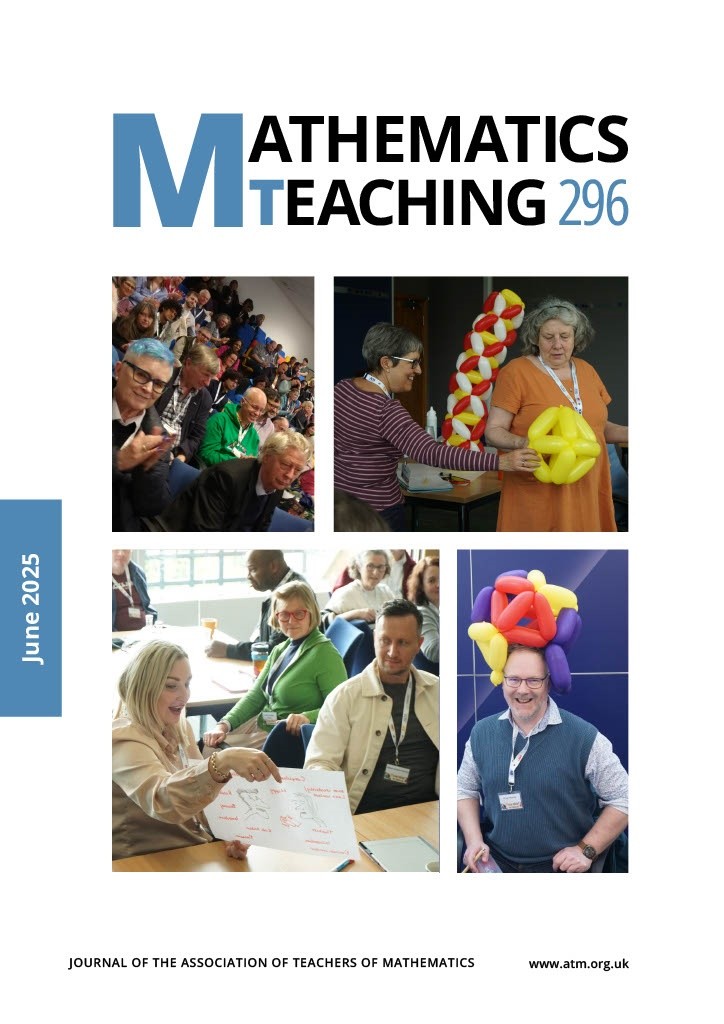
Mathematics Teaching 296 now available online https://atm.org.uk/Mathematics-Teaching-Journal-Archive/177731
Design and cover photographs by me
Four free articles for non-members:
Everyone can think mathematically by Tom Francome
Tom Francome explores ways of developing the mathematical thinking of all students, including low attainers.
https://atm.org.uk/write/MediaUploads/Journals/MT296/02.pdf
Book review Learning with AI by Ian Benson
Ian Benson reviews 'Learning with AI' by Joan Monahan Watson published by Johns Hopkins University Press (296 pages, $24.95)
https://atm.org.uk/write/MediaUploads/Journals/MT296/14.pdf
Book review Breaking images by Pete Wright
Pete Wright reviews ‘Breaking images: Iconoclastic analyses of mathematics and its education’, edited by Brian Greer, David Kollosche, and Ole Skovsmose.
https://atm.org.uk/write/MediaUploads/Journals/MT296/15.pdf
Ole Skovsmose—the man who put the critique in critical mathematics education by Peter Gates
Peter Gates has collated this obituary for Ole Skovmose.
https://atm.org.uk/write/MediaUploads/Journals/MT296/16.pdf
#MathematicsTeaching #iTeachMath #MathEd #MathsEd #Math #Mathematics #education #design #GraphicDesign #atm #MT #MT296 #photography
Edited 1y ago

Polydron special offer: Use code ATM10 for 10% off your Polydron order (offer ends 30 September 2025)
https://www.polydron.co.uk/shop.html
#coupons #coupon #discounts #polydron #offer #geometry #MathematicsTeaching #atm #MT #MT295 #iTeachMath #MathEd #Math #Education

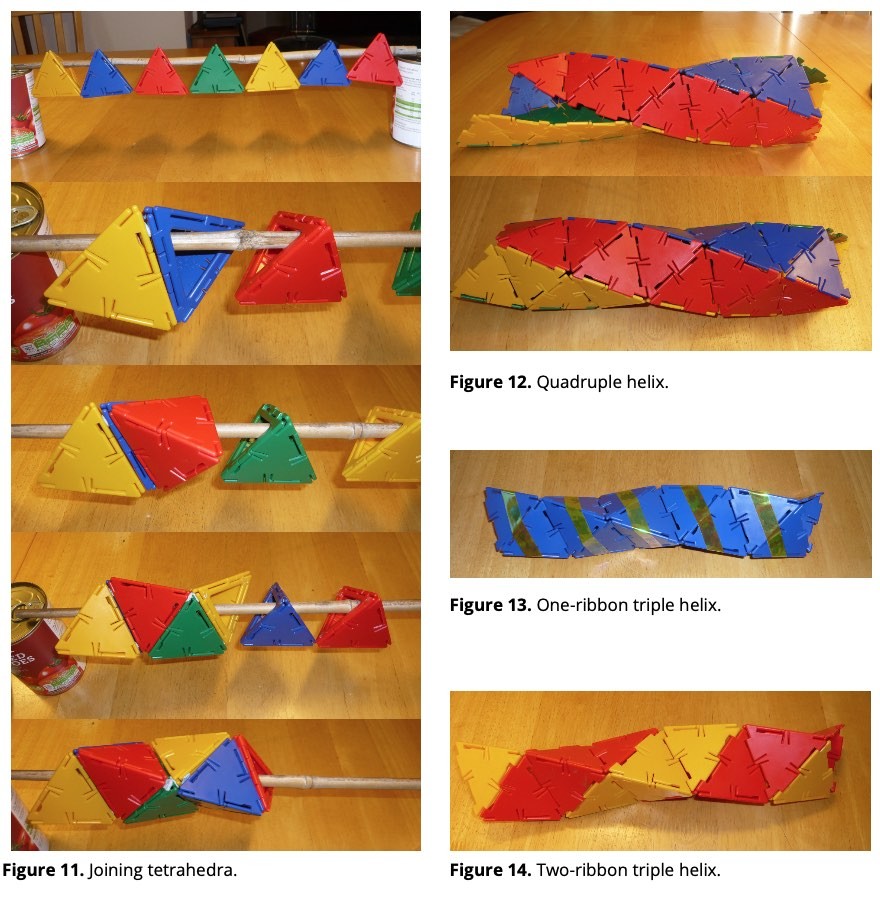
‘Exploring triangles at the Institute of Mathematics Pedagogy (IMP)’
Tandi Clausen-May reflects on an exploration of 3D shapes made from triangles.
https://atm.org.uk/write/MediaUploads/Journals/MT295/03.pdf
One of the two free articles from Mathematics Teaching 295 for non-members.
#geometry #triangle #helix #polydron #MathematicsTeaching #atm #MT #MT295 #iTeachMath #MathEd #Math #Education #mathematics
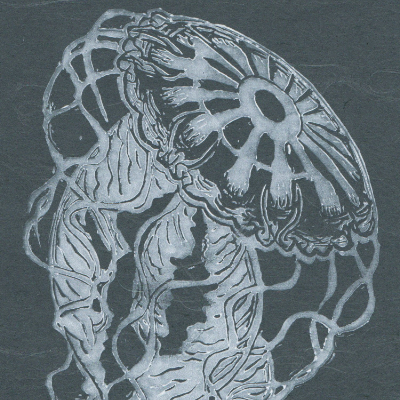
Happy birthday to #mathematician Maryam Mirzakhani (1977-2017)! The Fields Medal, one of the most prestigious #math awards, is awarded to mathematicians < 40. In 2014, she became 1st woman to win. Her research included Teichmüller theory, hyperbolic geometry, ergodic theory, & symplectic geometry, and Fields committee cited her work in “the dynamics and geometry of Riemann surfaces and their moduli spaces”.
🧵1/
#sciart #mathart #linocut #printmaking #womeninSTEM #histsci
tomkyle/binning – Determine optimal number of bins 𝒌 for #histogram #creation and optimal bin width 𝒉 using various statistical methods in #PHP.
Included methods: Sturges’ Rule, Doane’s Rule, Freedman-Diaconis Rule, Terrell-Scott’s Rule, Rice Rule, Scott’s Rule, and Square Root Rule.
GitHub: https://github.com/tomkyle/binning
Issues: https://github.com/tomkyle/binning/issues
Available on #packagist via #composer. Heavily inspired by markrogoyski/math-php but written for #PHP 8.3+. — #math #statistics
Edited 1y ago

Here is a “magic trick”
Give kids colored cards.
red card- 1 dot
blue card- 2 dots
green card- 4 dots
yellow card- 8 dots
“Show me a total of x dots!”
(x is a number between 1 and 15)
“look around, why are you all holding up the same cards? isn’t anyone creative enough to find another way?”
then ask what goes on the “next card” #matheducation #math #binary
Edited 285d ago

So how long?
Full video on my YouTube Channel snsus 🎬🍿#math #science #stem #education #maths #mathematics #fyp #shorts #limit #physics #philosophy #nature #convergence #divergence #explosion
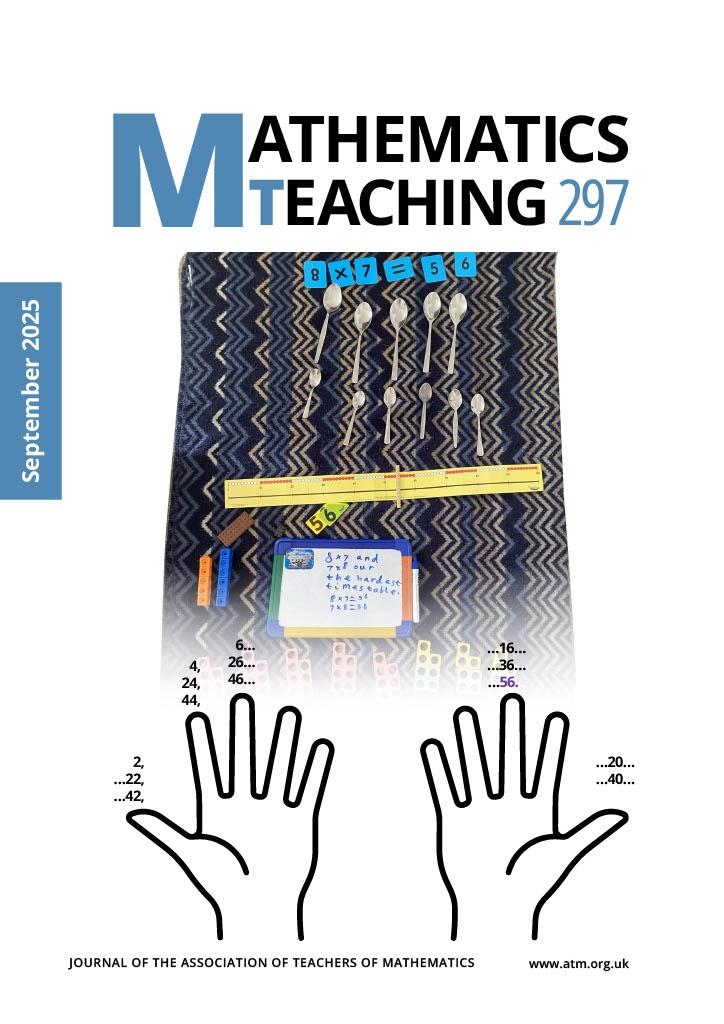
Mathematics Teaching 297 now available online https://atm.org.uk/Mathematics-Teaching-Journal-Archive/177732
Design by me
Six free articles for non-members:
For the classroom: fractions
Tom Francome offers activities from LUMEN (Loughborough University Mathematics Education Network https://www.lboro.ac.uk/lumen).
https://atm.org.uk/write/MediaUploads/Journals/MT297/08.pdf
Critical mathematics education student teachers’ perspectives
Manjinder K. Jagdev and her student teachers reflect on their experiences of developing critical mathematics education and social justice themes in initial teacher education courses
https://atm.org.uk/write/MediaUploads/Journals/MT297/10.pdf
Awareness of the division of fractions keep your flipping change to yourself!
Sam Brace describes a unit of work that uses learners’ powers of the mind to understand the division of fractions.
https://atm.org.uk/write/MediaUploads/Journals/MT297/11.pdf
Jan Potworowski the quest to humanise mathematics education
George Knights and Lyndon Baker have prepared this tribute to Jan Potworowski.
https://atm.org.uk/write/MediaUploads/Journals/MT297/13.pdf
Julian Williams teacher researcher theorist. 1954–2025
Geoff Wake and Laura Black celebrate Julian Williams’s contribution to mathematics Education.
https://atm.org.uk/write/MediaUploads/Journals/MT297/14.pdf
I want to remember...
In memory of Julian Williams by Laya Hooshyari.
https://atm.org.uk/write/MediaUploads/Journals/MT297/15.pdf
#MathematicsTeaching #iTeachMath #MathEd #MathsEd #Math #Mathematics #teaching #pedagogy #didactics #education #design #GraphicDesign #atm #MT #MT297
Edited 1y ago

Linear Algebra Done Right by Sheldon Axler looks like an excellent textbook. If I ever end up teaching or tutoring undergraduate linear algebra again I think I'd try it as a text. The book is open access and is available at https://linear.axler.net (I have no affiliation with the author; I just like the book!)
One thing I like about this book is its approach to eigenvalues and eigenvectors. Most linear algebra books present eigenvalues as roots of the "characteristic polynomial", which is built from the "determinant", which in turn has some formula defining it. These objects are rarely motivated geometrically, and so you're left with limited understanding of just what an eigenvalue is or why linear transformations on finite-dimensional vector spaces must have them. Axler avoids determinants till Chapter 9 of the book, focusing instead on linear operators. The fact that operators must have eigenvalues pops out of the observation that iterating an operator on a given non-zero starting vector results in a set of vectors that must eventually become linearly dependent. This fact also leads to the development of the characteristic polynomial; you can then come at the determinant from this, more geometric, perspective.
#math #teaching #LinearAlgebra
One thing I like about this book is its approach to eigenvalues and eigenvectors. Most linear algebra books present eigenvalues as roots of the "characteristic polynomial", which is built from the "determinant", which in turn has some formula defining it. These objects are rarely motivated geometrically, and so you're left with limited understanding of just what an eigenvalue is or why linear transformations on finite-dimensional vector spaces must have them. Axler avoids determinants till Chapter 9 of the book, focusing instead on linear operators. The fact that operators must have eigenvalues pops out of the observation that iterating an operator on a given non-zero starting vector results in a set of vectors that must eventually become linearly dependent. This fact also leads to the development of the characteristic polynomial; you can then come at the determinant from this, more geometric, perspective.
#math #teaching #LinearAlgebra
Time for a new #introduction!
I live on the border, where #Arizona, #Mexico and #NewMexico all come together.
I mostly post about #cooking, #gardening, #hiking and #publiclands
I'm interested in #music, #art, #anime, #manga, #comics, #math, #videogames, #retrogaming and #retrocomputing
I switched from #Amiga to #linux and #bsd so I actually know very little about MS Windows.

I need some #math / #machinelearning / #AI / #physics people to confirm for me that the topology of latent space shows non-Euclidean characteristics. This is not for a technical project; I'm trying to understand just how well cultural theorists are using their mathy metaphors. Thanks in advance!

Mathstodon.xyz is a Mastodon server for people who love mathematics. We have LaTeX rendering in the web interface!
This server has a post size of up to 1729 characters, and has been online since 2017.
You can find out more at https://mathstodon.xyz/about or contact the admin @christianp
#FeaturedServer #Mathematics #Maths #Math #Mastodon #Fediverse #FreeFediverse
Re: https://lipn.info/@mevenlennonbertrand/116997917683191056
To riff on this a bit from a very different field at a very different scale, as a pretext to share an anecdote:
When I was a graduate student I spent a fair amount of time (an embarrassing amount of time) trying to get a computer to learn how to play Tic-Tac-Toe (naughts and crosses) by self play, given minimal help. Why? Because it turns out to be significantly harder than you might think based on the simplicity of the game, and I was curious why. It's not that hard in the grand scheme of things, but it's weirdly harder than you'd (well, I'd) expect (1). So, I went about coding up a Tic-Tac-Toe implementation that could play as quickly as possible, since gameplay would be the inner loop of a search algorithm, tested it some, and set a self-play-based search I was working on loose. Before too long my search was logging data that suggested it had found at least one optimal player. I was excited because I had opinions about how to use self-play to guide strategy search and it seemed like I might have some data supporting those opinions (calling them "hypotheses" would be giving my past self too much credit).
After quite a bit of testing, I discovered that my Tic-Tac-Toe implementation had a bug: in a small set of configurations of the board, my code would flag two in a row as a win instead of three in a row. My "optimal players" turned out to exploit this fact, choosing moves to drive the game into that set of configurations, then "winning" with two in a row. Oops. (2)
I noticed the problem because some of my discovered players were beating a minimax player during post hoc testing, which I knew to be impossible. I was able to sort out why because Tic-Tac-Toe is small enough to exhaustively test: you can enumerate the < 6,000 board configurations (3), run a function or strategy on all of them, and analyze the output in a reasonable amount of time and without too much trouble. I was able to spot by eye what was wrong.
One might ask: why didn't you have unit tests to do this sort of thing? Well, after that experience I did do more routine testing. However, speaking more generally now, there's an infinite regress when it comes to checking whether or not an implementation of a set of rules is faithful to the intention of that set of rules. Barring some kind of theoretical guarantee you'd need some other implementation of the rules to perform that sort of test. How can you be certain that implementation is comprehensive and also doesn't have a bug? You sometimes can't, practically speaking, and sometimes you can't theoretically speaking either. When the domain becomes large and complicated enough that both the above features about Tic-Tac-Toe I took advantage of---a sure indicator grounded in theory, and the ability to comprehensively and satisfactorily test---fail to hold, you're a bit adrift. (4)
I'm not very familiar with Lean, but I do know a bit about type theory, and modern type checkers tend to be Turing complete. Formal verification of a Turing complete programming language is not easy. I understand that practical type systems are designed to make type judgments of interest decidable, but that does not mean they're easy nor that the rules are easy to implement faithfully or test. It seems to me to be a tough problem, which is one of many reasons why I've taken the claims about LLMs doing this or that math thing with a big grain of salt. (5) I've expected to see the analog of my two-in-a-row "optimal" Tic-Tac-Toe players emerge to much fanfare for awhile now, and I expect to see many more.
#AI #LLM #FormalizedMath #math #Lean #ComputerScience #LearningBySelfPlay #SelfPlay #TicTacToe
(1) Donald Michie reported his MENACE system, which was a rudimentary form of reinforcement learning, could learn a decent game of Tic-Tac-Toe within a few hundred games. Christopher Rosin reported his coevolution-based Tic-Tac-Toe learner, a variant of learning by self play, required tens of billions of games to achieve less competence. Arthur Samuel's system learned master-level checkers by self play faster than this.
(2) Debugging a system by wrapping a search or optimization algorithm around it is an underappreciated technique I've used many times. It's a bit like fuzzing with an incentive to cause trouble.
(3) When I said "given minimal help", I meant it: I didn't give the players knowledge of the board symmetries.
(4) Personally I think it's incumbent on computer science professionals to flag when this is the case, since that's something we're educated to know (at least in principle).
(5) "Under the assumption that the implementation of system Y is correct, a human-written formalization of problem X in system Y produced output that a team of humans verified could be adapted into a proof of theorem Z" would grab fewer headlines than "AI proves Z", though.
To riff on this a bit from a very different field at a very different scale, as a pretext to share an anecdote:
When I was a graduate student I spent a fair amount of time (an embarrassing amount of time) trying to get a computer to learn how to play Tic-Tac-Toe (naughts and crosses) by self play, given minimal help. Why? Because it turns out to be significantly harder than you might think based on the simplicity of the game, and I was curious why. It's not that hard in the grand scheme of things, but it's weirdly harder than you'd (well, I'd) expect (1). So, I went about coding up a Tic-Tac-Toe implementation that could play as quickly as possible, since gameplay would be the inner loop of a search algorithm, tested it some, and set a self-play-based search I was working on loose. Before too long my search was logging data that suggested it had found at least one optimal player. I was excited because I had opinions about how to use self-play to guide strategy search and it seemed like I might have some data supporting those opinions (calling them "hypotheses" would be giving my past self too much credit).
After quite a bit of testing, I discovered that my Tic-Tac-Toe implementation had a bug: in a small set of configurations of the board, my code would flag two in a row as a win instead of three in a row. My "optimal players" turned out to exploit this fact, choosing moves to drive the game into that set of configurations, then "winning" with two in a row. Oops. (2)
I noticed the problem because some of my discovered players were beating a minimax player during post hoc testing, which I knew to be impossible. I was able to sort out why because Tic-Tac-Toe is small enough to exhaustively test: you can enumerate the < 6,000 board configurations (3), run a function or strategy on all of them, and analyze the output in a reasonable amount of time and without too much trouble. I was able to spot by eye what was wrong.
One might ask: why didn't you have unit tests to do this sort of thing? Well, after that experience I did do more routine testing. However, speaking more generally now, there's an infinite regress when it comes to checking whether or not an implementation of a set of rules is faithful to the intention of that set of rules. Barring some kind of theoretical guarantee you'd need some other implementation of the rules to perform that sort of test. How can you be certain that implementation is comprehensive and also doesn't have a bug? You sometimes can't, practically speaking, and sometimes you can't theoretically speaking either. When the domain becomes large and complicated enough that both the above features about Tic-Tac-Toe I took advantage of---a sure indicator grounded in theory, and the ability to comprehensively and satisfactorily test---fail to hold, you're a bit adrift. (4)
I'm not very familiar with Lean, but I do know a bit about type theory, and modern type checkers tend to be Turing complete. Formal verification of a Turing complete programming language is not easy. I understand that practical type systems are designed to make type judgments of interest decidable, but that does not mean they're easy nor that the rules are easy to implement faithfully or test. It seems to me to be a tough problem, which is one of many reasons why I've taken the claims about LLMs doing this or that math thing with a big grain of salt. (5) I've expected to see the analog of my two-in-a-row "optimal" Tic-Tac-Toe players emerge to much fanfare for awhile now, and I expect to see many more.
#AI #LLM #FormalizedMath #math #Lean #ComputerScience #LearningBySelfPlay #SelfPlay #TicTacToe
(1) Donald Michie reported his MENACE system, which was a rudimentary form of reinforcement learning, could learn a decent game of Tic-Tac-Toe within a few hundred games. Christopher Rosin reported his coevolution-based Tic-Tac-Toe learner, a variant of learning by self play, required tens of billions of games to achieve less competence. Arthur Samuel's system learned master-level checkers by self play faster than this.
(2) Debugging a system by wrapping a search or optimization algorithm around it is an underappreciated technique I've used many times. It's a bit like fuzzing with an incentive to cause trouble.
(3) When I said "given minimal help", I meant it: I didn't give the players knowledge of the board symmetries.
(4) Personally I think it's incumbent on computer science professionals to flag when this is the case, since that's something we're educated to know (at least in principle).
(5) "Under the assumption that the implementation of system Y is correct, a human-written formalization of problem X in system Y produced output that a team of humans verified could be adapted into a proof of theorem Z" would grab fewer headlines than "AI proves Z", though.
Edited 49d ago

Can someone explain why my local newspaper's yearly subscription is more expensive than the monthly subscription times 12?
#math

Mathstodon.xyz is a Mastodon server for people who love maths, and includes LaTeX rendering in the web interface. Maths chat is especially welcome, but any topic of conversation following the code of conduct is OK.
This server has a post size of up to 1729 characters.
You can find out more at https://mathstodon.xyz/about or contact the admin account @christianp
#FeaturedServer #Mathematics #Maths #Math #Mastodon #Fediverse #FreeFediverse
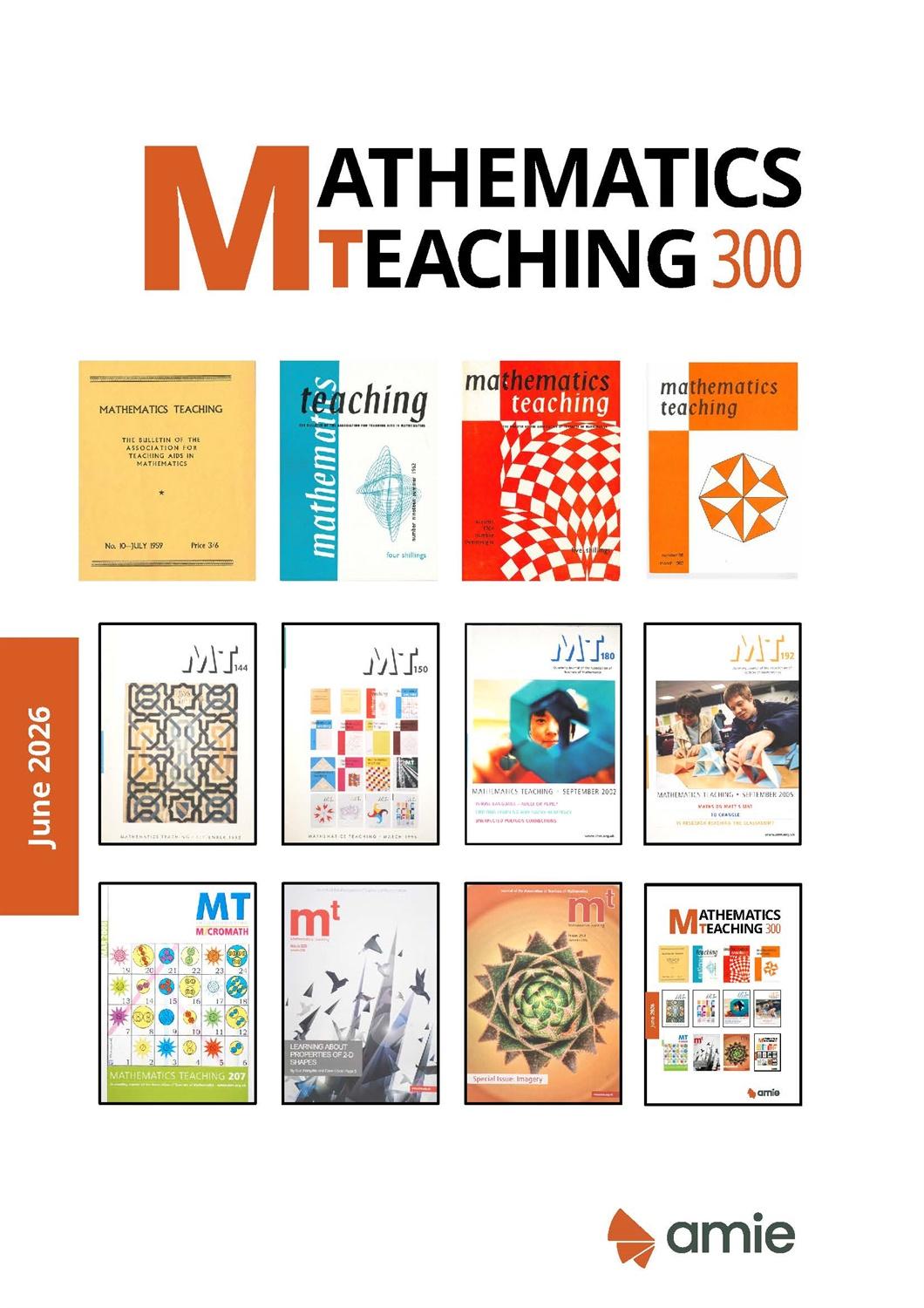
Mathematics Teaching 300 now available online https://atm.org.uk/Mathematics-Teaching-Journal-Archive/177735
A special edition celebrating 300 issues with a self-referential cover, like MT 150 (https://en.wikipedia.org/wiki/Droste_effect)
Design by me
Five free articles for non-members:
Understanding geometry proof what do students say to AI feedback? https://atm.org.uk/write/MediaUploads/Journals/MT300/06.pdf
Yuqian (Linda) Wang and Hanmin Song explore whether personalised AI feedback can support students’ understanding of geometry proof tasks.
An appreciation of Alison Parish (1951–2026) https://atm.org.uk/write/MediaUploads/Journals/MT300/07.pdf
Can pedagogy for problem solving promote equity in the classroom? https://atm.org.uk/write/MediaUploads/Journals/MT300/10.pdf
Laura King reflects on pedagogies to support equity in primary mathematics when teaching problem solving
Number a disinformation timeline https://atm.org.uk/write/MediaUploads/Journals/MT300/16.pdf
Micheál Ó Dúill traces history and cultures to argue for teaching zero to nine instead of one to ten.
If it hadn’t been for Dave… https://atm.org.uk/write/MediaUploads/Journals/MT300/18.pdf
Barbara Binns reflects on Dave Wilson (1947–2026) with contributions from Geoff Faux and Tony Brown.
#MathematicsTeaching #iTeachMath #MathEd #MathsEd #Math #Mathematics #teaching #pedagogy #didactics #education #design #GraphicDesign #AMiE #MT #MT300 #recursion #DrosteEffect #number