数学



Genius At Play Douban
author:
Siobhan Roberts
publishing house:
Bloomsbury USA
2015
- 7

混沌、Melnikov方法及新发展 Douban
author:
李继斌
/
陈凤娟
publishing house:
科学出版社
2012
- 6
《混沌、Mel′nikov方法及新发展》内容简介:物理、化学、力学和生物学中物质运动的数学模型往往用微分方程所定义的连续动力系统来模拟,这些动力学模型存在着复杂的动力学行为——混沌性质。《混沌、Mel′nikov方法及新发展》介绍精确地判定Smale马蹄存在意义下具有混沌性质的Mel′nikov方法,并介绍近年来学者们所发展的同宿和异宿到耗散鞍型周期轨道的同宿和异宿缠结理论。
《混沌、Mel′nikov方法及新发展》主要面向从事动力系统应用的读者,亦可作为研究生和对常微分方程与动力系统感兴趣的人员的入门读物。
《混沌、Mel′nikov方法及新发展》主要面向从事动力系统应用的读者,亦可作为研究生和对常微分方程与动力系统感兴趣的人员的入门读物。
Scaling, Self-similarity, and Intermediate Asymptotics Douban
Scaling laws reveal the fundamental property of phenomena, namely self-similarity - repeating in time and/or space - which substantially simplifies the mathematical modelling of the phenomena themselves. This book begins from a non-traditional exposition of dimensional analysis, physical similarity theory, and general theory of scaling phenomena, using classical examples to demonstrate that the onset of scaling is not until the influence of initial and/or boundary conditions has disappeared but when the system is still far from equilibrium. Numerous examples from a diverse range of fields, including theoretical biology, fracture mechanics, atmospheric and oceanic phenomena, and flame propagation, are presented for which the ideas of scaling, intermediate asymptotics, self-similarity, and renormalisation were of decisive value in modelling.
Lengths, Widths, Surfaces Douban
author:
Hoyrup, Jens
2002
- 1
In this examination of the Babylonian cuneiform "algebra" texts, based on a detailed investigation of the terminology and discursive organization of the texts, Jens Hoyrup proposes that the traditional interpretation must be rejected. The texts turn out to speak not of pure numbers, but of the dimensions and areas of rectangles and other measurable geometrical magnitudes, often serving as representatives of other magnitudes (prices, workdays, etc...), much as pure numbers represent concrete magnitudes in modern applied algebra. Moreover, the geometrical procedures are seen to be reasoned to the same extent as the solutions of modern equation algebra, though not built on any explicit deductive structure.

The Fractal Geometry of the Brain Douban
author:
Antonio Di Ieva
publishing house:
Springer
2016
- 8
Reviews the most intriguing applications of fractal analysis in neuroscience with a focus on current and future potential, limits, advantages, and disadvantages. Will bring an understanding of fractals to clinicians and researchers also if they do not have a mathematical background, and will serve as a good tool for teaching the translational applications of computational models to students and scholars of different disciplines. This comprehensive collection is organized in four parts:
(1) Basics of fractal analysis;
(2) Applications of fractals to the basic neurosciences;
(3) Applications of fractals to the clinical neurosciences;
(4) Analysis software, modeling and methodology.
Series: Springer Series in Computational Neuroscience
(1) Basics of fractal analysis;
(2) Applications of fractals to the basic neurosciences;
(3) Applications of fractals to the clinical neurosciences;
(4) Analysis software, modeling and methodology.
Series: Springer Series in Computational Neuroscience
Graph Theory (on Demand Printing Of 02787) Douban
author:
Frank Harary
publishing house:
Westview Press
1994
- 10
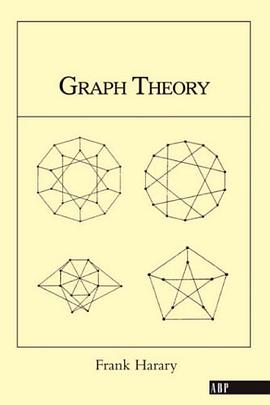
An effort has been made to present the various topics in the theory of graphs in a logical order, to indicate the historical background, and to clarify the exposition by including figures to illustrate concepts and results. In addition, there are three appendices which provide diagrams of graphs, directed graphs, and trees. The emphasis throughout is on theorems rather than algorithms or applications, which however are occaisionally mentioned.




勒贝格-斯蒂尔吉斯积分 Douban
author:
E.卡姆克(E.Kamke)
translator:
吴莲溪
publishing house:
高等教育出版社
1965

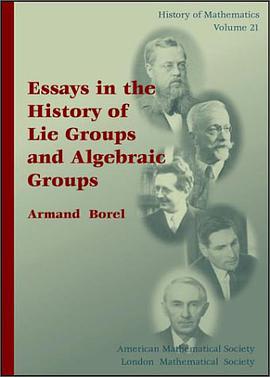
Essays in the History of Lie Groups and Algebraic Groups Douban
author:
Armand Borel
publishing house:
American Mathematical Society
2001
- 8
A co-publication of the AMS and the London Mathematical Society
Lie groups and algebraic groups are important in many major areas of mathematics and mathematical physics. We find them in diverse roles, notably as groups of automorphisms of geometric structures, as symmetries of differential systems, or as basic tools in the theory of automorphic forms. The author looks at their development, highlighting the evolution from the almost purely local theory at the start to the global theory that we know today. Starting from Lie's theory of local analytic transformation groups and early work on Lie algebras, he follows the process of globalization in its two main frameworks: differential geometry and topology on one hand, algebraic geometry on the other. Chapters II to IV are devoted to the former, Chapters V to VIII, to the latter.
The essays in the first part of the book survey various proofs of the full reducibility of linear representations of SL2(C)
, the contributions of H. Weyl to representations and invariant theory for semisimple Lie groups, and conclude with a chapter on E. Cartan's theory of symmetric spaces and Lie groups in the large.
The second part of the book first outlines various contributions to linear algebraic groups in the 19th century, due mainly to E. Study, E. Picard, and above all, L. Maurer. After being abandoned for nearly fifty years, the theory was revived by C. Chevalley and E. Kolchin, and then further developed by many others. This is the focus of Chapter VI. The book concludes with two chapters on the work of Chevalley on Lie groups and Lie algebras and of Kolchin on algebraic groups and the Galois theory of differential fields, which put their contributions to algebraic groups in a broader context.
Professor Borel brings a unique perspective to this study. As an important developer of some of the modern elements of both the differential geometric and the algebraic geometric sides of the theory, he has a particularly deep understanding of the underlying mathematics. His lifelong involvement and his historical research in the subject area give him a special appreciation of the story of its development.
Lie groups and algebraic groups are important in many major areas of mathematics and mathematical physics. We find them in diverse roles, notably as groups of automorphisms of geometric structures, as symmetries of differential systems, or as basic tools in the theory of automorphic forms. The author looks at their development, highlighting the evolution from the almost purely local theory at the start to the global theory that we know today. Starting from Lie's theory of local analytic transformation groups and early work on Lie algebras, he follows the process of globalization in its two main frameworks: differential geometry and topology on one hand, algebraic geometry on the other. Chapters II to IV are devoted to the former, Chapters V to VIII, to the latter.
The essays in the first part of the book survey various proofs of the full reducibility of linear representations of SL2(C)
, the contributions of H. Weyl to representations and invariant theory for semisimple Lie groups, and conclude with a chapter on E. Cartan's theory of symmetric spaces and Lie groups in the large.
The second part of the book first outlines various contributions to linear algebraic groups in the 19th century, due mainly to E. Study, E. Picard, and above all, L. Maurer. After being abandoned for nearly fifty years, the theory was revived by C. Chevalley and E. Kolchin, and then further developed by many others. This is the focus of Chapter VI. The book concludes with two chapters on the work of Chevalley on Lie groups and Lie algebras and of Kolchin on algebraic groups and the Galois theory of differential fields, which put their contributions to algebraic groups in a broader context.
Professor Borel brings a unique perspective to this study. As an important developer of some of the modern elements of both the differential geometric and the algebraic geometric sides of the theory, he has a particularly deep understanding of the underlying mathematics. His lifelong involvement and his historical research in the subject area give him a special appreciation of the story of its development.
Hidden Harmony-geometric Fantasies Douban
author:
Bottazzini, Umberto; Gray, Jeremy J.;
publishing house:
Springer
2013
- 8
This book is a history of complex function theory from its origins to 1914, when the essential features of the modern theory were in place. It is the first history of mathematics devoted to complex function theory, and it draws on a wide range of published and unpublished sources. In addition to an extensive and detailed coverage of the three founders of the subject - Cauchy, Riemann, and Weierstrass - it looks at the contributions of authors from d'Alembert to Hilbert, and Laplace to Weyl. Particular chapters examine the rise and importance of elliptic function theory, differential equations in the complex domain, geometric function theory, and the early years of complex function theory in several variables. Unique emphasis has been devoted to the creation of a textbook tradition in complex analysis by considering some seventy textbooks in nine different languages. The book is not a mere sequence of disembodied results and theories, but offers a comprehensive picture of the broad cultural and social context in which the main actors lived and worked by paying attention to the rise of mathematical schools and of contrasting national traditions. The book is unrivaled for its breadth and depth, both in the core theory and its implications for other fields of mathematics. It documents the motivations for the early ideas and their gradual refinement into a rigorous theory.

基础分析学之二 多元微积分学 Douban
author:
项武义
publishing house:
人民教育出版社
2004
- 9


A Concise Course in Algebraic Topology Douban
author:
J. P. May
publishing house:
University Of Chicago Press
1999
- 9
Algebraic topology is a basic part of modern mathematics and some knowledge of this area is indispensable for any advanced work relating to geometry, including topology itself, differential geometry, algebraic geometry and Lie groups. This book provides a treatment of algebraic topology both for teachers of the subject and for advanced graduate students in mathematics either specializing in this area or continuing on to other fields. J. Peter May's approach reflects the enormous internal developments within algebraic topology, most of which are largely unknown to mathematicians in other fields. But he also retains the classical presentations of various topics where appropriate. Most chapters end with problems that further explore and refine the concepts presented. The final four chapters provide sketches of substantial areas of algebraic topology and the book concludes with a list of suggested readings for those interested in delving further into the field.