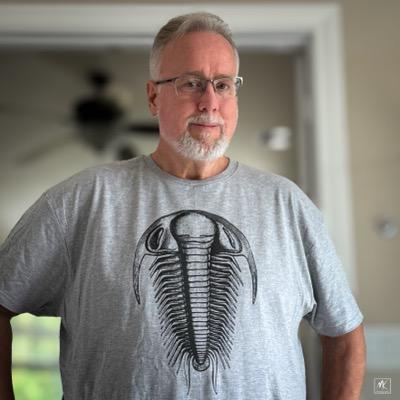
So as of yesterday I am retired, had a 37+ year career working in #NASA human spaceflight, Space Shuttle and then the #Orion spacecraft. I set my retirement date in the hope that the #Artemis 2 mission, Orion’s first crewed flight, would have completed by then but Feb launch was delayed and by “cosmic coincidence” Artemis 2 finally launched yesterday - my final day. Very proud of all my colleagues and all the hard work we’ve done to get to this point. Onward to the #moon - and beyond. Ad astra.
nasa

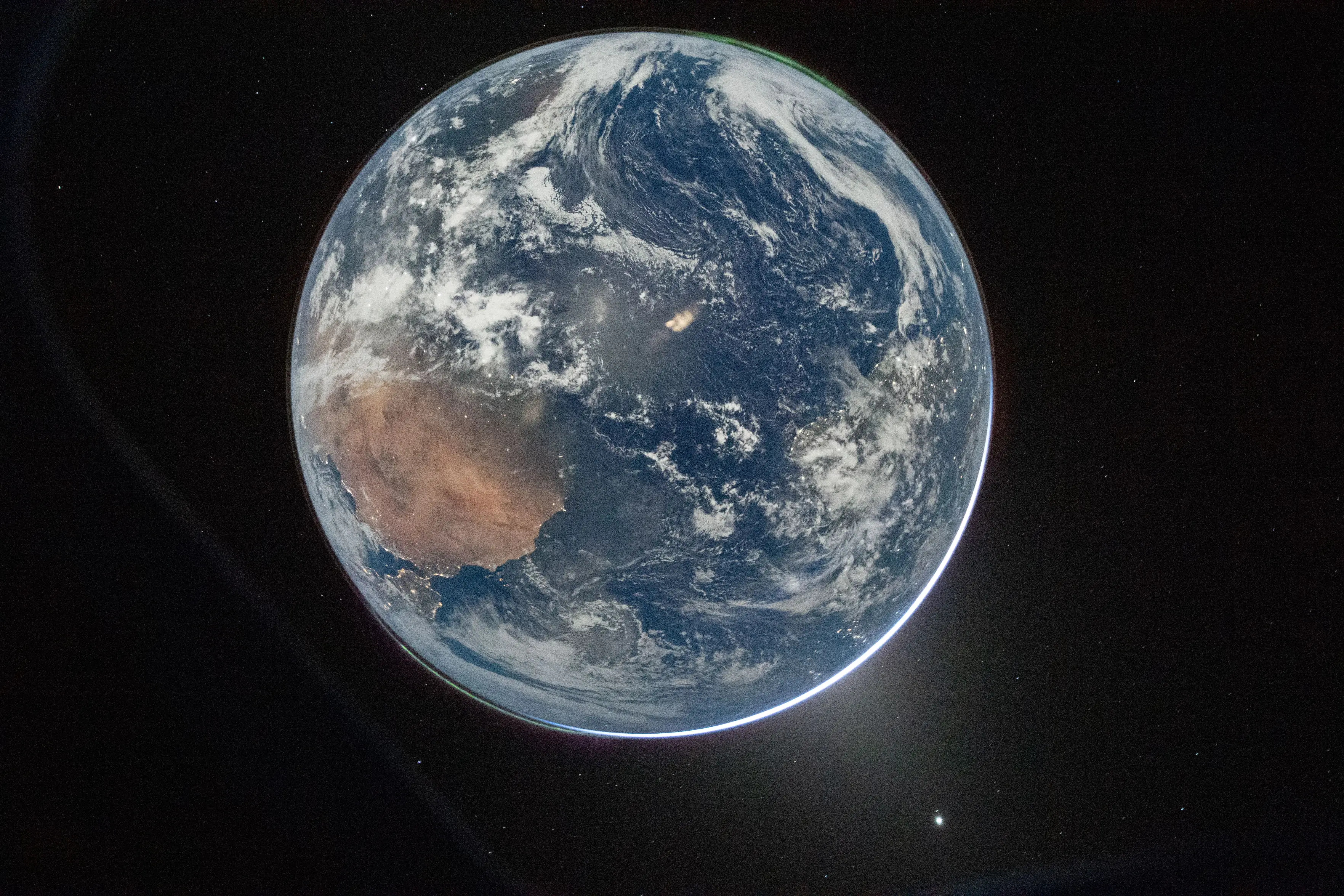
Artemis II Commander Reid Wiseman took this picture of Earth from the Orion spacecraft after completing the translunar injection burn. There are two auroras (top right & bottom left) and zodiacal light (bottom right) is visible as the Earth eclipses the Sun.
https://www.nasa.gov/image-article/hello-world/
#Earth #Artemis #Artemis2 #Orion #Integrity #OrionIntegrity #spacecraft #NASA #Moon #space #aurora
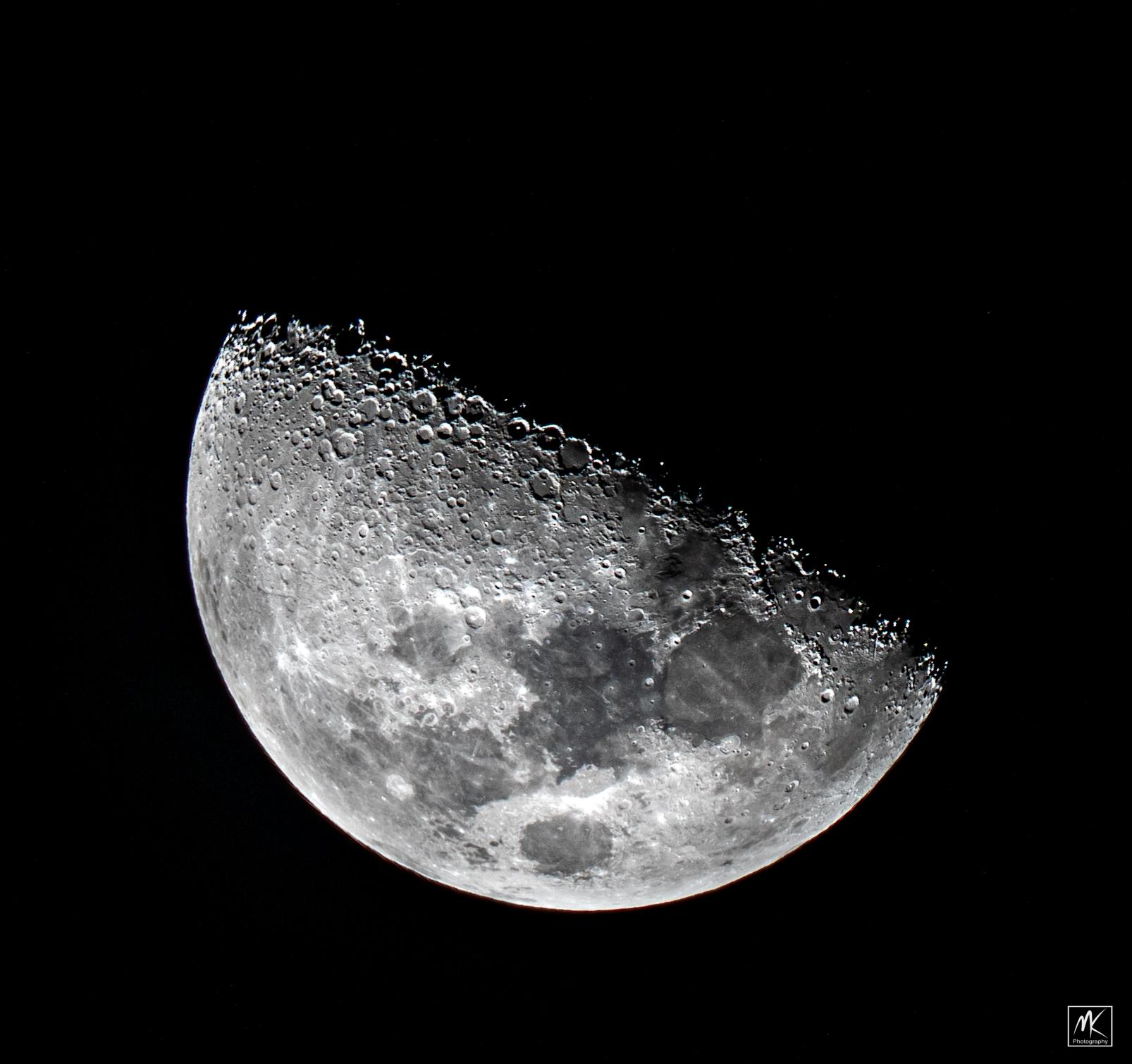
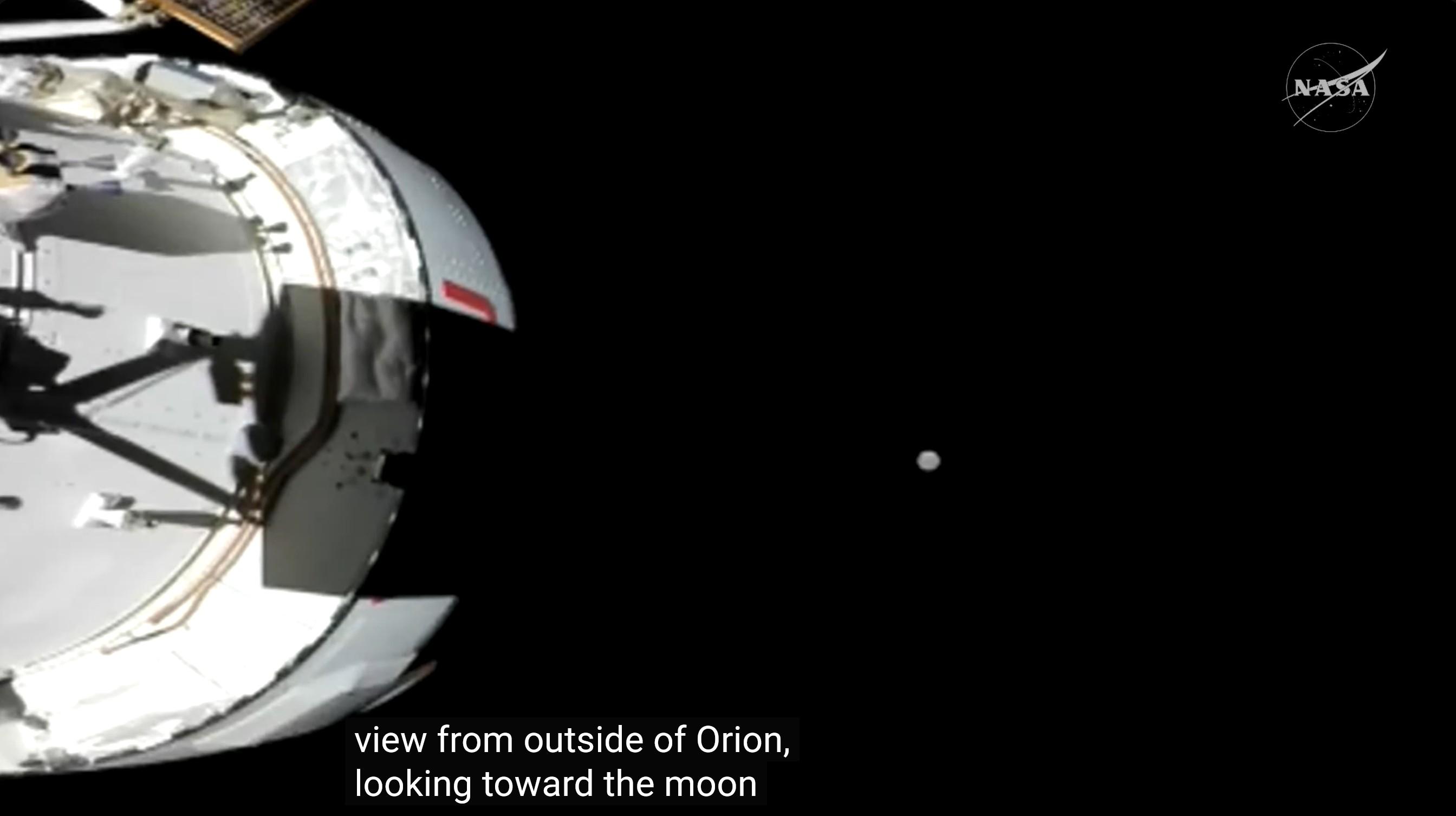
New point of view, looking toward the Moon
Live: https://www.youtube.com/watch?v=m3kR2KK8TEs
#Artemis #Artemis2 #Orion #Integrity #OrionIntegrity #spacecraft #NASA #Moon #space #news
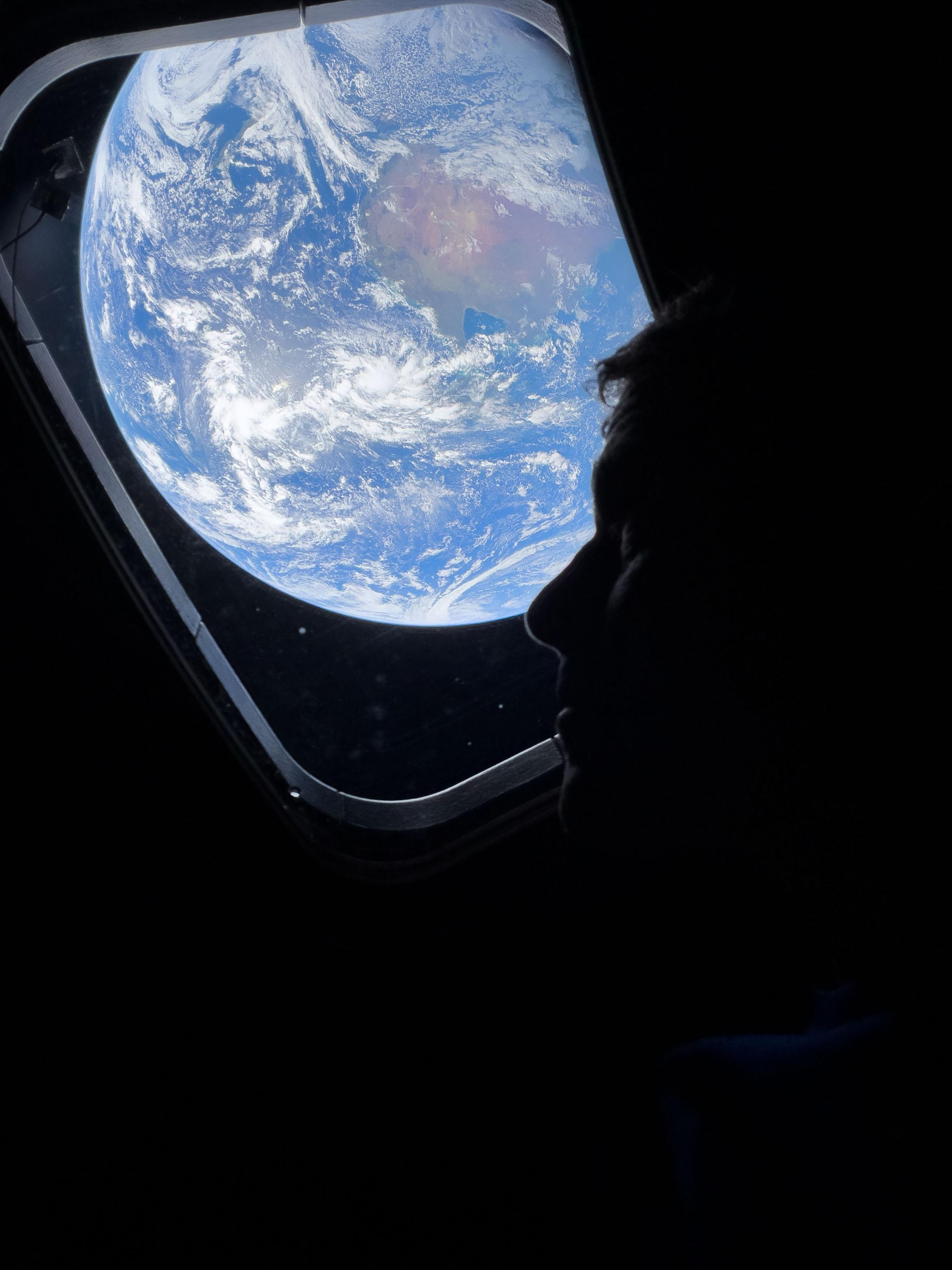
Home, Seen from Orion.
NASA astronaut and Artemis II Commander Reid Wiseman peers out of one of the Orion spacecraft's main cabin windows, looking back at Earth, as the crew travels towards the Moon.
#ReidWiseman #Earth #Artemis #astronaut #Artemis2 #Orion #Integrity #OrionIntegrity #spacecraft #NASA #space #photography


It's no secret that I've been struggling, and my therapist said I need to find things to keep me busy, so I created the @cdnspace Artemis II dashboard.
I reverse-engineered the Unity Engine powering the NASA AROW visualization and found an absolute treasure trove of data to display.
Little did I expect that it's now being seen by anywhere from 200 to 600 people at any given time with 130,000 people having looked at it in the last 24 hours. People are even building projects around my API.
Yesterday, I received a message on LinkedIn from someone working in Mission Control in Houston... and they're using my dashboard! He even sent me a photo, but I can't share it until after the crew has splashed down.
Mind blown, and an absolute pick-me-up. The best part? It's being served from my basement.

Bonus #TrekJokes
Q: How many #Klingons does it take to change a light bulb?
A: None. Klingons do not fear the dark.
Q: How many #Ferengi does it take to change a light bulb?
A: It depends how much Latinum you are willing to pay.
Q: How many #Starfleet officers does it take to change a light bulb?
A: It depends if it would violate the Prime Directive.
Q: How many #Cardassians does it take to change a light bulb?
A: None. They just try to convince you that there are five lights.
(It's #HootinTootinTuesday again! Post some jokes or funny memes under this hashtag today, and bring lots of smiles to #Mastodon.)
#Humor #Humour #FunnyMeme #Space #Jokestodon #Artemis #MoonMission #SpaceMission #NASA #Astronauts #ArtemisII #Artemis2 #StarTrekTNG #StarTrek #StarTrekTheNextGeneration #DadJokes #LightBulbJokes
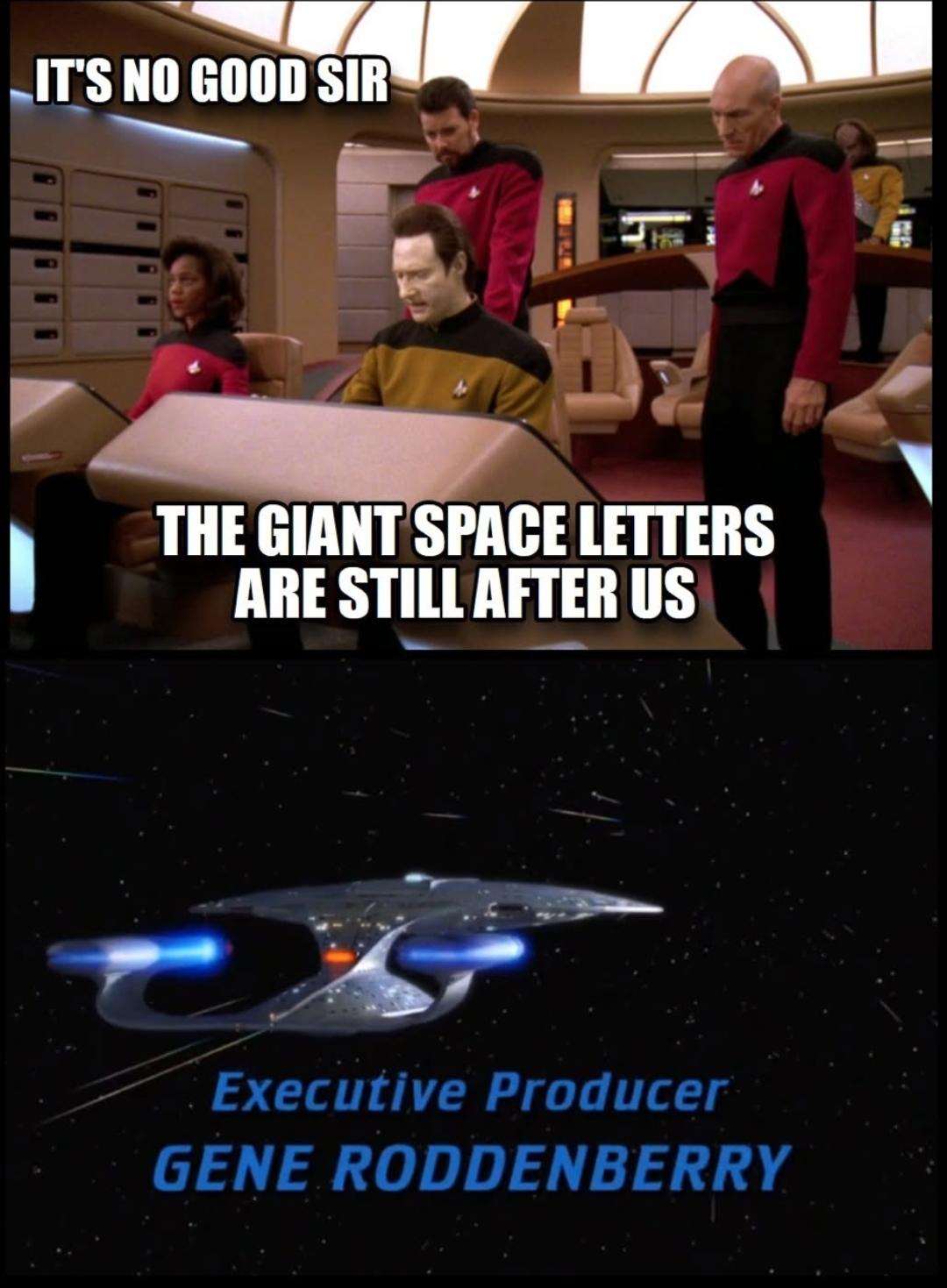


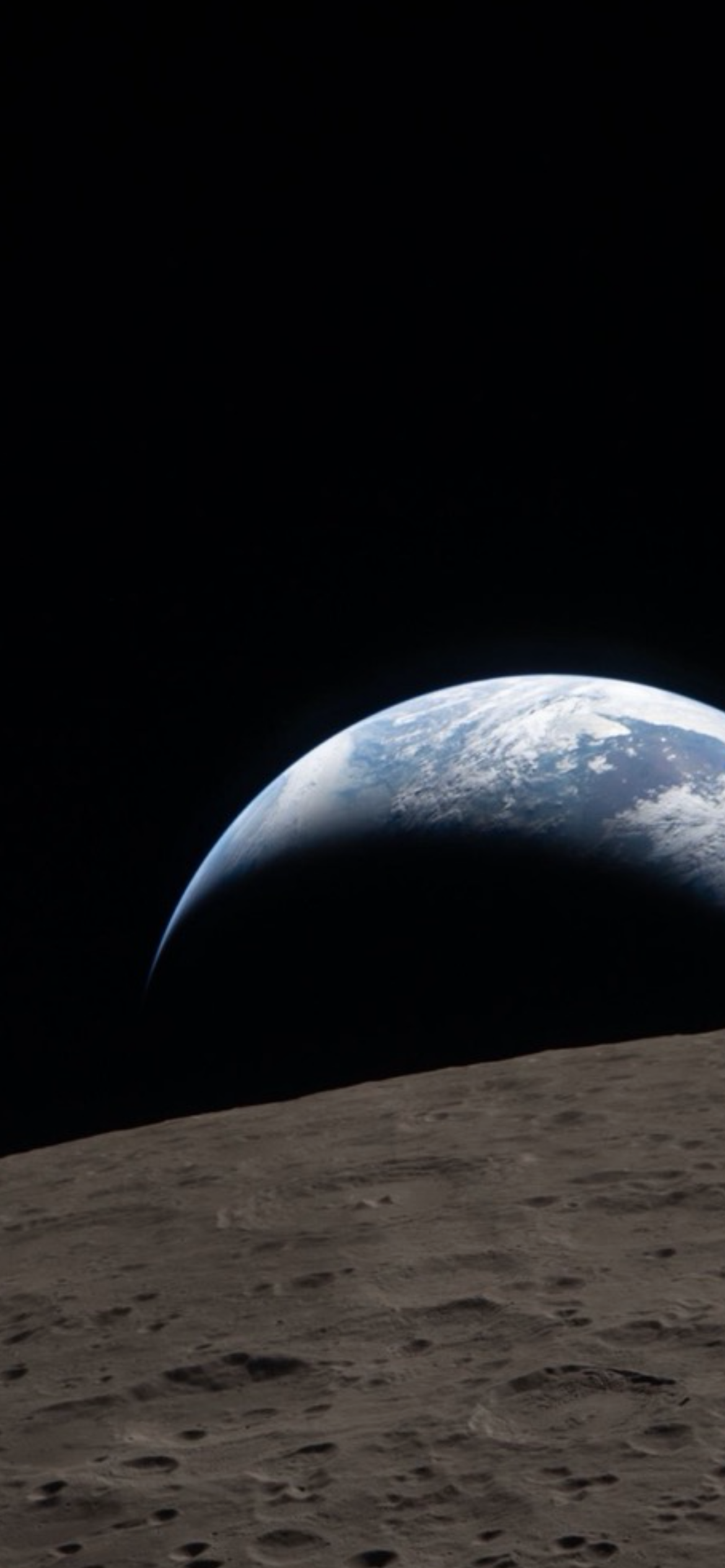
The astros obviously saw a giant cat back-side of the moon (waiting for mice to go for the cheese, doubtless) and NASA is not telling us.

Lovely Peeps! Your cool #history for the day! 🚀
(You might want to watch with sound off. The music has words & I found it difficult to hear the music, read the text, AND focus on the signing.)
If you want to just enjoy the signing, the full text is within this post. 😊
"Everyone’s talking about Artemis II. The first humans to travel to the moon in 50 years. Historic mission.
But nobody’s talking about the #Deaf men who made it possible.
In the late 1950s, #NASA had a problem. They needed to understand what weightlessness does to the human body. But every test subject kept getting violently motion sick.
So they came to #Gallaudet.
Eleven Deaf men. Most of them had lost their hearing to spinal meningitis as children, which also damaged their vestibular system. Their inner ears couldn’t be overwhelmed. They were immune to motion sickness.
NASA put them in centrifuges. Zero-gravity flights. A rotating room for twelve straight days. One experiment on a ferry in choppy Nova Scotia waters. The researchers got so seasick they had to cancel it. The Gallaudet Eleven? They were playing cards.
Their bodies gave NASA the data it needed to send humans into space.
No #Gallaudet_Eleven — no Mercury. No Mercury — no Apollo. No Apollo — no Artemis II.
Sixty years later, four astronauts just flew 252,000 miles from Earth & came home safely.
They stood on the shoulders of eleven Deaf men most people have never heard of.
Now you know!"
Edited 156d ago
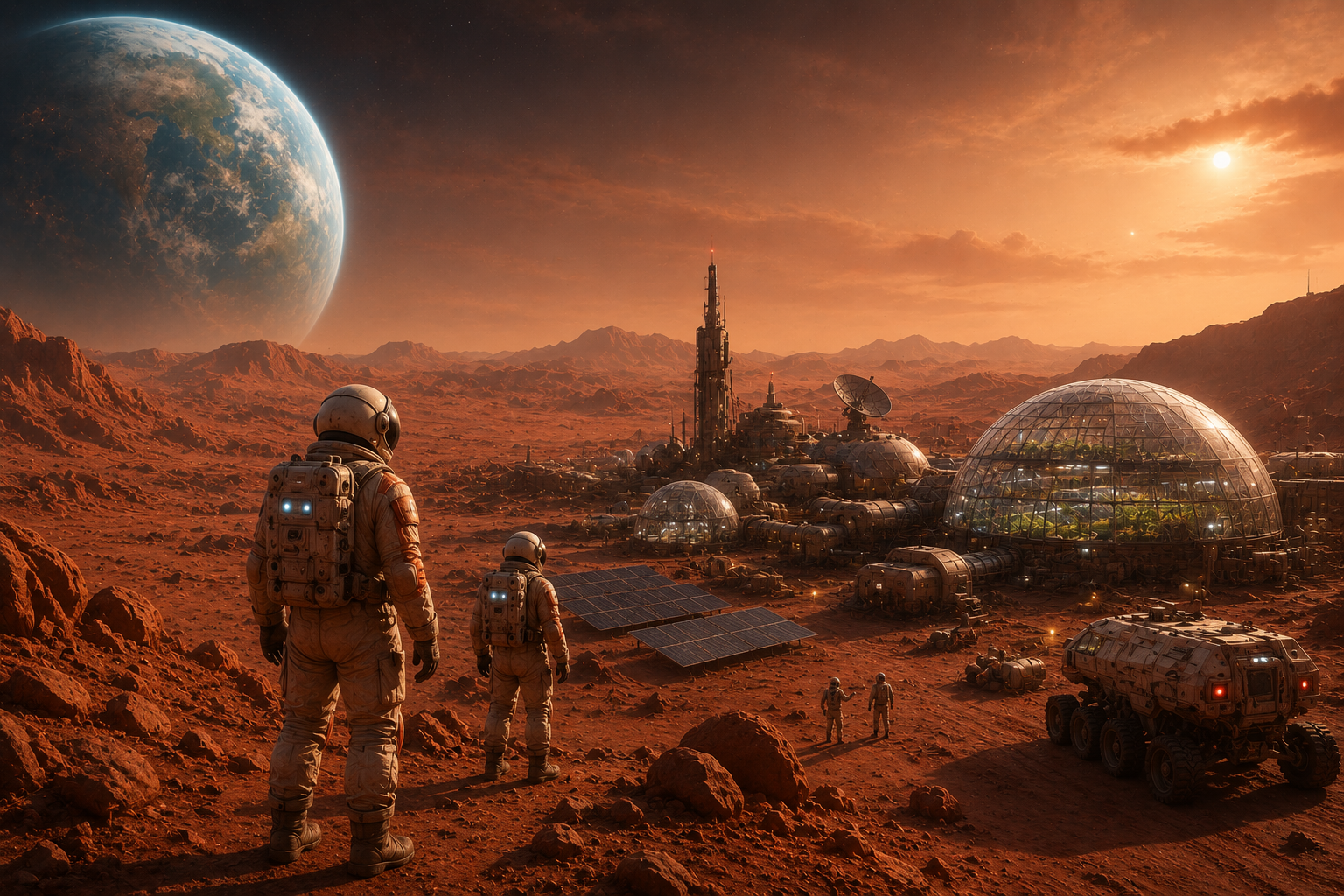
IF WE CAN SURVIVE ON MARS,
WE CAN THRIVE ON EARTH 💎
I've just watched a fascinating video about something that doesn't get nearly as much attention as getting humans to Mars.
GETTING SAFELY HOME AGAIN.
Mars isn't the Moon. A return journey means launching a substantial spacecraft from the Martian surface, which means an enormous amount of fuel. Carrying all that fuel from Earth adds enormous mass. Making fuel on Mars means sending machinery capable of producing rocket fuel, along with a large, extraordinarily reliable power supply, and having the whole system operate autonomously before the astronauts even arrive.
Then there is what a multi-year Mars mission might do to the human body. Months in weightlessness. Long exposure to radiation. More than a year potentially living in 38% of Earth's gravity. Then another long journey home to Earth.
And you can't simply leave Mars whenever you've had enough. The useful alignment between Earth and Mars comes around only about every 26 months.
This is difficult stuff.
But towards the end, the video makes the familiar argument for doing it anyway.
HUMANITY NEEDS A BACKUP PLANET.
An asteroid crashing into Earth. A nuclear war. A supervolcano darkening the skies. Another pandemic. Some unforeseen catastrophe that makes Earth uninhabitable.
SO WE ESTABLISH A SELF-SUSTAINING CIVILISATION ON MARS.
And that's where something occurred to me.
HAVE WE GOT THIS BACKWARDS?
Mars is already catastrophically hostile to human life.
It is freezing. Its atmosphere is almost entirely carbon dioxide and less than 1% of Earth's atmospheric pressure. There is dangerous radiation at the surface. No breathable air. No forests or plants of any kind. No oceans, lakes or rivers. No farms.
And no functioning biosphere is waiting for us.
To establish a genuinely independent civilisation there, we would have to become extraordinarily good at creating and maintaining habitable, fully enclosed environments.
We'd need to recycle our water and air and grow all of our food. We'd need to generate enormous amounts of reliable energy, protect ourselves from radiation, manufacture what we need and keep a closed human ecosystem functioning for generations.
So here's the question I can't get past.
IF WE BECOME GOOD ENOUGH AT KEEPING HUMAN BEINGS ALIVE ON MARS, HOW BADLY WOULD WE HAVE TO DAMAGE EARTH BEFORE MARS BECAME THE EASIER PLACE TO LIVE?
Even a badly damaged Earth still starts with something Mars doesn't have.
A BIOSPHERE.
Perhaps Mars really will become humanity's second home one day. I hope we go. Exploration is one of the things human beings do magnificently.
But I'm not convinced Mars is our lifeboat.
Perhaps the technologies required to survive there will teach us something considerably more urgent.
How to look after the astonishing planet we're already standing on.
https://youtu.be/ahrj83jWl-I?si=xCpgTx42MVXZFs_l
@3goodthings @DigitalCoup @meditation @economics_that_works @startrek
#Mars #SpaceExploration #Science #Climate #Environment #SpaceX #NASA
Edited 23d ago
"Scientific evidence continues to show that human activities -- primarily the human burning of fossil fuels -- have warmed Earth's surface and its ocean basins, which in turn have continued to impact Earth’s climate." (NASA)
#ClimateChange #GlobalWarming #StopFossils #CleanEnergy #ProtectNature #BeTheChange #ResetSociety #FireSeason #SaveThePlanet #NASA