Since pure thallium can be poisonous to the touch...does that make it death metal?
And send.
Since pure thallium can be poisonous to the touch...does that make it death metal?
And send.
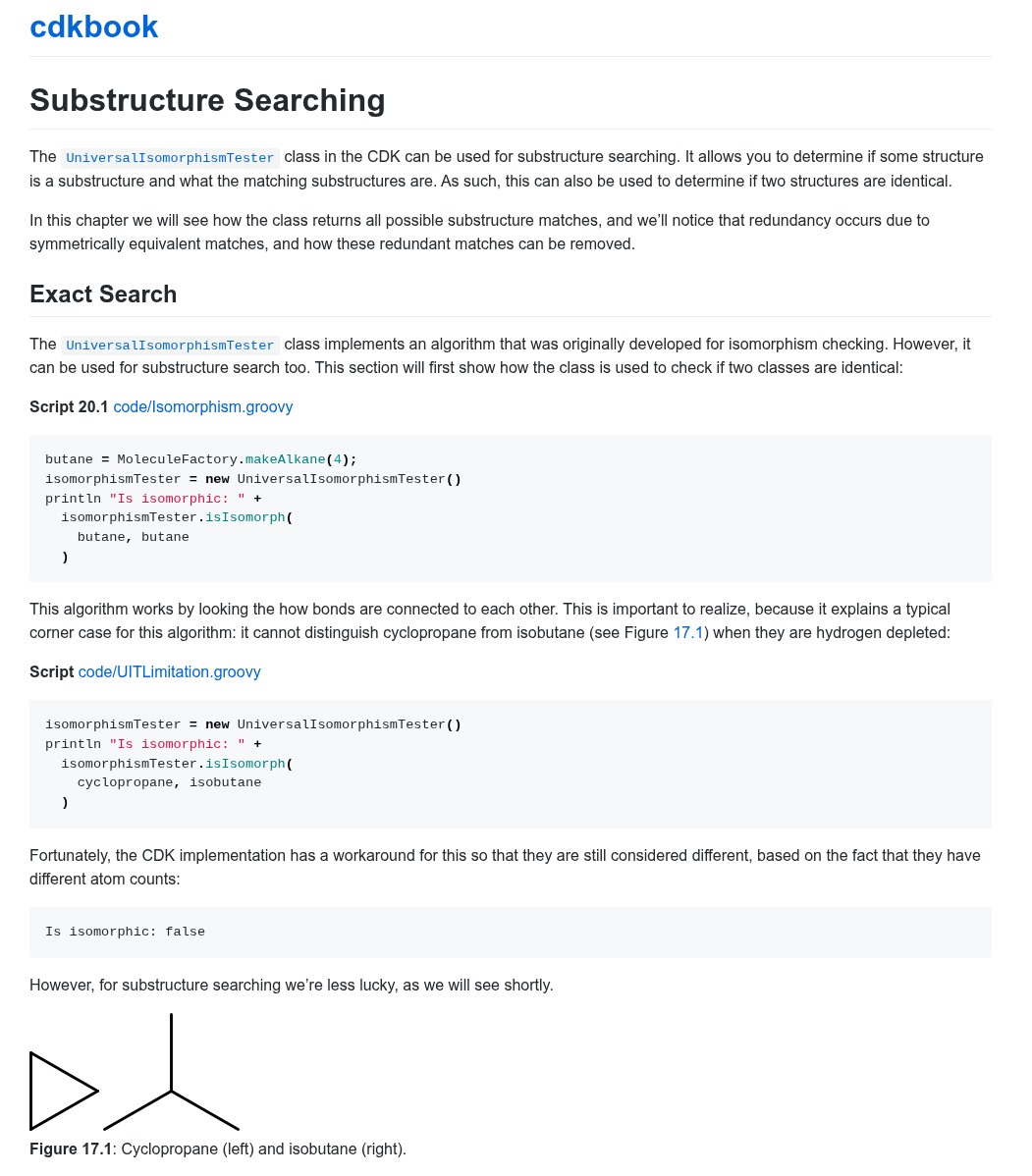
porting more content of the old Groovy #Cheminformatics with the #Chemistry Development Kit book to Markdown, here about substructure searching: https://cdk.github.io/cdkbook/substructure.html
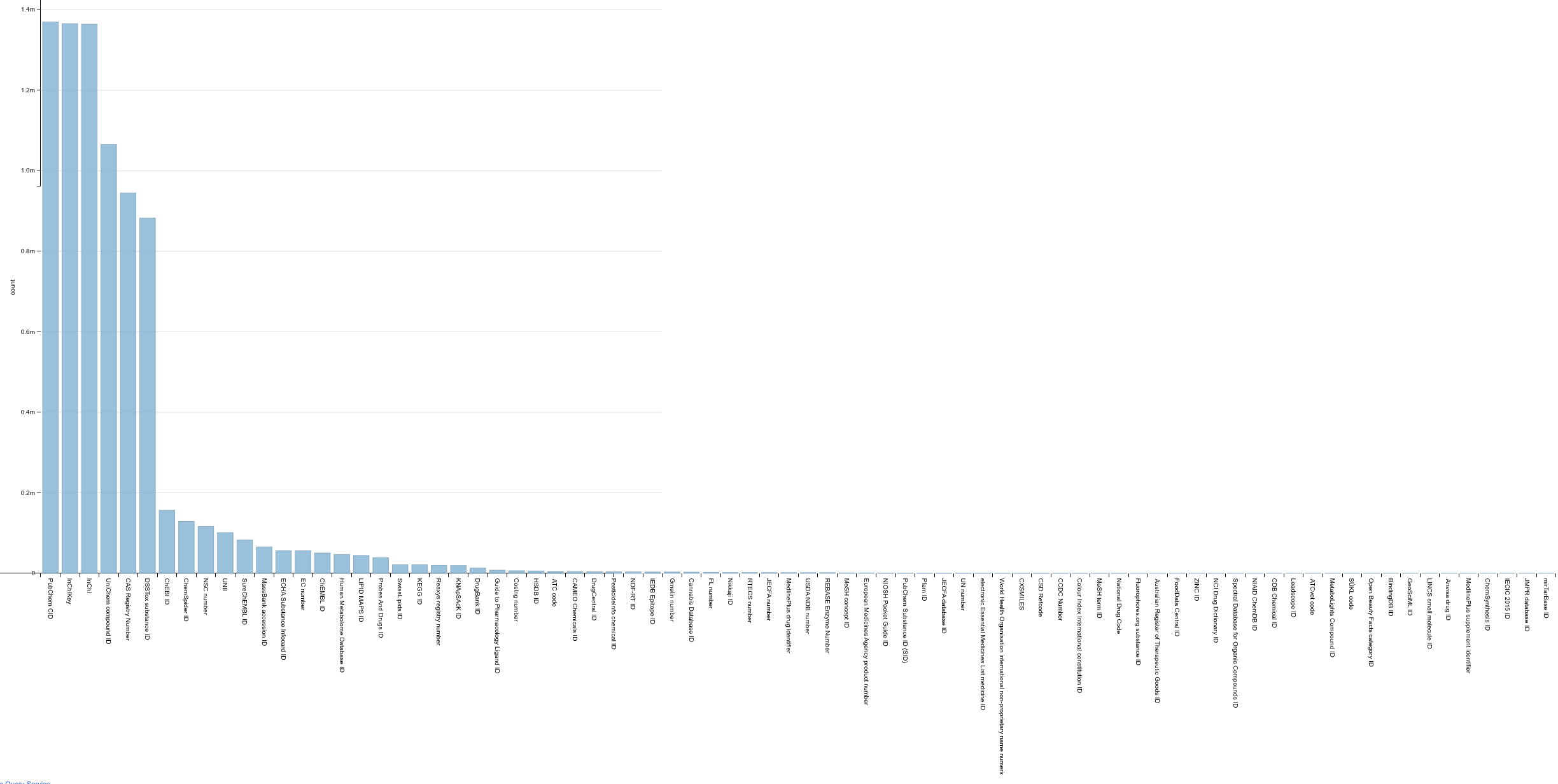
chemical compound identifiers in @wikidata: https://edu.nl/xb8y7
#Chemistry picks of the day:
➡️ @ChemistryViews - Online magazine of Chemistry Europe, org of 16 European chemical societies
➡️ @compoundchem - Blog of infographic posters about chemistry etc
➡️ @organic_chemistry - Developments in total synthesis, catalysis, medicinal chemistry, organic chemistry
➡️ @fafo - Non-commercial grassroots semiconductor & analytical chemistry lab
➡️ @CellChemicalBiology - Cell Chemical Biology journal
🧵 1/3
The Cl(4,1,1) unified electromagnetic field theory: https://crudfactory.com/PHYSICS.html
Key points:
* It is one equation
* It yields Maxwell’s equations
* It yields Newton’s law of gravitation
* It explains Michelson-Morley
* It yields a proof of inertial mass
* It yields digital parallel Grover’s algorithm
When combined with axiomatic probability theory and the principle of maximum entropy, it becomes a basis for all academic fields to intercommunicate.
🧱 The secret ingredient holding the Great Wall of China together is sticky rice.
Ming Dynasty masons (1368-1644) mixed boiled sticky rice soup into their lime mortar. The result was a tough, flexible, water-resistant binder that has held brick sections together for around 600 years.
The chemistry: sticky rice is packed with amylopectin, a complex starch. In 2010, chemists led by Bingjian Zhang at Zhejiang University found that amylopectin acts as a template, steering calcium carbonate crystals into a dense, interlocking structure instead of large brittle chunks.
That compact microstructure is why some wall sections have shrugged off earthquakes and still keep weeds out of the seams centuries later.
Read more:
https://pubs.acs.org/doi/abs/10.1021/ar9001944
https://www.nationalgeographic.com/history/article/100608-sticky-rice-mortar-china-science
https://www.sciencedaily.com/releases/2010/05/100530093704.htm
This gate area for this CMH to ATL flight looks to be chock full of chemists with poster tubes
#ACS #chemistry #ACS_National_Meeting
What’s the biggest single crystal you’ve grown? David Boyce and students at Queenswood School have grown a 3kg crystal of copper sulfate. Now he shares his tips for how you can do it too.
Via Chemistry World on Bluesky.
#Chemistry https://www.chemistryworld.com/culture/how-to-grow-an-enormous-single-crystal/4022946.article
Glad UC Riverside still has a scientific glassblower. Fewer and fewer US campuses do.
https://ucnet.universityofcalifornia.edu/employee-news/uc-people-stephen-lepore-scientific-glassblower/ #Chemistry #Biology #Science #Glassblowing #Craft
Just found out I wasted 3 weeks of work, a significant amount of solvent and other reagents because the commercial starting material is not what the bottle says it is to add insult to injury what is in the bottle isn't even clean, there is at least one other thing in there.
Hilariously (not really) the only reason I determined this was because I'm making something from the literature and none of my spectra were matching close enough. Went back to the start to check and remade the first step, it produced the same wrong thing. Tried some other conditions, same deal. Finally took an NMR of the starting material today.